Can the ELT Detect Oxygen on Exoplanets
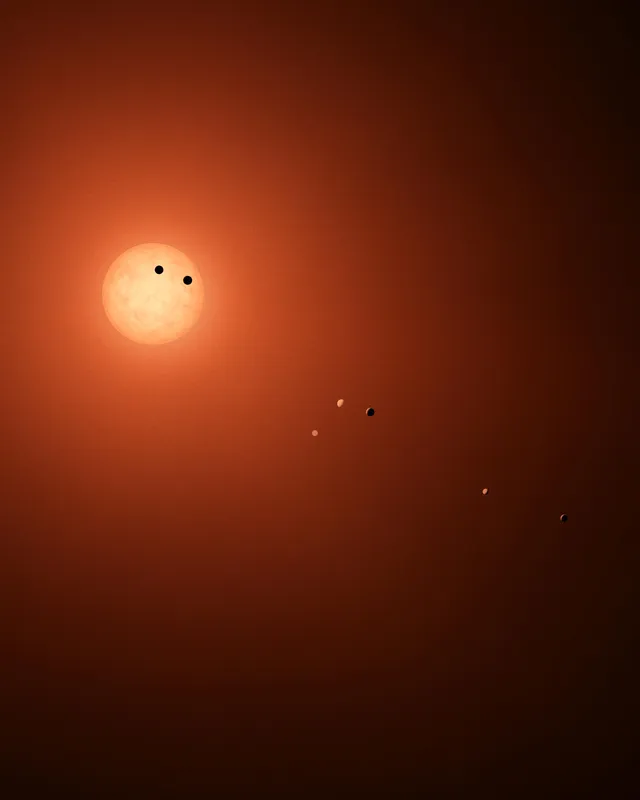
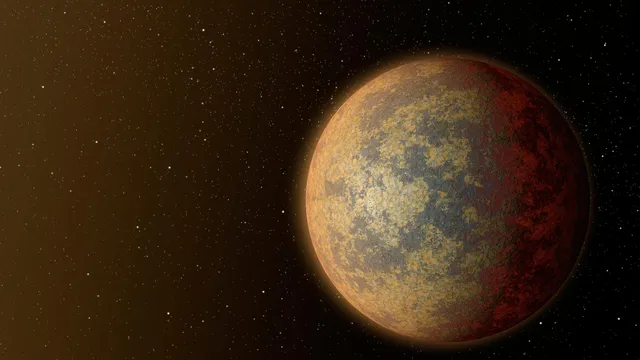
Astronomers developed a Bayesian cross-correlation method to estimate how many transits the ANDES spectrograph on the future ELT would need to reliably detect gases in the atmospheres of rocky exoplanets. The technique was tested on 18 known potentially habitable planets, searching for carbon dioxide, water, methane and oxygen in starlight filtered through planetary atmospheres during transit.
Water turned out easiest to spot: TRAPPIST-1 planets would need just 10-19 transits, LHS 1140 b around 30. Carbon dioxide requires 1.5 times more observations, methane three times more, and oxygen, the key marker of photosynthetic life, needs four times more transits than water. The authors stress these figures assume cloud-free atmospheres and no instrumental errors, so real campaigns would likely demand even more observing time.
Third Planet at Beta Pictoris Found by Its Air
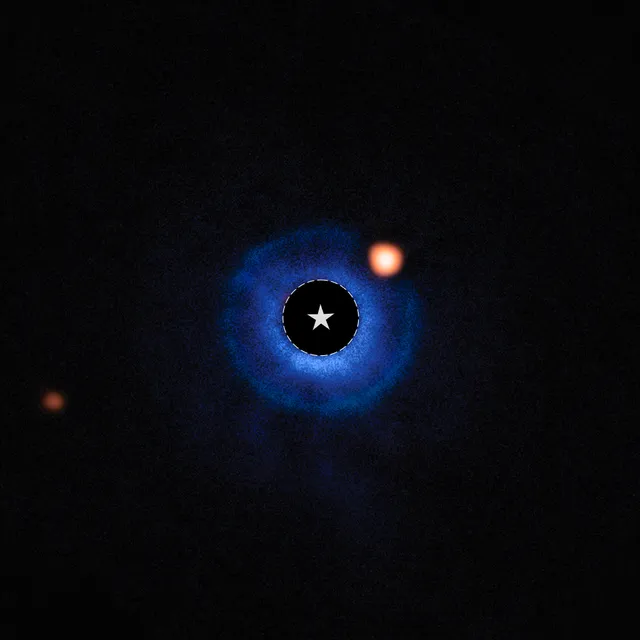
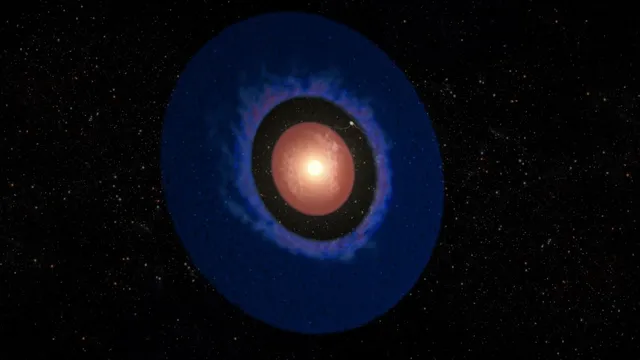
The James Webb telescope spotted a third giant planet in the Beta Pictoris system while studying the already known Beta Pictoris b with its NIRSpec spectrograph. Instead of a smooth expected spectrum, researchers found a series of peaks characteristic of carbon monoxide — a chemical signature that revealed a new object hidden within the star's bright debris disk.
Beta Pictoris d has a mass of at least twice that of Jupiter and orbits about 30 astronomical units from its star, the widest orbit among the system's three planets. Follow-up observations with the MIRI instrument detected water and methane in its atmosphere, confirming its nature. The system, only 23 million years old, became just the second known to have at least three directly imaged planets.
Roman Will Catch Stars Torn Apart by Black Holes
The Nancy Grace Roman Space Telescope, set to launch on August 30, 2026, will be able to detect flares from stars torn apart by gravity, allowing it to spot supermassive black holes that existed as far back as 11 billion years ago. These tidal disruption events are the only way to notice lighter black holes, weighing between 100,000 and 100 million solar masses, which otherwise shine too faintly to observe.
Modeling showed that the rate of such events does not simply decline with distance but actually rises toward the "cosmic noon" of 11-12 billion years ago, when star formation across the universe peaked. Roman will scan an 18-square-degree patch of sky and is expected to catch about 100 such flares per year, while the Rubin Observatory will see far more events overall, though mostly closer, less distant ones.
A Shredded Star Behaved Like a Binary System
Event 2025aarm, the second-closest recorded stellar tidal disruption, allowed six months of monitoring that tracked X-ray emission from an extremely faint initial level of about 7x10^39 erg/s to a flare nearly a hundred times brighter, peaking roughly four months after the optical maximum. This time lag suggests the optical and X-ray emissions originate from different processes within the accretion disk.
Most notably, the spectrum's behavior shifted from a hard power-law state to a soft, disk-dominated one, then hardened again. This low-hard to high-soft sequence had previously been seen only in binary systems where a star feeds a stellar-mass black hole, never before in a thermal tidal disruption of an entire star by a supermassive black hole.
Hubble Finds First Black Hole in Omega Centauri
In the globular cluster Omega Centauri, home to about 10 million stars, astronomers have directly detected a stellar-mass black hole for the first time, despite theoretical predictions of up to 10,000 such objects hiding there. The team used astrometry, tracking tiny shifts in a star's position across more than 20 years of Hubble images combined with fresh James Webb observations.
The visible star has a mass of 0.78 solar masses, while its invisible companion, named oMEGACat BH-2, weighs 4.46 solar masses, too much to be a neutron star. The object lies 18,000 light-years from Earth, and the star orbits it once every 94 years, the longest orbital period known among black hole binaries. This also raises questions about how such an object formed in a metal-poor environment.