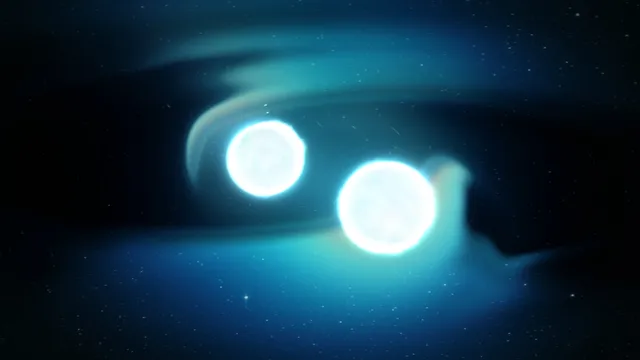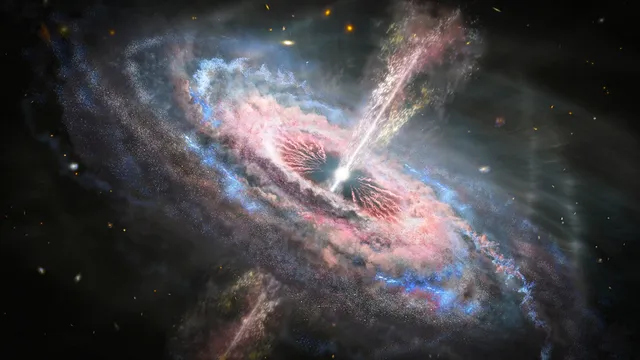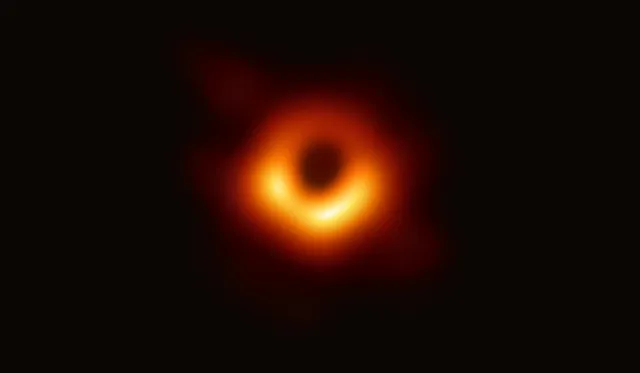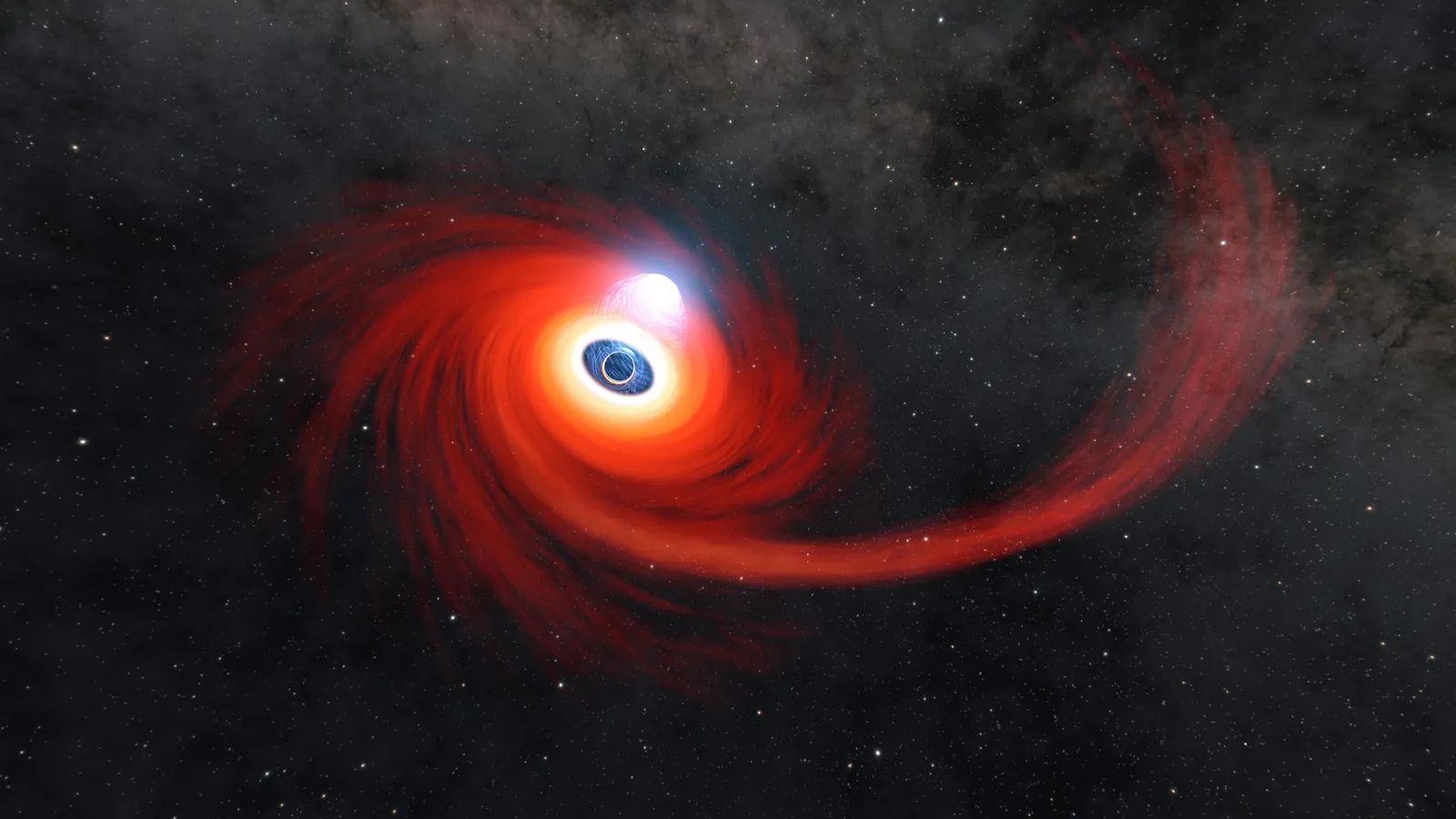
When a star strays too close to a black hole, gravity tears it apart — a process astronomers call a tidal disruption event, or TDE. The stellar debris falls onto the black hole, forming an accretion disk, and for a brief period the region around the black hole flares in optical and X-ray light. Event 2025aarm turned out to be the second closest such event ever recorded, and that proximity revealed details that usually slip past observers entirely.
A six-month monitoring campaign gave astronomers something TDE studies rarely have: enough time and sensitivity. The result was an unexpected pattern in the X-ray emission, one previously seen only in black hole binary systems and never before in a thermal tidal disruption.
The faintest early signal ever caught
The source's proximity let astronomers trace its X-ray emission down to a luminosity of about 7×10³⁹ erg/s in the 0.2–10 keV band near the optical peak. For comparison, that is orders of magnitude below the typical luminosity of active galactic nuclei, which is why such faint signals usually get lost at the edge of telescope sensitivity.
This is the faintest X-ray emission ever recorded in the early stage of any TDE. The detection itself matters: it suggests that faint X-ray signals during tidal disruptions may not be rare exceptions but a common feature that is simply hard to catch.
After the first detection, the source did not stay dim. It brightened by nearly a hundredfold, and its peak luminosity — about 5×10⁴¹ erg/s — arrived roughly four months after the optical peak. That delay between the optical and X-ray maxima on its own suggests the two emissions come from different physical processes in the disk that do not evolve in lockstep.
A spectrum that behaves like a binary system
Things got more interesting when researchers broke down the X-ray emission by energy at different points in time. At first, the spectrum was hard and followed a power law — a signature typical of emission that has passed through hot plasma, a corona, which scatters photons to higher energies.
Then, as luminosity rose, the spectrum softened, and the accretion disk itself — a source of thermal emission — began to dominate. Later, the spectrum hardened again.
This sequence, a "low-hard to high-soft" state transition, is well known from X-ray binaries, where a companion star feeds a stellar-mass black hole. But in thermal TDEs, where an entire star is destroyed around a supermassive black hole, this pattern had never been described before.
The authors attribute the spectral changes to a shifting balance between the accretion disk and the scattering corona component, qualitatively resembling the disk-corona evolution seen in X-ray binaries. Optical follow-up observations with HET/LRS2 confirmed the event's classification as a tidal disruption and revealed NIII Bowen fluorescence lines — another trace of radiation interacting with surrounding gas.
What this event changes about tidal disruptions
For years, tidal disruption events have been split into two camps: those bright in X-rays and those where no X-ray emission is detected at all. The extremely faint early signal from 2025aarm suggests this split is largely artificial — driven by the depth and cadence of observations rather than any real physical difference between the events.
In other words, if astronomers look long enough and sensitively enough, faint X-ray emission can likely be found even where silence was previously recorded.
The broader implication concerns the universality of accretion. If disk formation and evolution in a TDE around a supermassive black hole resemble what happens in tight binaries with stellar-mass black holes, then the physics of accretion appears to follow similar rules across a mass range spanning several orders of magnitude.