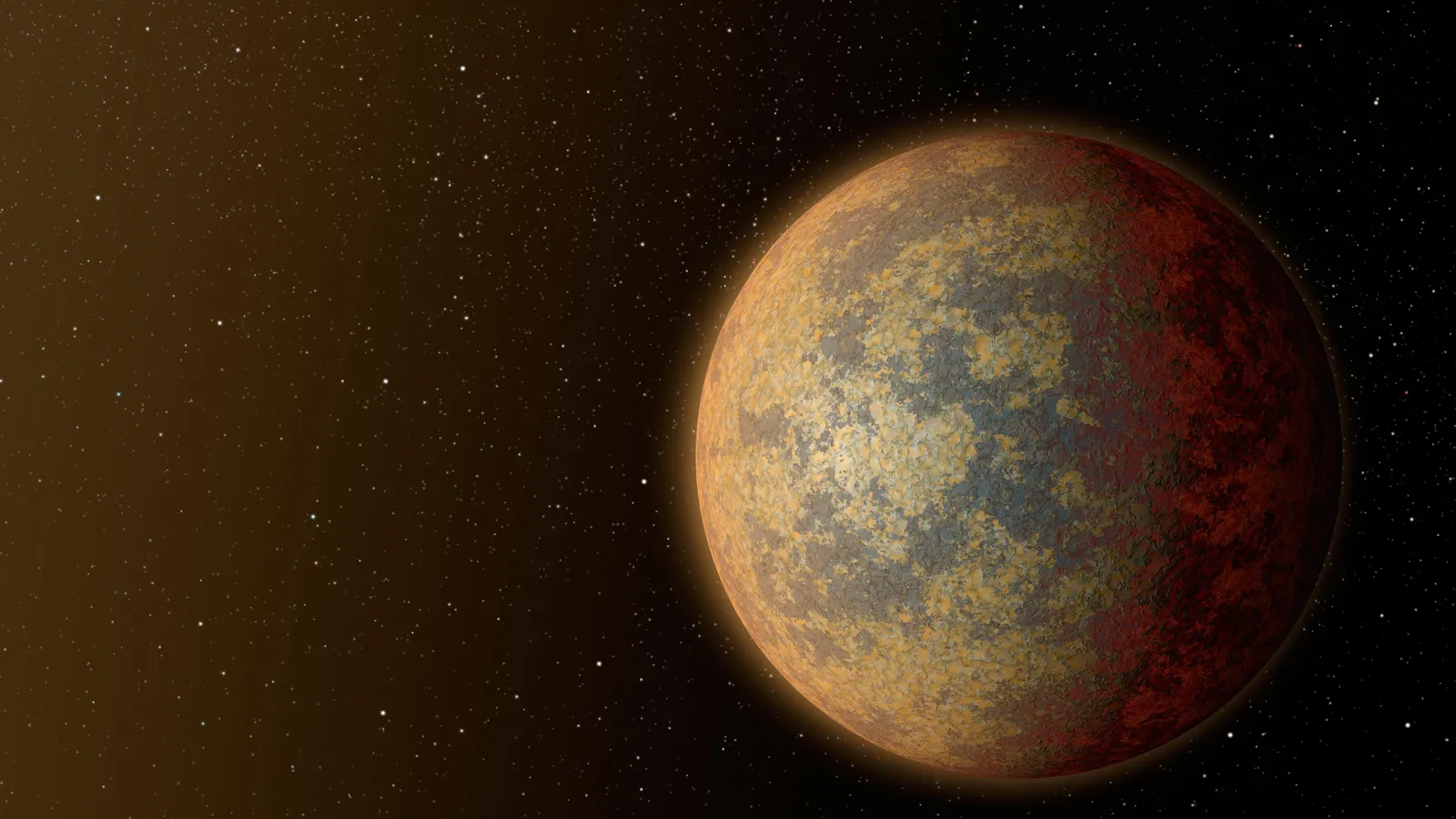
Astronomers have confirmed, for the first time, that a rocky planet orbiting within its star's habitable zone actually has an atmosphere. The habitable zone is the region around a star where temperatures allow liquid water to exist on a planet's surface — and this discovery is considered a major milestone in the search for potentially life-supporting worlds beyond our solar system.
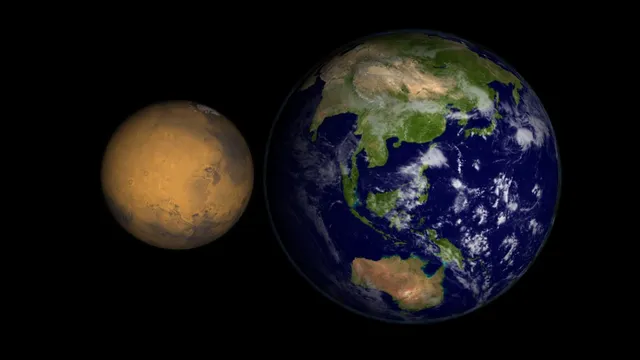
The study, published in Science, focuses on LHS 1140 b, a rocky world located 48 light-years from Earth, orbiting a cool red dwarf star. The planet has long been considered one of the best candidates for studying potentially habitable conditions outside the solar system. Until now, though, no one could say with confidence whether it had an atmosphere at all.
A Prediction That Needed Observational Proof
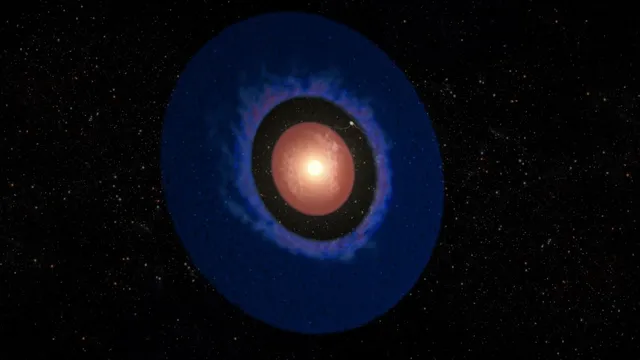
Lead author Collin Cherubim, who recently earned his Ph.D. in Earth and Planetary Sciences from Harvard University, built a theoretical model of LHS 1140 b's atmosphere. The model predicted that the planet's upper atmosphere should contain helium slowly escaping into space.
The idea seemed bold even to Cherubim's colleagues. David Charbonneau, head of the Harvard Department of Astronomy and one of Cherubim's dissertation advisors, was initially skeptical of the plan — it was based purely on mathematical calculations and had never been tested for a rocky world before. But once Cherubim organized telescope time, gathered the data, and demonstrated a statistically solid detection, Charbonneau was convinced.
Catching Helium Escaping Into Space
To test the prediction, the team used the WINERED spectrograph on the Magellan Telescope at Las Campanas Observatory in Chile. They observed a rare alignment: on the same night, two planets in the system transited their star.
The comparison turned out to be telling. One planet showed no evidence of an atmosphere at all. The other, LHS 1140 b, showed a clear signal of helium escaping around it — direct evidence that the planet retains an atmosphere.
Twenty years ago we wondered whether other terrestrial-type planets even existed. Then we learned they're common, and found some in the habitable zone. The next question was whether any of them had managed to keep an atmosphere. Now we know at least one has.Robin Wordsworth, Professor at Harvard University, Cherubim's dissertation advisor
An Atmosphere at Least 3 Billion Years Old
The team estimates that LHS 1140 b's atmosphere has likely persisted for more than 3 billion years. That makes the planet a particularly valuable target for future observations — a long-lived atmosphere suggests stable conditions worth studying in more detail.
Cherubim plans to determine the atmosphere's full composition, and eventually investigate whether the planet has surface oceans or other features associated with habitability. He and his colleagues also intend to apply his model to search for similar worlds among already-known exoplanets.
The researchers stress that this is a model validation, and they hope more observations will follow. The method used for LHS 1140 b — searching for escaping gases with ground-based telescopes — could become an important tool for studying atmospheres on rocky exoplanets in general. Until now, such detections had mostly succeeded for gas giants, so confirming that the method works for small rocky worlds opens up a new direction for the search.