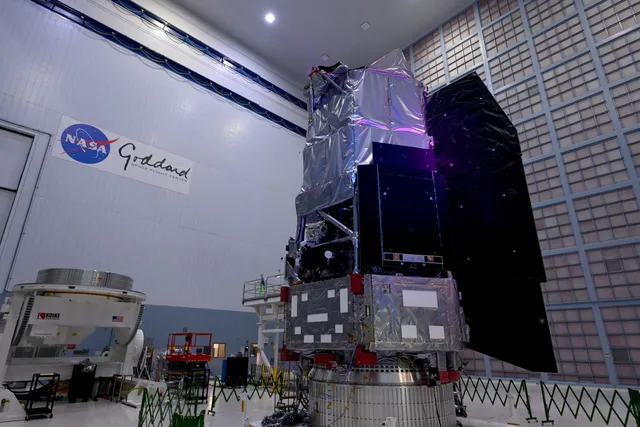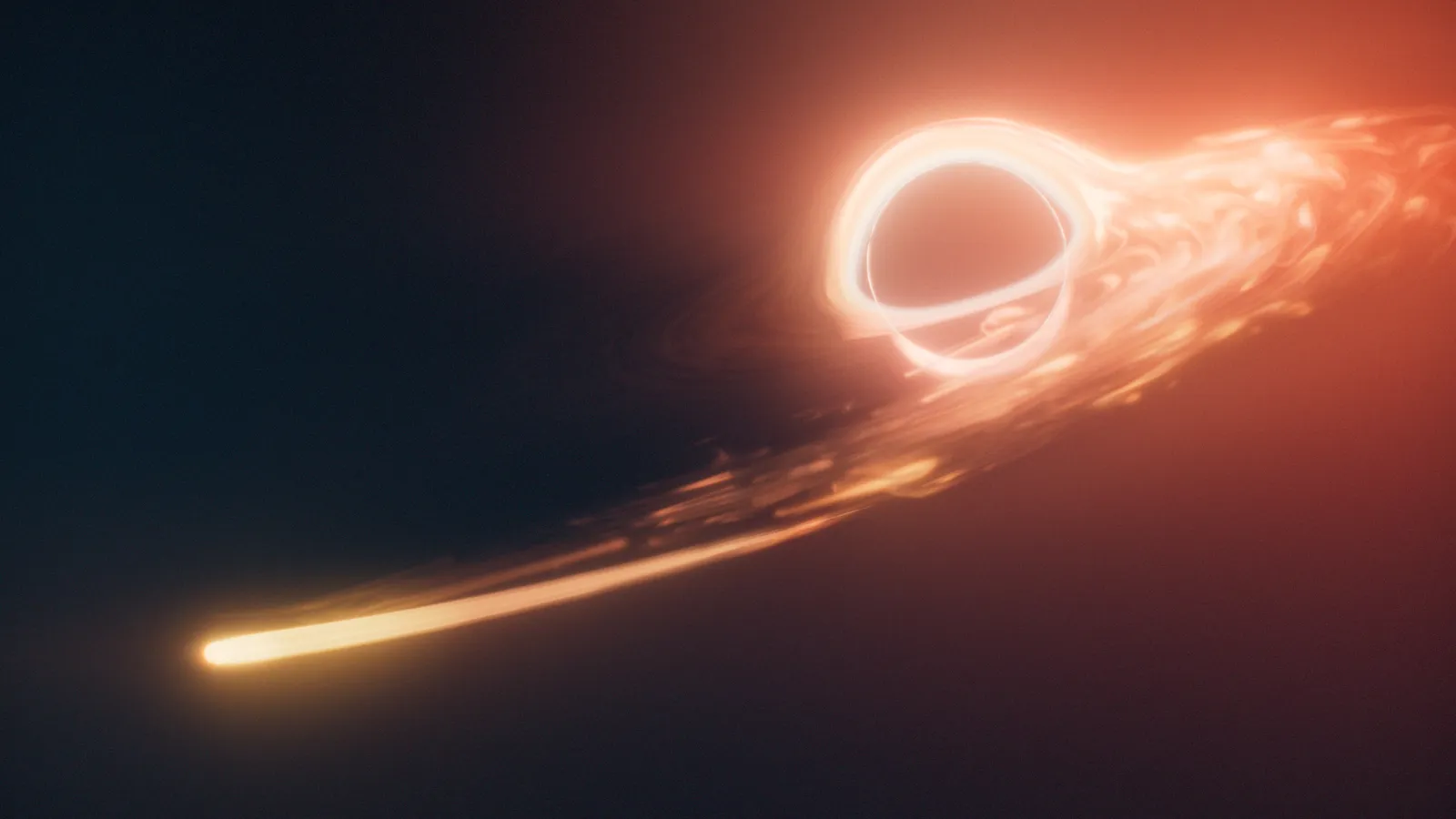
Supermassive black holes hide at the centers of nearly every large galaxy, but spotting them directly is nearly impossible. It is not the black hole itself that shines, but the matter swirling around it, and lighter black holes tend to be too faint to notice. NASA's Nancy Grace Roman Space Telescope, set to launch on August 30, 2026, is expected to solve this problem thanks to rare but bright events: the destruction of stars.
A new study published in The Astrophysical Journal shows that Roman will be able to catch such flares from black holes that existed as far back as 11 billion years ago. This will let astronomers trace how the population of supermassive black holes grew over most of the universe's history.
How a Star Reveals a Black Hole
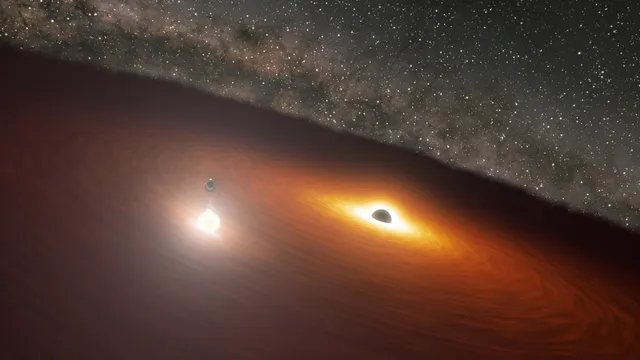
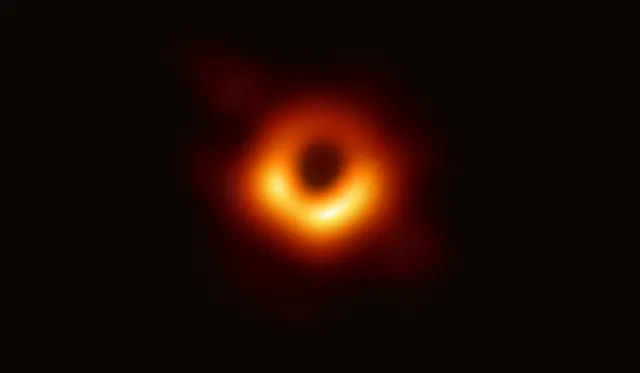
The easiest way to spot a black hole is through its accretion disk — the glowing matter orbiting it before being consumed. But lighter supermassive black holes accrete little material and therefore shine weakly.
That changes when a star strays too close. Gravity tears it apart in what is called a tidal disruption event (TDE). The region around the black hole brightens for a few weeks, outshining its entire host galaxy, before gradually fading.
Such flares are only possible for black holes weighing between 100,000 and 100 million solar masses. Anything heavier than a billion Suns swallows an incoming star whole, with no visible flare — making these giants harder to account for in surveys.
A team led by Mitchell Karmen of Johns Hopkins University modeled how many such events Roman, the ground-based Vera C. Rubin Observatory, and the James Webb Space Telescope could detect. The model accounted for factors that change over cosmic time: the frequency of galaxy mergers, the number of stars in galactic cores, and how densely packed they are.
The rate of TDEs, it turns out, does not simply decline with distance as previously assumed. It rises up to so-called "cosmic noon," roughly 11 to 12 billion years ago, when star formation across the universe peaked, before declining again.
Hunting Flares Across Wavelengths
The key tool for finding TDEs is the High-Latitude Time-Domain Survey, one of Roman's three core community surveys. It repeatedly scans a patch of sky covering about 18 square degrees — equivalent to roughly 90 full moons — allowing astronomers to track brightness changes in the same objects over time.
Roman observes in near-infrared light. Because the universe's expansion stretches light from distant TDEs to longer wavelengths (cosmological redshift), the telescope is well suited to catching events whose light traveled 8 to 11 billion years to reach us. Roman is expected to record about 100 such flares per year.
Rubin Observatory, working in visible light, will spot far more events — thousands to tens of thousands of TDEs annually. But most of those will be relatively nearby. The distant ones, most crucial for understanding black holes' early history, will remain within Roman's reach alone.
Just by counting the number of TDEs as a function of redshift, you can put meaningful constraints on the population of million-solar-mass black holesSuvi Gezari, University of Maryland
Two Theories of How Giants Are Born
Astronomers have already observed truly enormous black holes in the very early universe — so massive that current theories struggle to explain how they grew so large so quickly. They must have started smaller and grown over time. But how much smaller?
The first theory, "light seeds," suggests black holes formed from the remnants of massive dying stars, weighing up to a few hundred solar masses. They then merged with each other and consumed surrounding gas at an extraordinary rate. In this scenario, nearly every young galaxy would host a massive black hole at its core.
The second theory, "heavy seeds," proposes a different start: a black hole is born already weighing up to a million Suns, through the direct collapse of a gas cloud. Such a process would be far rarer, meaning massive black holes should be scarce in early galaxies.
Counting tidal disruption events at different distances will help test both ideas. Once Roman and Rubin begin regular observations, researchers will be able to compare actual detection rates with their model's predictions — and determine which theory better matches reality.