ESO Sets Limit on Satellite Numbers
The European Southern Observatory (ESO) has assessed how satellite megaconstellations could affect astronomy. Current commercial proposals could put more than 1.7 million satellites into orbit, some extremely bright, risking serious interference with telescope observations.
To keep the night sky usable for modern astronomy, no more than 100,000 satellites visible to the naked eye should be allowed in orbit, the study concludes. Megaconstellations have also raised concerns about environmental and health effects, but this is the first study to quantify how much brighter the sky would become.
Atmosphere Found on Habitable Rocky World
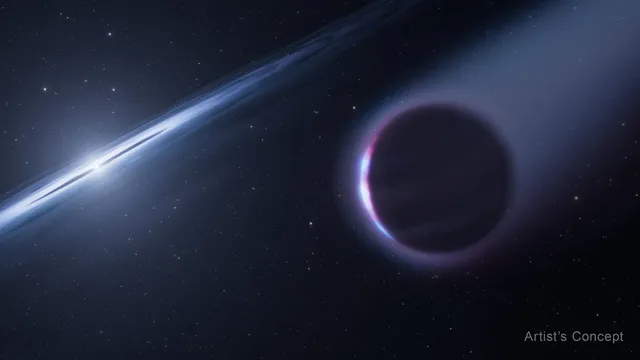
Astronomers have detected an atmosphere around a rocky planet orbiting within the habitable zone of another star for the first time. The planet, LHS 1140 b, orbits a cool red dwarf, and new data suggest its atmosphere is rich in helium.
The finding, led by Collin Cherubim of Harvard University, marks a major milestone in the search for life beyond the solar system. An atmosphere is essential for a planet to support life as we know it, and this result provides the strongest evidence yet that Earth-like worlds in composition and temperature could exist around other stars.
Earth Vanishes Behind Martian Moon
NASA's Perseverance rover captured a sequence of images showing Earth, appearing as a bright dot in the Martian sky, vanish behind the edge of Phobos, Mars' largest moon. The observation was made with the Mastcam-Z camera on July 2, the mission's 1,907th sol, marking the first time such an event has been recorded from the surface of another planet.
Astronomers call this kind of event an occultation, when a larger-appearing object completely blocks another from view. Phobos orbits just 7,800 kilometers from Mars and crosses the Martian sky three times a day, so lining up the crossing with Earth's visibility took careful planning and a bit of luck.
Supernova Explodes Without a Jet
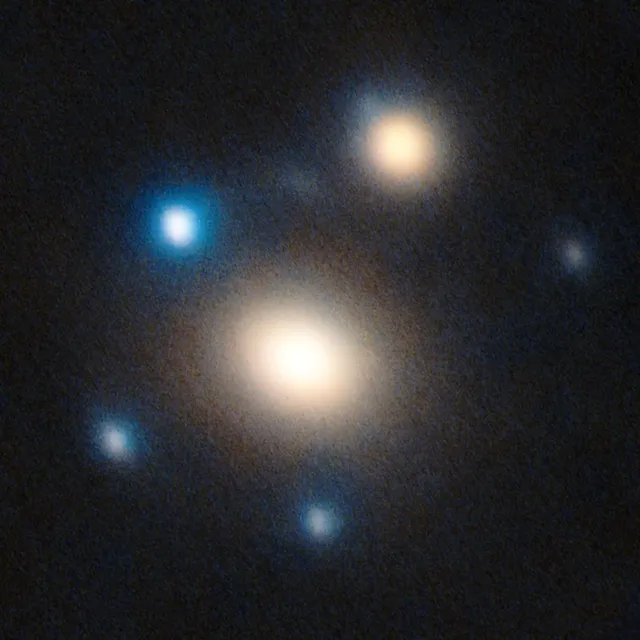
On March 21, 2026, China's Einstein Probe X-ray satellite detected a brief X-ray flash from a galaxy about 500 million light-years away. Astronomers interpreted the event, designated EP260321a, as a "shock breakout" — the moment a shockwave from a collapsing stellar core breaks through the star's outer layers.
A wide range of observatories, including NOIRLab telescopes, NASA's Chandra X-ray Observatory and the Very Large Array, were used to study the explosion. Described in two papers published in The Astrophysical Journal Letters, the supernova may represent a new way for massive stars to die — one that does not involve the relativistic jet typical of gamma-ray bursts.
Few Galaxies Lit Up the Universe
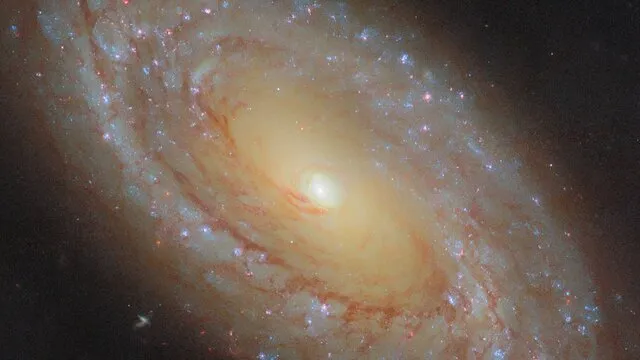
An analysis of 1,428 galaxies observed with JWST's NIRSpec instrument helped pinpoint which galaxies ionized intergalactic gas during the universe's first billion years. Researchers split the sample into "weak" and "strong leakers" based on how much of their ionizing radiation escapes into intergalactic space.
Strong leakers make up only about 20% of the sample but emit 30 times more ionizing photons than weak leakers at the same brightness. Modeling the history of reionization, the authors found that this small population alone reproduces nearly the entire reionization timeline, ending around z = 5.7, while the much larger group of weak leakers had almost no effect.