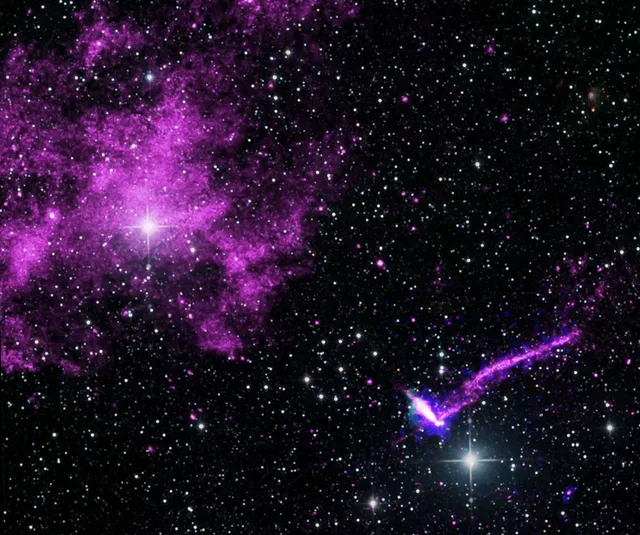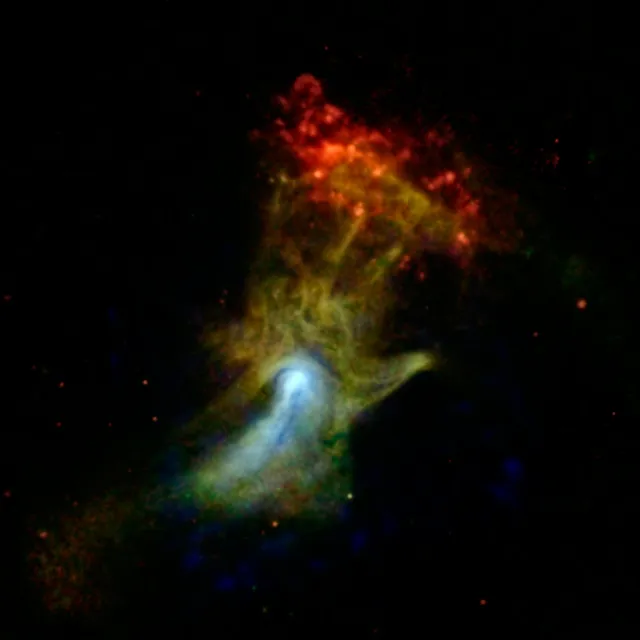
Scientists working with NASA's IXPE space telescope have completed one of the longest single-target observation campaigns in the mission's history: more than 140 hours of continuous monitoring of the magnetar 1E 1547-5408, conducted between March and April 2025. The result could turn out to be more than just another measurement of an exotic star's properties — it may be the first direct evidence of a phenomenon physicists described theoretically 90 years ago but have never observed directly.
What makes a magnetar special
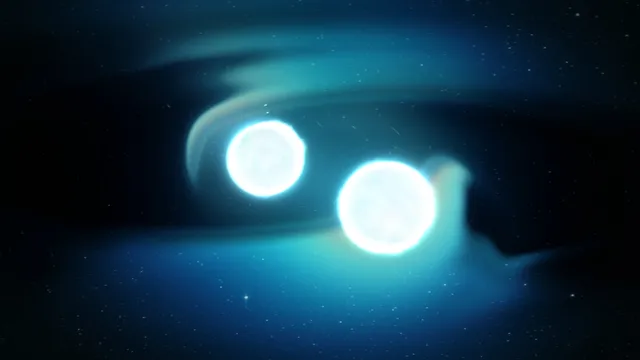
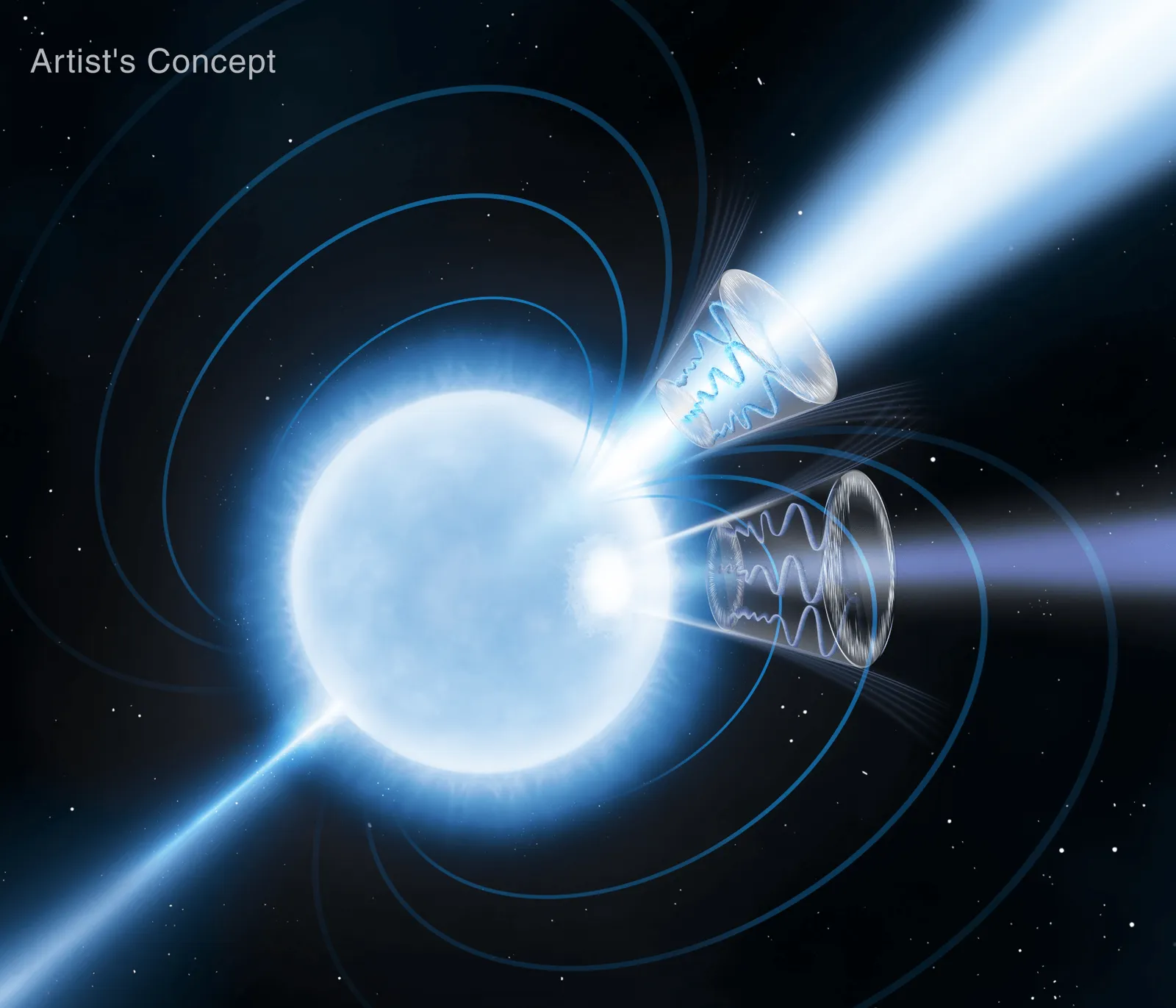
Magnetars are a distinct class of neutron stars, the collapsed remnants of massive stars after a supernova explosion. Their defining feature is an extraordinarily powerful magnetic field. In 1E 1547-5408, that field is roughly a trillion times stronger than the strongest permanent magnets ever built on Earth — making it one of the strongest magnetic fields known anywhere in the observable universe.
Such fields turn magnetars into a unique natural laboratory. No particle accelerator or experimental facility on Earth can reproduce comparable conditions. That's why everything scientists know about how matter — and even space itself — behaves in such extreme magnetic fields has to be tested through observations of stars like this one.
How IXPE detects a magnetic field
IXPE (Imaging X-ray Polarimetry Explorer) specializes in measuring the polarization of X-ray light — the direction in which the electromagnetic wave oscillates. Polarization is difficult to measure for most cosmic sources, yet it carries information about physical processes invisible in ordinary images.
Under a strong enough magnetic field, quantum electrodynamics predicts that even completely empty space — vacuum — can transmit light differently depending on its polarization direction. This resembles how some crystals split a beam of light into two components traveling at different speeds depending on polarization. Theory suggests a similar effect could occur in vacuum itself, given a field strong enough.
That's the subtle shift in polarization the 140-hour observation campaign was designed to catch, as X-rays passed through the magnetar's extreme field.
The research team stresses that the data may point to an effect predicted nearly a century ago, but final confirmation is still lacking.
Why it matters and what comes next
If confirmed by further data, this would be the first direct experimental evidence that vacuum stops being a neutral medium for light under an intense enough magnetic field. Until now, this prediction remained a purely theoretical consequence of quantum electrodynamics — the branch of physics describing how light and charged particles interact at the deepest level.
Confirming such an effect won't change cosmology or everyday life, but it would strengthen confidence in quantum field theory under extreme conditions unreachable by any Earth-based experiment. The magnetar 1E 1547-5408 remains a priority target for IXPE, and further observations should show whether this result holds up.