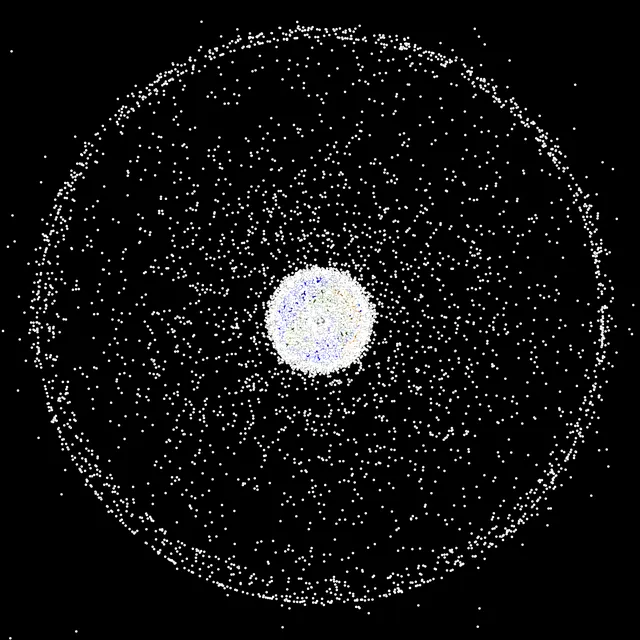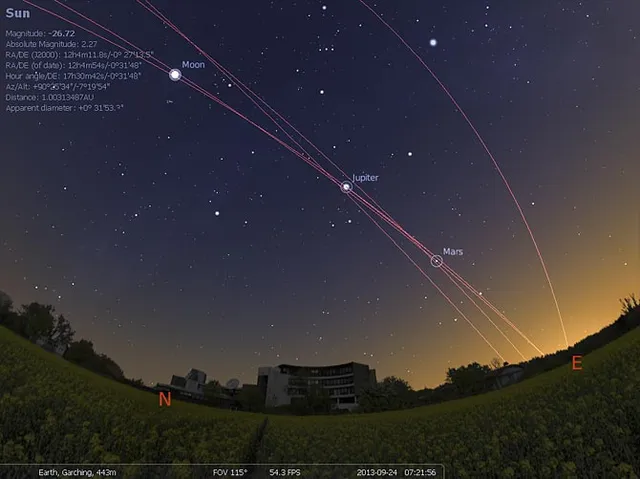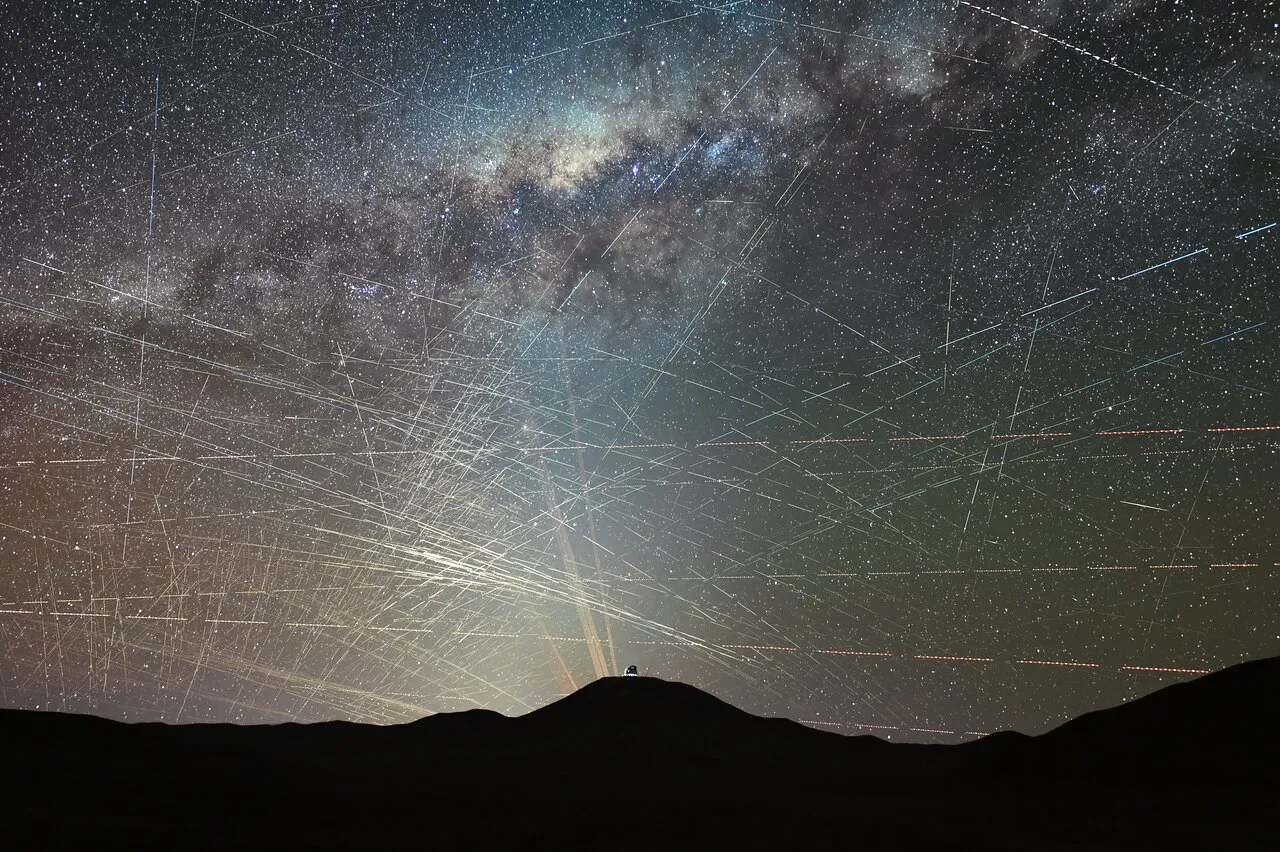
The number of satellites orbiting Earth grows every year, and companies' plans look even more ambitious. According to the European Southern Observatory (ESO), current filings propose launching over 1.7 million spacecraft. Some of these aren't just working communications satellites — they include designs with large reflective surfaces that could be visible to the naked eye.
ESO's new study is the first to turn astronomers' general concern into concrete numbers. Researchers asked directly: how many satellites can orbit Earth before they start seriously interfering with ground-based observations of the night sky.
How the limit was calculated
The team modeled the combined effect of satellite constellations on overall night sky brightness. They accounted not just for the number of spacecraft but for their brightness — a parameter that depends on size, shape, and reflectivity. The bigger and more "mirror-like" a satellite, the more sunlight it scatters even after sunset on the ground, while the satellite itself is still in sunlight at orbital altitude.
The result: a safe threshold of no more than 100,000 faint satellites — ones that stay below naked-eye visibility. That's an order of magnitude lower than the numbers currently proposed by companies.
Why brightness matters more than quantity
The core problem isn't just the sheer number of satellites — it's that some planned spacecraft are deliberately designed to be bright, with large panels or reflective elements. Such objects could be visible even in daylight, and at night they add scattered light to the sky, similar to urban light pollution but coming from space instead.
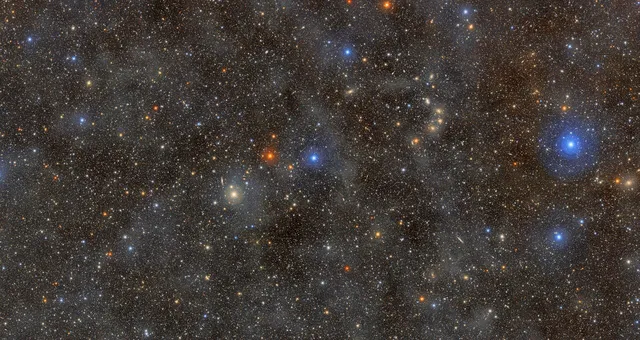
This combination — many satellites plus high brightness — is what researchers describe as having devastating consequences for astronomy. This isn't only about losing the aesthetic view of a starry sky. It's a technical obstacle for modern telescopes, which capture extremely faint light from distant galaxies and stars. Extra background sky brightness makes such observations harder or impossible.
The study's authors also note that massive satellite constellations raise concerns beyond astronomy — including possible effects on the environment and human health — though these aspects weren't examined in detail in the study itself and are mentioned only as related context.
What comes next
ESO's study doesn't ban launches and carries no regulatory power on its own. But it gives regulators and space agencies concrete numerical benchmarks to consider when approving new constellations. For now, the 1.7 million filed satellites remain corporate plans rather than objects actually in orbit. The question is whether anyone will factor in the 100,000-satellite limit before those plans turn into metal and glass overhead.