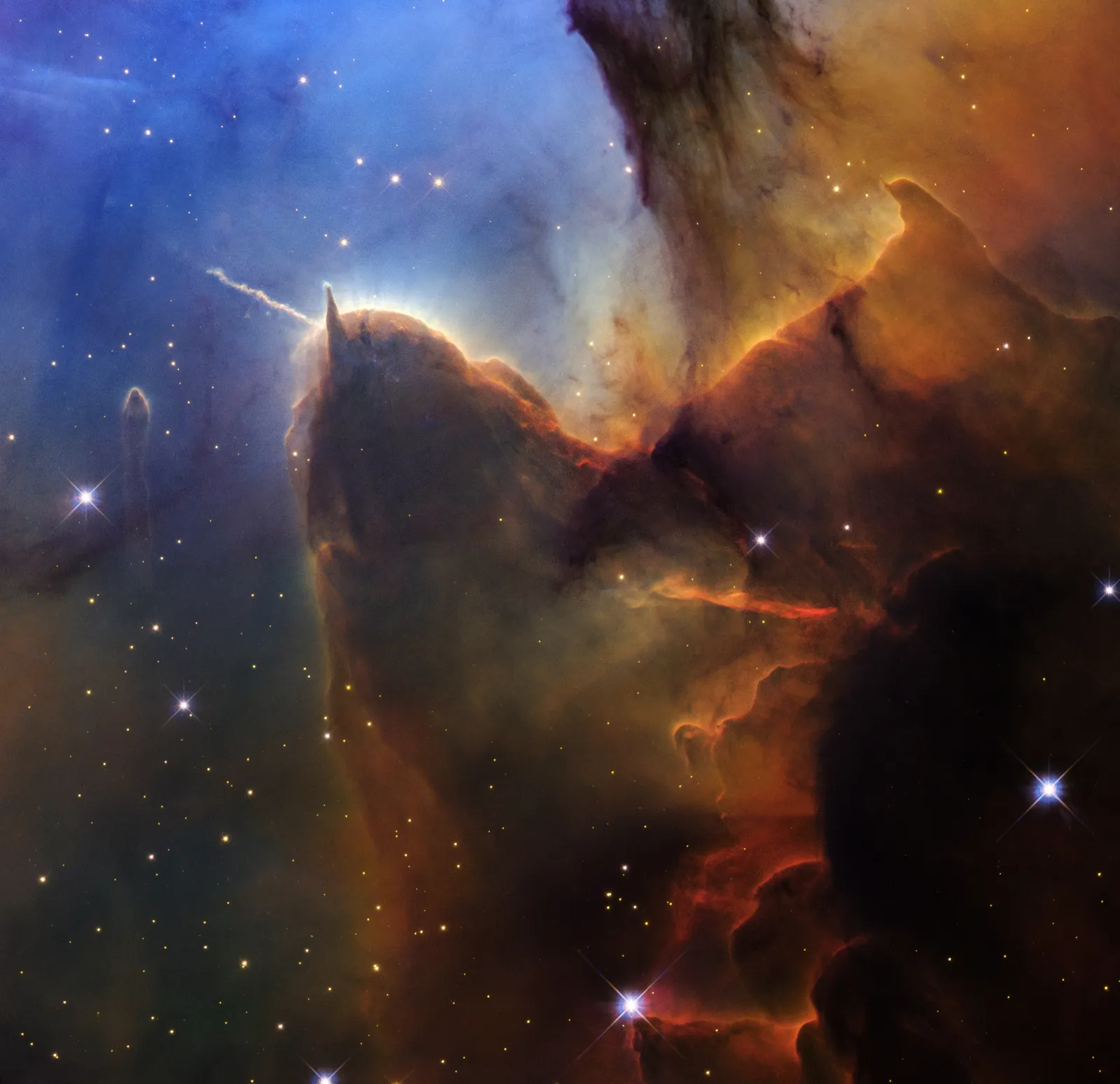
For its 36th anniversary, the Hubble Space Telescope returned to a scene it first captured in 1997 — a small portion of the star-forming Trifid Nebula (Messier 20) in the constellation Sagittarius, roughly 5,000 light-years from Earth.
Comparing the two images, taken 29 years apart, reveals changes visible on human timescales — a rare chance to watch a nebula evolve in something close to real time. The revisit was made possible by the Wide Field Camera 3, installed during the fourth servicing mission, which offers a wider field of view and greater sensitivity than the instrument used in 1997.
The "Cosmic Sea Lemon" and its twin jets
The cloud of gas and dust in the frame has earned the nickname "Cosmic Sea Lemon," for its resemblance to a marine sea slug drifting through space. Hidden in its "head" is a young protostar — a clump of gas and dust still collapsing into a fully formed star.
The cloud's left "horn" is part of Herbig-Haro 399, a plasma jet periodically ejected by that protostar over centuries. Comparing the 1997 and 2026 images shows the jet has visibly expanded over that span.
Such measurements let researchers estimate outflow speeds and how much energy the young star injects into its surroundings. Just below and to the right, jagged orange and red lines trace the counter-jet, running along a natural V-shaped notch in the brown dust.
The darker, more triangular "horn" on the right hides another young star at its tip, appearing as a faint red dot with a tiny jet of its own. A green arc above it may indicate a circumstellar disc being eroded by intense ultraviolet light from nearby massive stars; the clearer surroundings suggest this protostar's formation is nearly complete.
To the immediate left of the Sea Lemon sits a small, faint pillar — most of its gas and dust has been blown away, leaving only the densest material at its tip. Near the center of the frame, a rippling, angled line shifts from bright orange to blazing red; between the two images it appears to move, hinting at yet another jet buried deep in the dust.
Ultraviolet winds and the bubble's edge
Several massive stars outside the frame have been shaping this region for at least 300,000 years. Their powerful ultraviolet winds are blowing an enormous bubble — only a small piece of which appears here — compressing the cloud's gas and dust and triggering new waves of star formation.
The clearest part of the image lies toward the upper left, where the colors shift toward blue. There, strong ultraviolet light has stripped electrons from nearby gas, making it glow, while stellar winds have carved out the bubble by clearing away dust.
At the top of the Sea Lemon's "head," bright yellow gas streams upward — a sign of ultraviolet light plowing into the dark brown dust, stripping and dismantling it. Many ridges and slopes of that dark material will persist for a few million years yet, as starlight slowly eats away at them.
The densest regions hide protostars invisible in visible light. In the far right corner, the dust is so thick the frame turns nearly pitch black; any stars visible there may not even belong to this region, but sit closer to us in the foreground. Elsewhere, bright orange orbs mark stars that have already fully formed and cleared the space around them — over millions of years, the nebula's gas and dust will disperse entirely, leaving only stars behind.
1.7 million observations over 36 years
Over 36 years of operation, Hubble has made more than 1.7 million observations. Its data has fueled peer-reviewed research by nearly 29,000 astronomers, resulting in more than 23,000 publications, with about 1,100 appearing in 2025 alone.
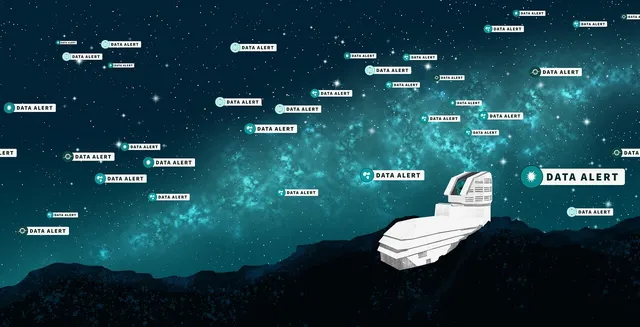
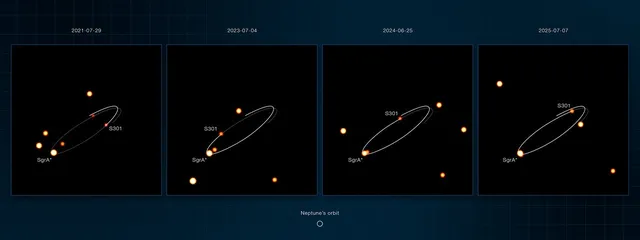
The telescope's 36th year brought discoveries across a wide range: a relic of early galaxy formation, a galaxy so faint it is nearly invisible, and cosmic anomalies flagged with the help of artificial intelligence. Researchers spotted colliding asteroids in another star system for the first time, while Hubble serendipitously captured a comet breaking apart within our own Solar System. Data combined with ESA's Gaia mission also challenged the long-held prediction that the Milky Way will one day collide with Andromeda. Hubble additionally tracked the interstellar comet 3I/ATLAS, which unexpectedly appeared in the Solar System last year, contributing to a rapid estimate of its size.
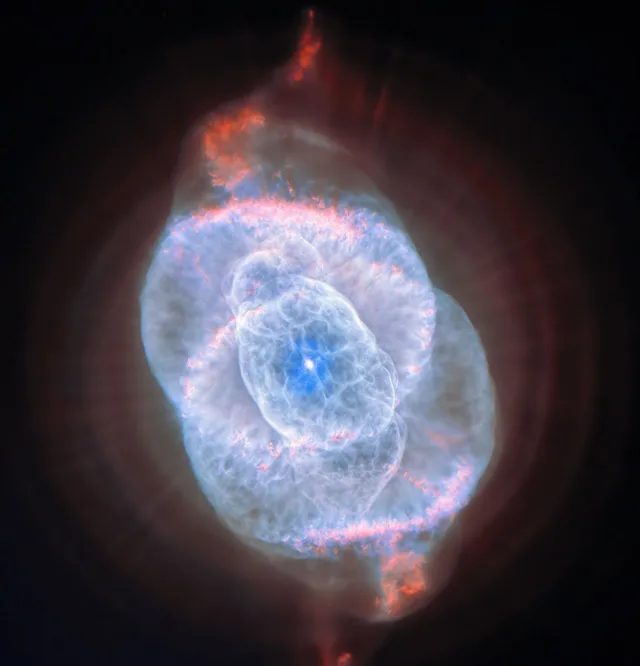
Other striking images from the past year include the star-forming region N11 in the Large Magellanic Cloud, the stardust shells of the Egg Nebula, the Cat's Eye Nebula captured together with ESA's Euclid telescope, and a fresh view of the Crab Nebula. Since 2022, researchers have increasingly combined Hubble's observations with data from the James Webb Space Telescope to push discovery further.