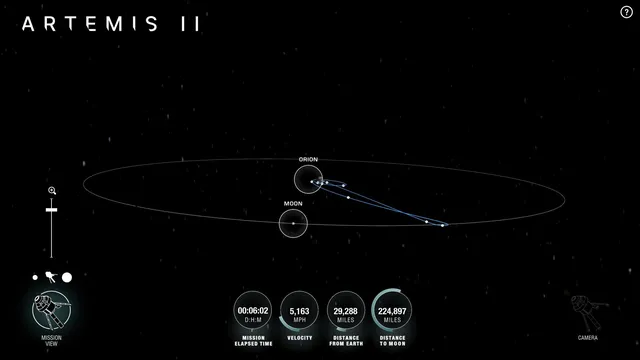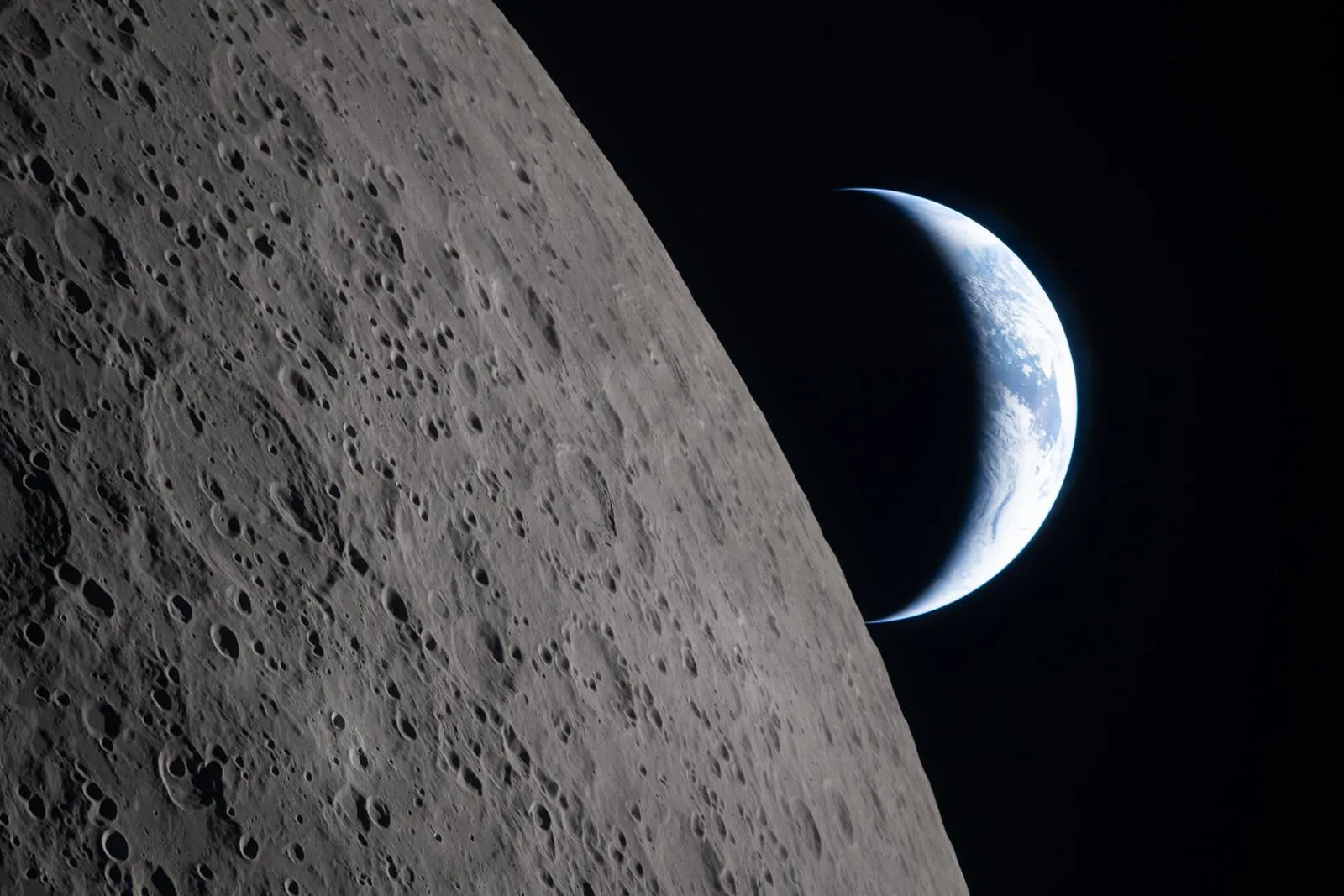
Six days into the Artemis II mission, history was made. At 12:56 p.m. CDT on Monday, April 6, 2026, the crew aboard NASA's Orion spacecraft crossed a threshold that had defined the limits of human spaceflight for 56 years — the record for farthest distance from Earth, set by the Apollo 13 crew in 1970.
Aboard Orion are NASA astronauts Reid Wiseman, Victor Glover, and Christina Koch, along with CSA (Canadian Space Agency) astronaut Jeremy Hansen. They are heading toward the far side of the Moon, where a new record awaits them along with a sight no human has ever witnessed before: a solar eclipse observed from behind the Moon.
A Record That Stood for 56 Years
Apollo 13's record was never planned — it was the result of an emergency. A damaged spacecraft was forced to loop around the Moon on a wider trajectory to get back to Earth, and that detour pushed the crew farther from home than anyone before or since. The mark stood unbroken for nearly six decades.
Artemis II is surpassing it deliberately, as part of the mission's test objectives. At the moment the record was broken, Orion was 248,655 miles (400,234 kilometers) from Earth. At its farthest point, the spacecraft will travel roughly 252,756 miles (406,779 kilometers) — slightly beyond the average Earth-Moon distance of about 238,855 miles (384,400 km) — before looping back home with a new absolute record in human spaceflight.
The Far Side of the Moon and an Eclipse From the Cabin
Flying past the Moon at a closest approach of about 4,067 miles (6,545 kilometers) from the surface, the crew will become the first humans to see certain regions of the Moon's far side with their own eyes. Until now, these areas had only ever been imaged by robotic spacecraft.
During the flyby, the astronauts will also witness a solar eclipse as the Moon passes directly between Orion and the Sun. NASA expects to lose communication with the crew for about 40 minutes during this period, as the Moon blocks signals between the spacecraft and Earth's Deep Space Network. Contact is expected to resume quickly once Orion reemerges from behind the Moon.
Throughout the flyby, a fleet of cameras will capture high-resolution imagery of lunar features never directly observed before, while the astronauts themselves conduct handheld photography from the cabin — four sets of eyes viewing the surface under varying light and texture, considered one of the mission's most valuable scientific tools.
Two New Crater Names: Integrity and Carroll
The crew used the moment to propose names for two lunar craters. The first, Integrity, honors the call sign of the Orion spacecraft itself. The second, Carroll, honors the late wife of astronaut Reid Wiseman. Once the mission concludes, both proposals will be formally submitted to the International Astronomical Union, the organization responsible for naming celestial bodies and their surface features.
As the record was surpassed, the crew sent down brief remarks. Jeremy Hansen spoke on behalf of all four:
From the cabin of Integrity here, as we surpass the furthest distance humans have ever traveled from planet Earth, we do so in honoring the extraordinary efforts and feats of our predecessors in human space exploration. We will continue our journey even further into space before Mother Earth succeeds in pulling us back to everything that we hold dear. But we most importantly choose this moment to challenge this generation and the next to make sure this record is not long-lived.Jeremy Hansen, CSA astronaut
What Comes Next
Artemis II launched on April 1 atop an SLS (Space Launch System) rocket from NASA's Kennedy Space Center in Florida. After a series of burns to break free of Earth orbit, Orion set its course for the Moon. The crew has now passed the halfway point of the mission.
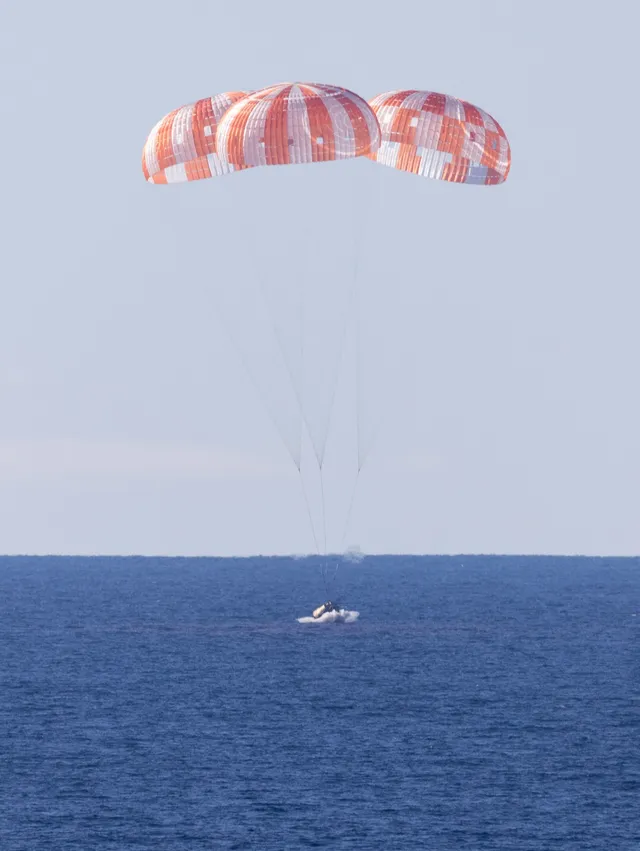
Splashdown is scheduled for April 10 off the coast of San Diego. Recovery teams will retrieve the crew by helicopter and bring them aboard the USS John P. Murtha, where they will undergo initial post-flight medical evaluations before returning to NASA's Johnson Space Center in Houston.
The imagery, telemetry, and communications data gathered during the flight will help shape the design of future Artemis missions, as NASA works toward establishing a permanent lunar base and preparing for the first crewed missions to Mars.