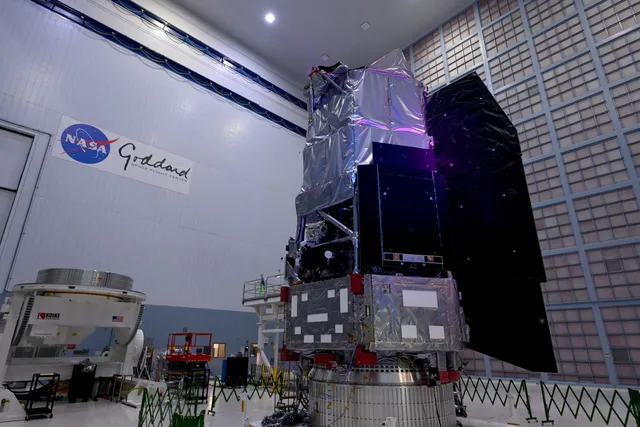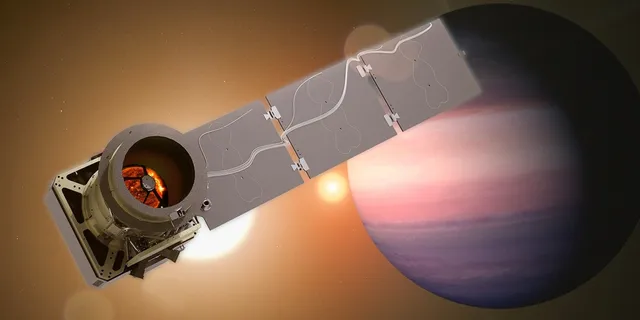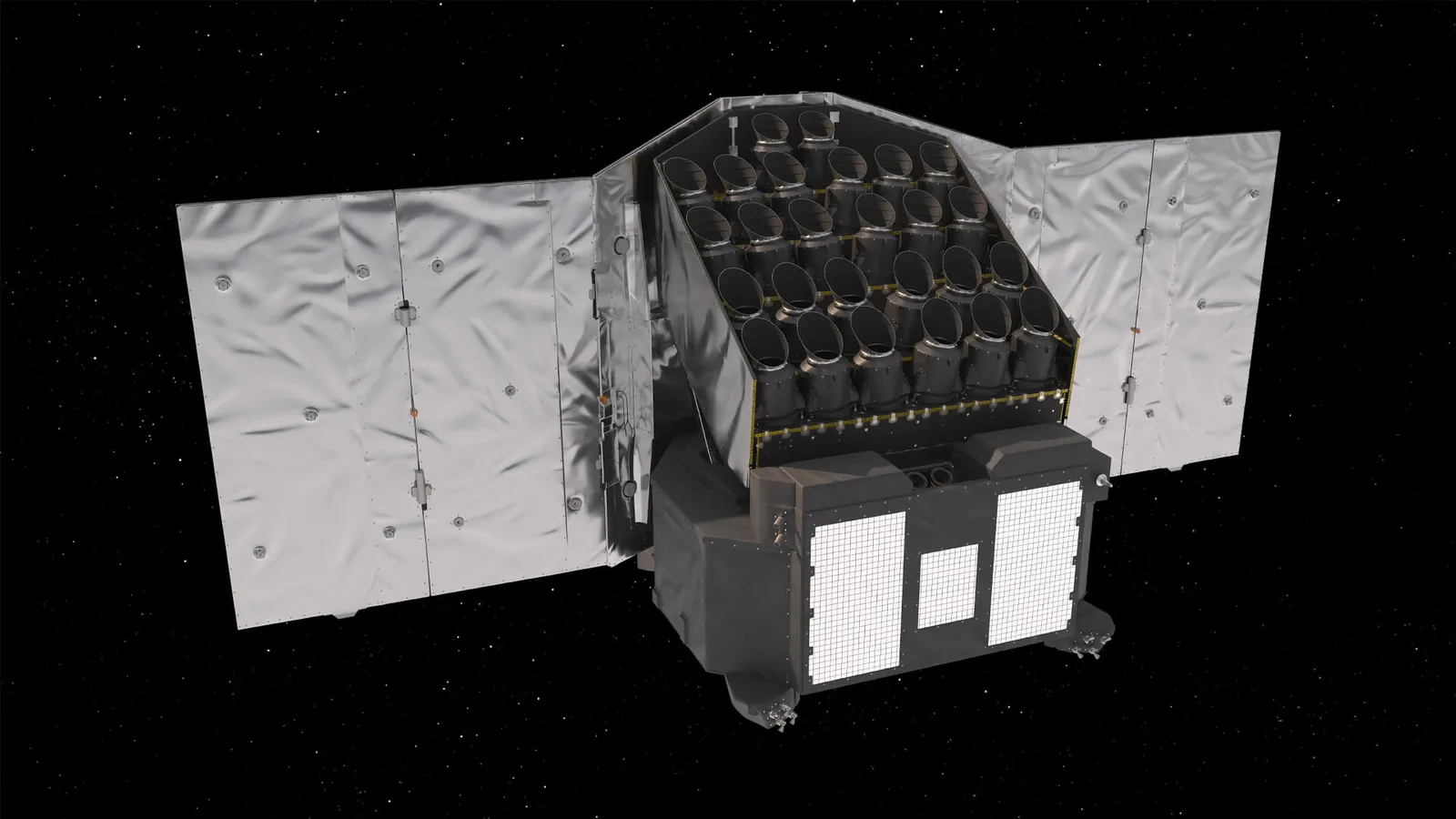
The search for Earth-like planets starts not with a telescope, but with a catalog. Before any spacecraft records a single transit — the moment a planet crosses in front of its star and slightly dims its light — the mission team must decide which stars are worth watching in the first place. For Europe's PLATO mission, set to launch in 2027, that question has become the subject of its own dedicated study.
Researchers from the PLATO consortium have published the methodology behind selecting the so-called Prime Sample — a set of 15,000 stars that will receive the mission's full package of ground-based follow-up support. This is not simply a list of interesting targets, but the outcome of a multi-step ranking process applied to a much larger source catalog, the PLATO Input Catalog (PIC).
Why only 15,000 stars make the cut
PLATO will monitor its LOPS2 field in the southern sky continuously for at least two years — long enough to catch repeated transits of planets with orbital periods comparable to Earth's own year. Over that time, the telescope will register signals from hundreds of thousands of stars simultaneously.
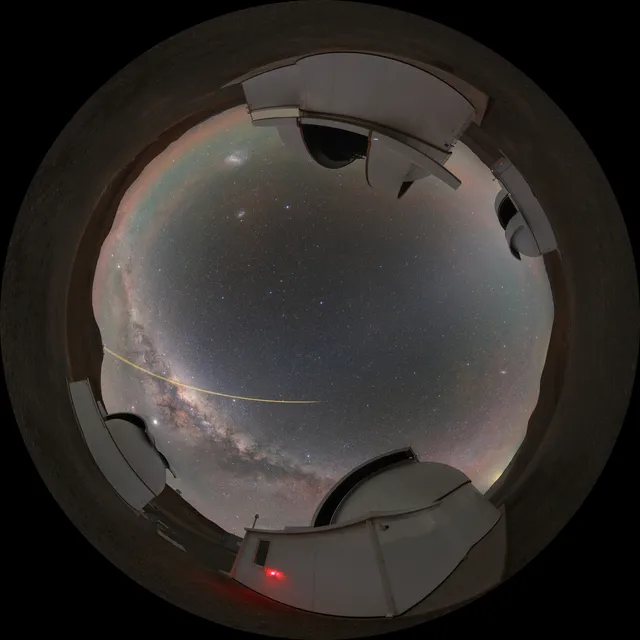
But a transit signal alone is only half the story. Confirming that a dip in brightness is truly caused by a planet — rather than stellar activity or a background binary star — requires additional observations from the ground. And determining a planet's mass, not just its size, requires radial velocity measurements: tiny wobbles in a star's motion caused by a planet's gravitational pull. These follow-up observations are costly and depend on access to large ground-based telescopes, so resources cannot be spread across the entire PLATO catalog at once.
That is why the consortium defines a priority list in advance — stars around which the search for Earth-like planets has the best chance of success and can realistically be confirmed with existing ground-based facilities.
Selection criteria: brightness, star type, noise
The methodology described in the new paper ranks stars using several parameters at once. Stellar brightness matters because brighter stars yield more precise signals and simpler ground-based confirmation. Spectral type is equally important, since the mission is primarily focused on Sun-like stars, as these are the ones around which Earth-like conditions are being sought.
The team also assesses stellar noise levels — a star's intrinsic variability and pulsations, which can mask or mimic a transit signal. Finally, each target's accessibility for further observation with existing ground-based instruments is factored in: some stars are technically observable by PLATO but poorly suited for spectroscopy from Earth due to their position in the sky or other constraints.
The authors note that the method is not tied exclusively to PLATO. The same set of metrics and thresholds can be applied to rank any catalog of stars surveyed for transiting planets, regardless of the specific mission or survey involved.
Ground-based program: confirming size and mass
The Prime Sample is effectively a list of commitments made by the consortium. Through its Ground-based Observing Program, the PLATO team guarantees that planet candidates discovered around these 15,000 stars will receive photometric confirmation and mass measurements via radial velocity curves.
This combination is essential. Only by pairing a planet's size — derived from transit photometry — with its mass — derived from radial velocities — can researchers calculate density, and therefore determine whether a planet is rocky or gaseous. Without both measurements, it is impossible to claim that a newly found object truly resembles Earth rather than simply matching its size.
What comes next
The Prime Sample list will be made public nine months before launch, alongside ESA's first Guest Observer call for proposals for outside researchers. This gives the scientific community time to prepare its own observation programs well before PLATO begins collecting data.
If the mission achieves its stated goal, it would mark the first time both the size and the mass of a potentially Earth-like planet around a Sun-like star are measured through two independent methods at once.