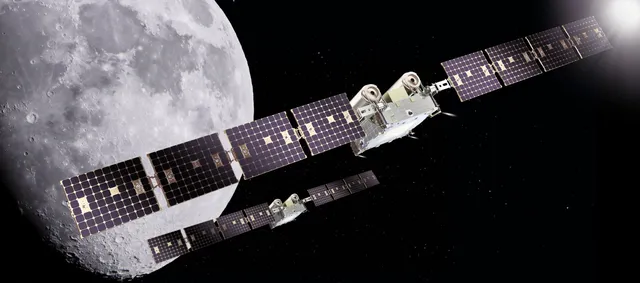
On April 10, 2026, the history of human lunar flight gained a new chapter: for the first time in more than half a century, a crew returned to Earth after flying around the Moon. The Artemis II mission lasted nearly 10 days and served as the first crewed test of the Orion spacecraft and the SLS (Space Launch System) rocket.
For NASA, this was not just a flight but a test of the entire architecture meant to carry astronauts to the lunar surface within two years, during the Artemis III mission.
A journey of more than a million kilometers
The SLS rocket lifted off at 6:35 p.m. Eastern time on April 1 from Launch Pad 39B at Kennedy Space Center in Florida. At liftoff it generated 8.8 million pounds of thrust (roughly 39 meganewtons), sending the Orion capsule, named Integrity by the crew, onto its planned trajectory.
On the first day, astronauts and ground teams checked out all of the spacecraft's systems. NASA also deployed four CubeSats from international partners into Earth orbit.
On the second day, with all systems confirmed healthy, Orion's service module fired its main engine, placing the crew on a path that brought them to within 4,067 miles (6,545 km) of the lunar surface at closest approach.
At their farthest point from home — 252,756 miles (406,700 km) — the crew surpassed the distance record held by the Apollo 13 astronauts since 1970. Over the course of the mission, Orion traveled a total of 694,481 miles (1,117,900 km).
The lunar flyby and onboard science
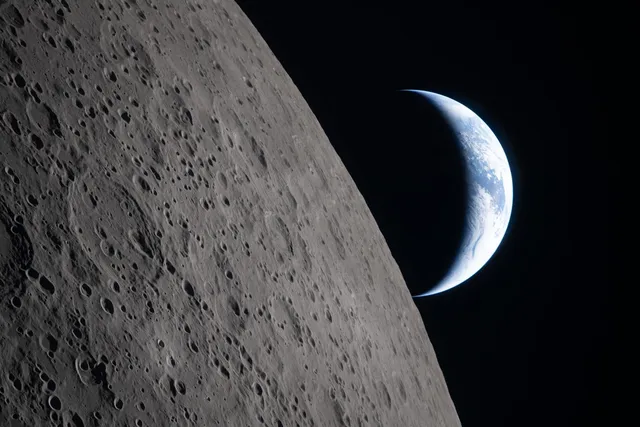

During the April 6 lunar flyby, the crew captured more than 7,000 images of the surface. Among them were impact craters, ancient lava flows, views of the Milky Way, and rare shots of earthset and earthrise — the moments when Earth disappears behind the Moon's limb and reappears again.
The astronauts also observed a solar eclipse, as the Moon blocked the Sun from Orion's vantage point, and documented the terminator region — the boundary between lunar day and night — near the south pole. There, low-angle sunlight casts long shadows, conditions similar to what the Artemis III crew will encounter when they land near the lunar south pole in 2028.
The crew proposed names for two lunar craters and reported meteoroid impact flashes on the Moon's night side.
Alongside this, medical research continued on board, including the AVATAR investigation into how human tissue responds to microgravity and deep-space radiation. This data is essential for NASA's planning of longer missions — and, eventually, flights to Mars.
Engineers also ran the first crewed evaluation of Orion's life support systems, while astronauts took manual control of the spacecraft several times. These maneuvers will inform future rendezvous and docking with lunar landers during Artemis III.
Coming home and what comes next
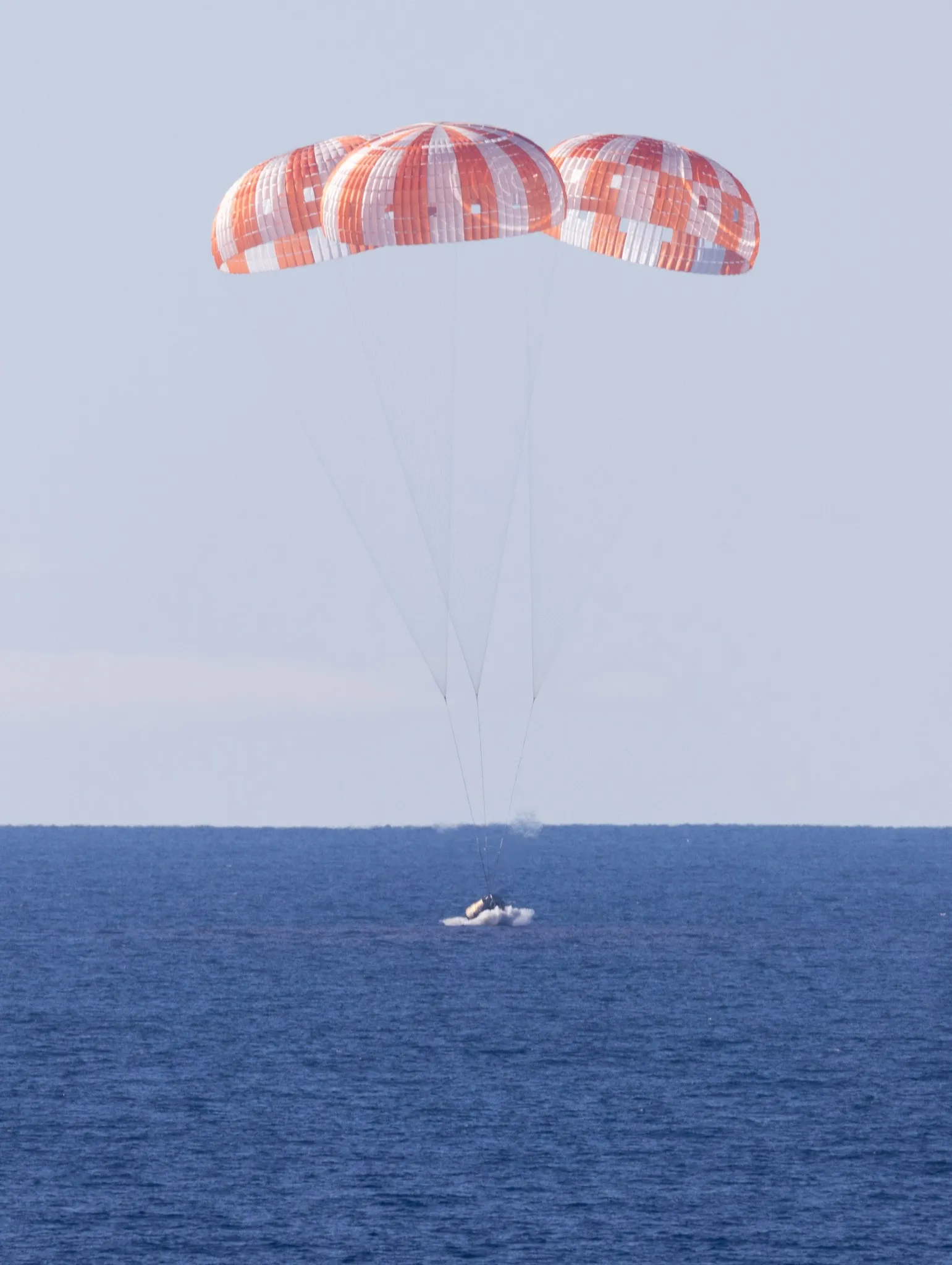
At 5:07 p.m. Pacific time on April 10, the Orion capsule splashed down in the Pacific Ocean off the coast of San Diego. Reentry speeds reached about 25,000 miles per hour (40,200 km/h) — the velocity at which Orion's entry, descent, and landing systems had to protect four human lives.
A combined NASA and U.S. military team met the crew, helping the astronauts out of the capsule in open water before flying them by helicopter to the USS John P. Murtha for initial medical checks. The crew was expected to return to NASA's Johnson Space Center in Houston on April 11.
NASA Associate Administrator Amit Kshatriya said the moment belonged to the thousands of people across fourteen countries who built, tested, and trusted the vehicle.
Fifty-three years ago, humanity left the Moon. This time, we returned to stay.Amit Kshatriya, NASA Associate Administrator
Artemis II was not the destination — it was proof of concept. Next comes Artemis III, when a new Orion crew will first test integrated operations with commercially built Moon landers in low Earth orbit before attempting a landing on the lunar surface in 2028.