Searching for life beyond the Solar System requires more than just finding a planet — it means reading its atmospheric composition in enough detail to tell a genuine biosignature apart from a false alarm. That challenge is shaping the plans for the next generation of space telescopes, and it's revealing a split in approach between NASA and Europe.
Two Paths to the Same Goal
NASA's flagship project is the Habitable Worlds Observatory (HWO), built around finding potentially habitable worlds, operating mainly in visible and near-infrared light. Within ESA's Voyage 2050 programme, the Senior Committee set a different priority — detecting habitable exoplanet atmospheres specifically in the mid-infrared. The mission best suited for that task is the Large Interferometer for Exoplanets (LIFE), a global science collaboration coordinated out of ETH Zürich.
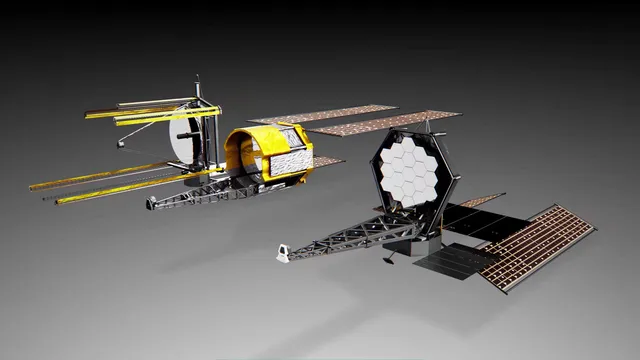
LIFE isn't a single large telescope but a group of mirrors working together as an interferometer. This approach combines light collected by multiple instruments to achieve spatial resolution unattainable by any single telescope of practical size. For exoplanet research, that's essential — you need to separate a planet's faint light from the far brighter glow of its host star.
What LIFE Would Reveal That HWO Cannot
LIFE's central advantage is operating in the mid-infrared. That range exposes a wider range of molecular biosignatures, detectable at lower concentrations than what's achievable for HWO in visible light.
Beyond biosignatures themselves, context matters — without it, any detection stays ambiguous. LIFE can measure a planet's surface temperature and atmospheric pressure, basic parameters that determine whether conditions could even support liquid water and life as we understand it.
Then there's methane. This molecule is a key discriminator: its presence or absence helps distinguish a genuine biosignature from a false positive caused by non-biological processes. Methane is readily visible in the mid-infrared, whereas for HWO, detecting it will be "much harder or impossible," according to the research.
There's also a purely technical limitation for HWO — spatial resolution. Many of the nearest rocky exoplanets have already been found through radial velocity searches, which detect a star's wobble caused by an orbiting planet's gravity. But HWO simply won't be able to separate the light of these planets from their host stars due to limited resolution. LIFE, thanks to its interferometric design, can overcome that barrier and study exactly these nearby worlds — the ones most accessible for detailed follow-up.
The UK's Potential Role
The study highlights the UK's accumulated expertise in building infrared instruments. The authors see this as grounds for the country to take a leading role in realising the ambitious LIFE mission, rather than remaining a peripheral participant in a project centred around ETH Zürich.
For now, LIFE remains at the stage of scientific and technical concept development rather than hardware construction. But the fact that a European science committee identified the mid-infrared as the priority range for detecting life shows that the rivalry between HWO and LIFE isn't competition for its own sake — it's an attempt to cover the gaps that neither method can close on its own.