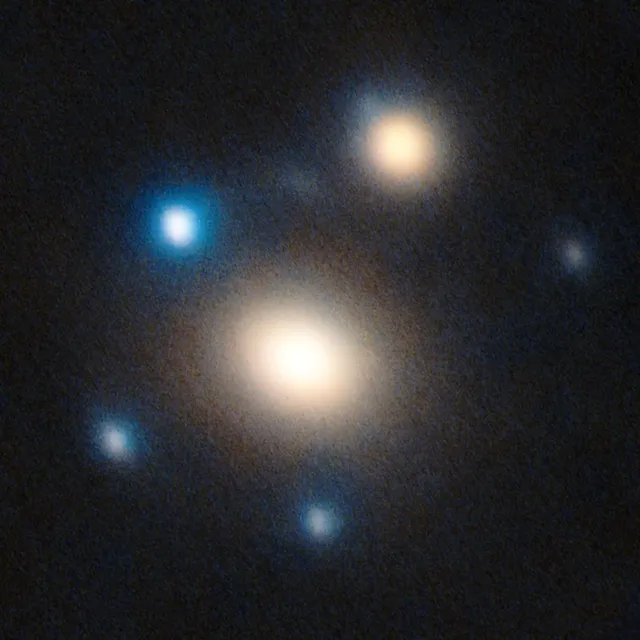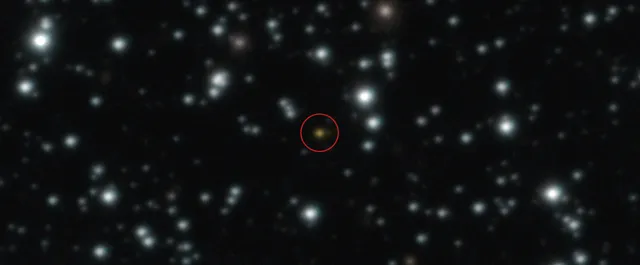
Astronomers have detected X-rays from AT 2016blu for the first time — a star in the galaxy NGC 4559 that for years has been classified as a "supernova impostor." That label describes stars that undergo dramatic outbursts resembling supernova explosions in brightness, yet survive the event. New research suggests that AT 2016blu's outbursts are not driven by instability in the star itself, but by a binary system that includes a compact object — either a neutron star or a black hole.
What Makes AT 2016blu Unusual
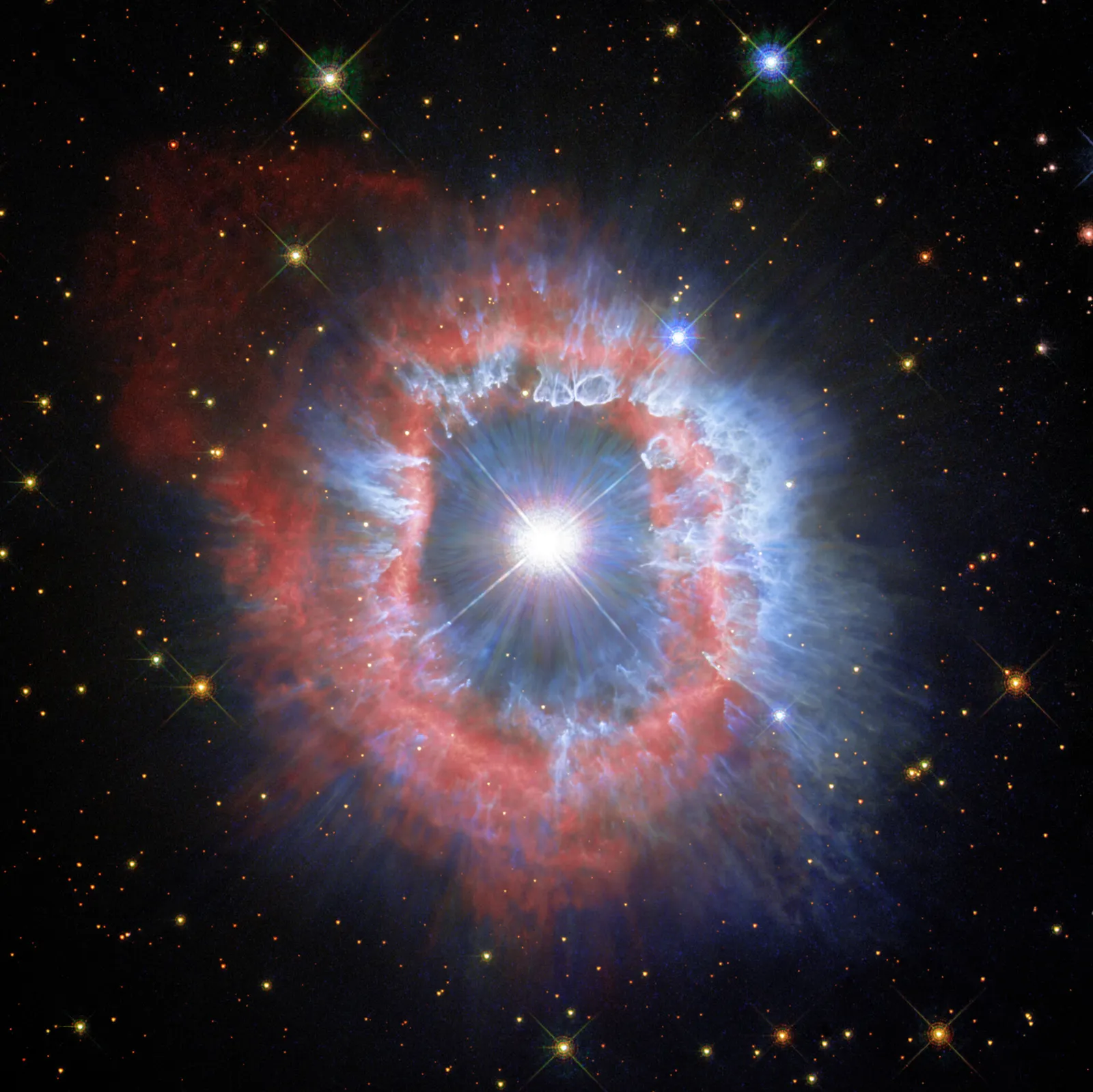
The system's primary star is a luminous blue variable (LBV) — a massive, unstable star that periodically sheds significant amounts of material through a powerful stellar wind. Its mass is estimated at no less than 33 solar masses. Between 2012 and June 2026, astronomers recorded 27 quasiperiodic outbursts, spaced roughly 113 days apart. This regularity pointed researchers toward a binary system with an eccentric orbit: when the compact companion swings through its closest approach to the primary (periastron), it captures material from the star's wind, triggering an outburst.
How X-rays Confirmed the Accretion Hypothesis
The key evidence came from the Chandra X-ray Observatory. It turned out that Chandra had serendipitously observed the same patch of sky back in 2001-2002 — well before AT 2016blu's first documented outburst in 2012. But the stacked archival data showed no X-ray detection at all: the source was quiet at the time.
That changed once researchers, tracking the star's visual-wavelength variability, predicted the timing of its next outburst and triggered a dedicated Chandra Target-of-Opportunity observation. In March 2026, the telescope detected the source across five closely spaced observing epochs. The resulting X-ray luminosity came out to log L_X ≈ 38.64 ± 0.11 (about 4.4×10³⁸ erg per second), with an accretion rate of at least 8×10⁻⁸ solar masses per year. These figures are consistent with a compact companion accreting material from the massive donor star's wind.
Why It Matters: A New Kind of X-ray Binary
The researchers conclude that AT 2016blu is the first known case in which an LBV classified as a supernova impostor has its outbursts driven by intermittent accretion onto a compact object. In effect, the system is a high-mass X-ray binary — a class in which a massive donor star feeds material to a compact companion.
The closest known analog is SN 2010da, another object once labeled a supernova impostor before being recognized as an X-ray binary. There, however, the donor is a red supergiant, whereas in AT 2016blu it's a luminous blue variable. That makes AT 2016blu a unique example of how tracking outbursts from massive, unstable stars can reshape their classification over time — from unpredictable standalone objects into components of binary systems with a rare but predictable rhythm of activity.
Further observations of such systems may reveal how common this mechanism is among other objects still labeled as ordinary supernova impostors, and how many of them actually hide a compact companion.