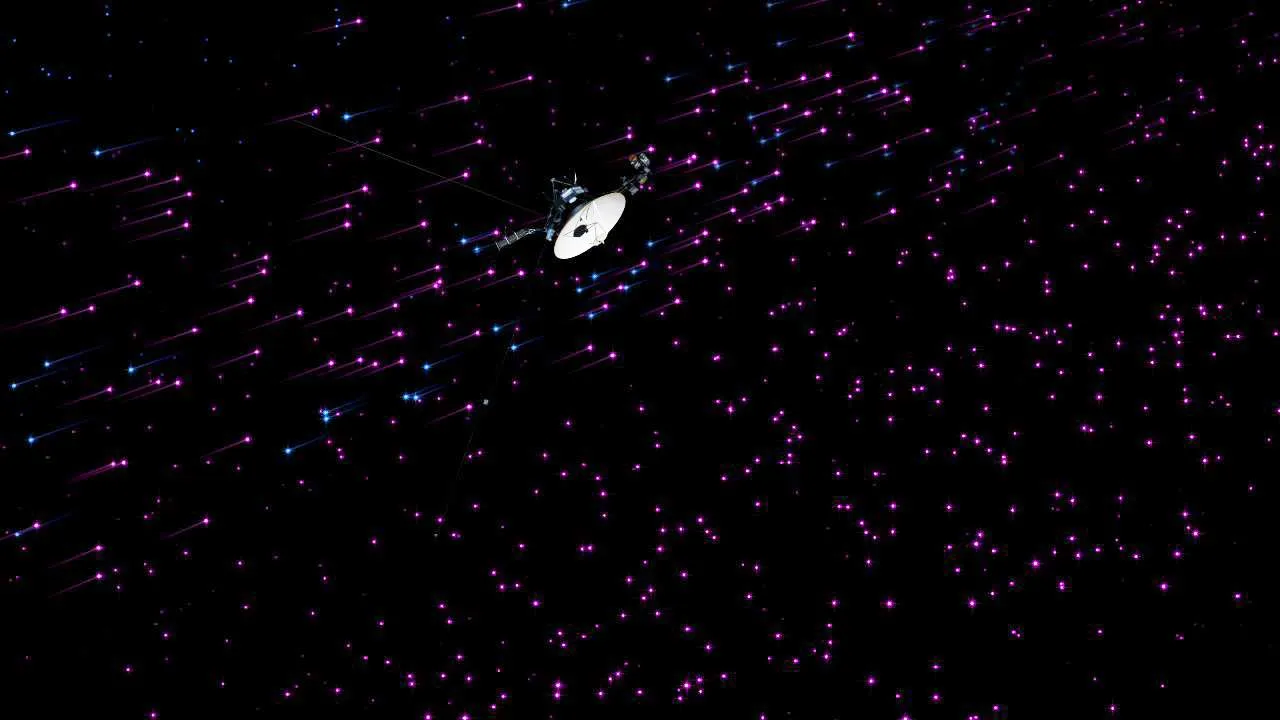
Voyager 1 remains the most distant human-made object. It is now about 24 billion km from Earth and travels at 61,155 km/h. The past few weeks were busy for the mission. In September the team completed a months-long effort to save power, and in October the probe suddenly dropped out of contact for two days.
Both events belong to one story. A spacecraft almost half a century old is running on an ever thinner power margin, and engineers have to find creative solutions to keep it talking to Earth.
The "Big Bang": three devices for three
In early September, engineers switched off three devices on Voyager 1 and replaced them with three that use less power. The effort was nicknamed the "Big Bang." About six weeks earlier, the team had performed the same swap on Voyager 2.
What made it unusual was that the swaps had to happen simultaneously. The six devices help keep the spacecraft warm enough to operate in the cold of space. Only by swapping all three at once could the team both cut power use and make sure heat stayed properly distributed across the spacecraft.
The payoff is practical. Without the Big Bang, the mission would have had to turn off another instrument on Voyager 1 as early as summer 2027. Now the remaining science instruments can keep operating longer than previously expected.
Where the power comes from, and why there is less of it
The Voyagers draw electricity from radioisotope thermoelectric generators. These devices convert heat from decaying plutonium into electric current. The plutonium supply keeps shrinking, so each probe loses about 4 watts of power every year.
For that reason the team has already turned off two science instruments. The mission launched in 1977 with 10 dedicated science instruments. Some were switched off after the planetary encounters. Others were kept running to study the outer region of the heliosphere, the bubble of particles and magnetic fields created by the Sun. Both Voyagers are now in interstellar space, outside the heliosphere, and remain the only spacecraft to have studied this region directly.
Two days without a signal
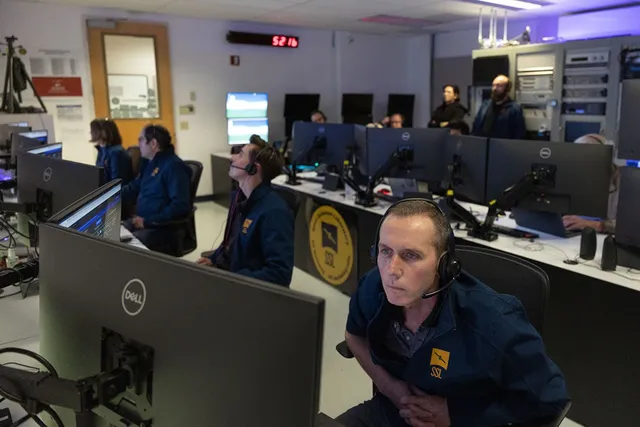
On Oct. 18 and 19, the Deep Space Network, a system of large antennas at three sites around the globe, could not detect a radio signal from Voyager 1. There were two scheduled communication attempts, 24 hours apart. The signal reappeared on Oct. 20, before the team had sent any commands to troubleshoot. Contact has held since then.
Engineers are still investigating the cause. So far they know that one group of thrusters went offline and their backups turned on. That swap is programmed to happen automatically if the spacecraft's computers detect a problem with the active thrusters. This is called fault protection. The spacecraft puts itself into a safe, stable configuration and pauses normal operations, giving engineers time to diagnose the issue.
This is the first time we've seen the spacecraft do something like this, but we are also at a point in the mission where we have to expect the unexpected.Kareem Badaruddin, Voyager mission manager at NASA's Jet Propulsion Laboratory
What it means
Both stories show the mode the mission now lives in. The power budget shrinks every year, so each decision becomes a trade-off between science and keeping the spacecraft alive. The Big Bang bought time before the next instrument must go dark, but it did not reverse the trend.
The October episode showed something else. The automation did what it was built to do and moved the spacecraft to a safe state. At the same time, the team had never seen this behavior before, and the cause is still unknown. For a probe flying for almost fifty years, every new failure scenario is a new problem to solve.
One light-day
On Nov. 18, Voyager 1 will be 25.89 billion km (16.09 billion miles) from Earth. That is one light-day: the distance light travels in 24 hours. Radio waves will need a day to reach the probe, and the reply will need another day to come back.
If you want to say "hello" to Voyager, you send your message and then you go home and you wait two days before you finally get a response.Suzanne Dodd, Voyager project manager at JPL
The spacecraft itself will notice no change in its surroundings, and nothing will change on board. The mark is symbolic. It shows the vastness of the universe and the endurance of humanity's most distant explorer.