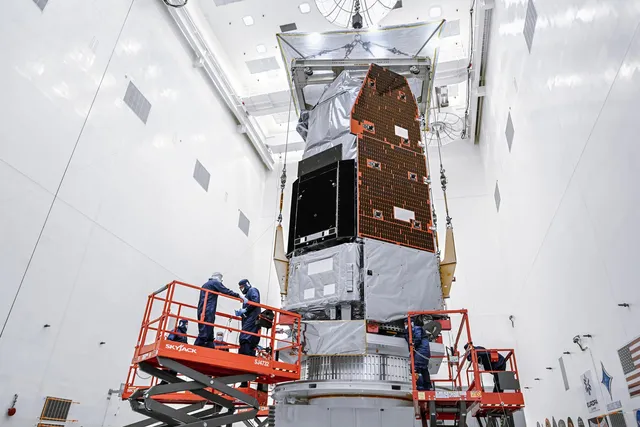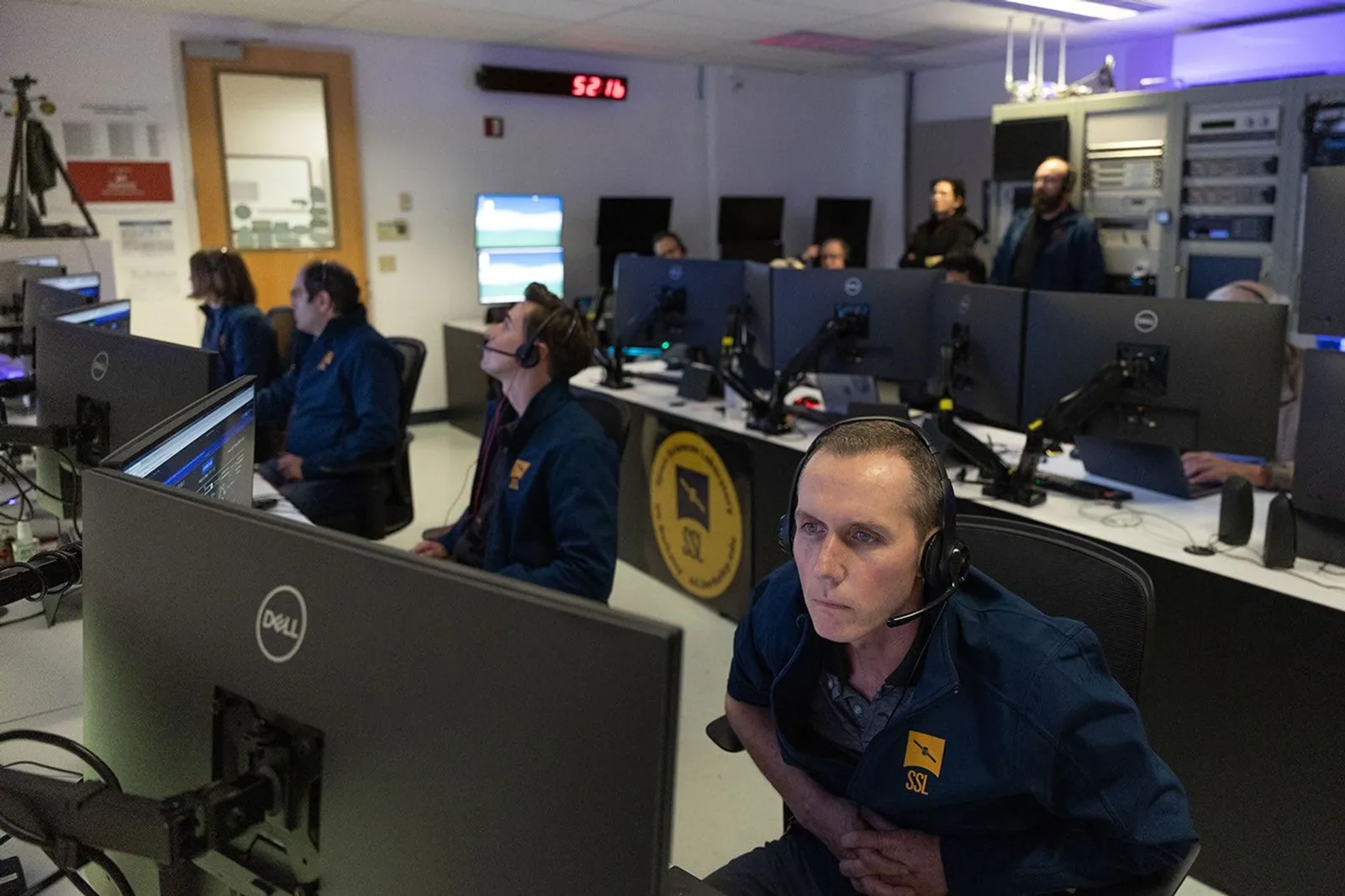
The two spacecraft of NASA's ESCAPADE mission (Escape and Plasma Acceleration and Dynamics Explorers) have completed a powered flyby of Earth and are now on their way to Mars. The first spacecraft made its closest approach on Nov. 7, 2026, and the second followed two days later, on Nov. 9. Both maneuvers went flawlessly, and arrival at Mars is planned for September 2027.
How the powered flyby works
During the flyby, each spacecraft combined Earth's gravity with a burn of its own engine. The first made its closest approach around 5 a.m. EST at an altitude of about 1,600 km. The second did so on Nov. 9 around 6 a.m. EST, at about 1,050 km.
At that moment each spacecraft fired its engine for roughly 9 minutes. This trans-Mars injection burn is the engine firing that commits a spacecraft to its path to Mars. After it, the route to the Red Planet is set, and only course refinements remain.
The pairing works because an engine burn is most effective when the spacecraft is moving fastest near a planet. Earth's gravity adds its own contribution, and the spacecraft ends up on the required trajectory.
Why they waited a year near L2
The probes launched on Nov. 13, 2025, from Cape Canaveral in Florida. At that time Earth and Mars were on opposite sides of the Sun, so a direct flight was not practical. Most Mars missions in that situation simply wait for the next launch window.
ESCAPADE took a different route. Both spacecraft entered a "loiter" orbit near Earth, shaped like a kidney bean, looping around Lagrange point 2. That is a point about 1.6 million km from Earth, on the side opposite the Sun, where gravitational forces balance out. No one had charted such a course before. A year later the probes returned to Earth just as the planets had lined up favorably.
What's new
This is the first time NASA has used a powered Earth flyby to send a spacecraft toward Mars. The maneuver was also executed twice in two days.
This method provides the flexibility to launch almost anytime and then use Earth's gravity to get a boost to Mars, rather than waiting every two years to launch there directly when the planets are aligned.Jeff Parker, Advanced Space, lead mission designer
Direct launches to Mars are possible only once every two years, when the planets are suitably aligned. The new approach removes that calendar constraint at launch. Whether other missions will adopt it is not yet known, but the concept has now been proven in practice.
What lies ahead at Mars
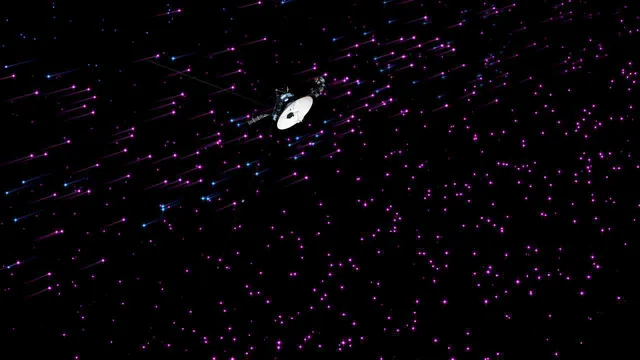
A 10-month cruise is ahead. The spacecraft will perform several trajectory correction maneuvers to arrive precisely. They have already gathered some science data in the loiter orbit, flying several times through Earth's magnetotail, the part of Earth's magnetic environment that the solar wind stretches away from the Sun. On the way to Mars they will study how the solar wind behaves between the two planets.
The Mars orbit insertion burns are planned for Sept. 7 and 9, 2027. Each will last about 11 minutes. After that the spacecraft will need several months to reach their first science formation, in which they follow one another in the same orbit. Science operations are expected to begin in June 2028.
Six months later the spacecraft will move to different orbits. One will travel farther from Mars to observe the incoming solar wind, and the other will stay closer to see how the planet responds in real time. That campaign is scheduled to last five months.
Why it matters
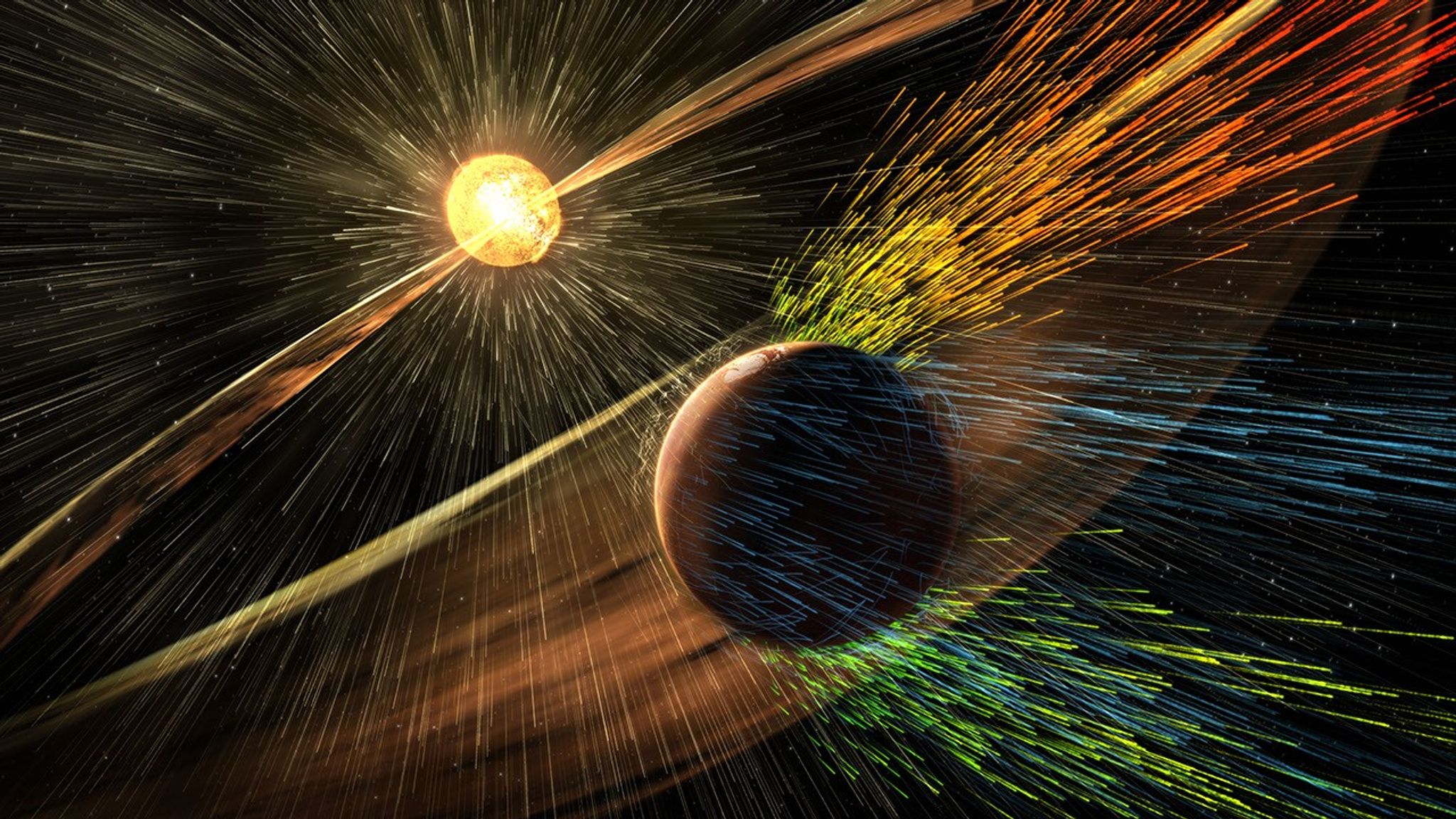
The solar wind, a stream of material from the Sun moving at about 1.6 million km/h, interacts with the Martian environment and drives atmospheric loss at Mars. ESCAPADE is designed to study exactly this process.
Principal investigator Rob Lillis of the University of California, Berkeley, stresses the novelty: this will be the first science mission to choreograph two orbiters around Mars, and the first time coordinated observations of the Martian environment can be made from two locations simultaneously.
According to Michele Cash, ESCAPADE program scientist at NASA Headquarters, the findings could help plan and prepare for future human exploration of Mars.
ESCAPADE is funded by NASA's Heliophysics Division as part of the SIMPLEx program (Small Innovative Missions for Planetary Exploration), which supports missions that explore the solar system in innovative ways on smaller budgets. The mission is led by the University of California, Berkeley's Space Sciences Laboratory. Key partners include Rocket Lab, NASA's Goddard Space Flight Center, Embry-Riddle Aeronautical University, Advanced Space and Blue Origin.