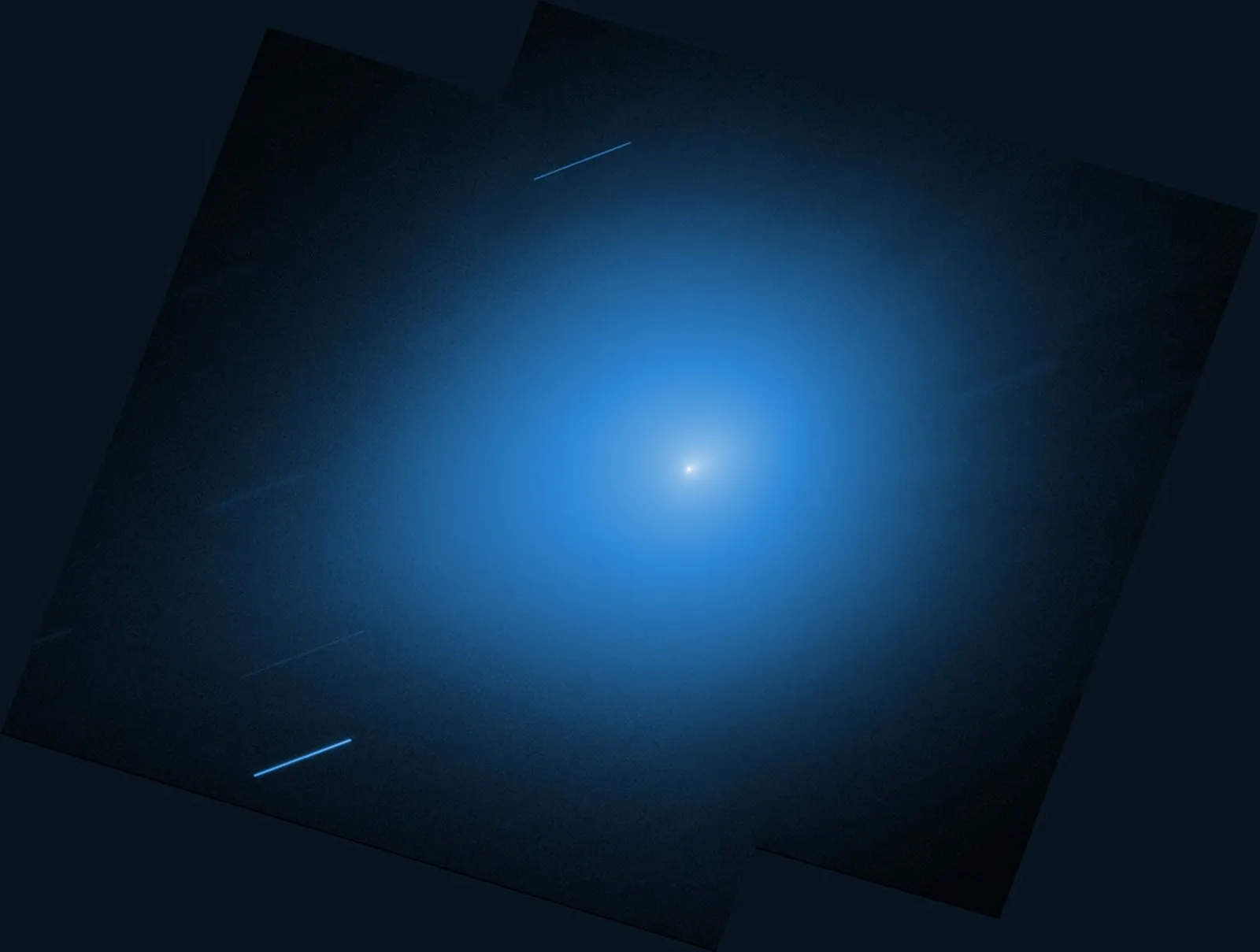
Comet 3I/ATLAS is already heading toward the edge of the solar system and will never return. Yet over just a few months of observation, it became one of the most thoroughly documented comets in astronomical history — not because of a single powerful telescope, but because more than a dozen NASA missions turned their instruments toward it at the same time.
That wasn't an accident. For decades, NASA has been building an open data infrastructure — unified storage formats, public archives, free access for anyone. The story of 3I/ATLAS shows exactly how that infrastructure pays off.
TESS captured the comet two months before its official discovery
The ground-based ATLAS survey telescope in Rio Hurtado, Chile, officially discovered 3I/ATLAS on July 1, 2025. The object's trajectory ruled out any origin within our own solar system — a clear sign it was a visitor from interstellar space.
But a search through public archives revealed something unexpected. NASA's TESS, a space telescope built to hunt for exoplanets, had accidentally captured 3I/ATLAS in its wide field of view back in May 2025 — two months before the official discovery. That data sits openly in the MAST archive (Barbara A. Mikulski Archive for Space Telescopes), and that's where researchers found it.
Those early frames let astronomers reconstruct the comet's trajectory through the solar system with far greater precision. As Kevin Murphy, NASA's chief science data officer, put it, the agency's archives are a "gold mine of discoveries," and the early TESS sighting of 3I/ATLAS is just one example of what open data can reveal.
Four separate missions pieced together the comet's chemistry
Decades of observations have given scientists a solid understanding of the typical chemical makeup of comets formed in our solar system — well-known ratios of water, carbon dioxide, and carbon monoxide. Because 3I/ATLAS formed around another star, researchers expected different proportions, and they were right.
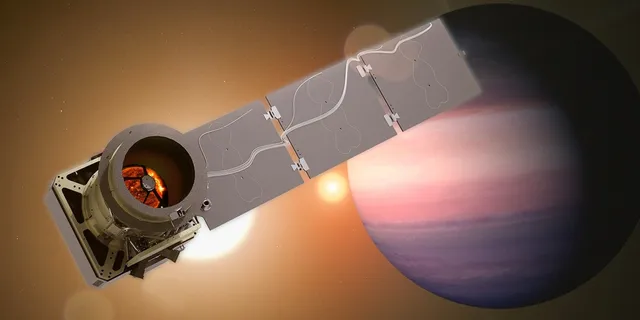
Confirming that required combining data from several missions at once. Spectral observations from the MAVEN Mars orbiter, taken on October 5, 2025, revealed the coma — the cloud of gas and dust surrounding the comet's nucleus. Researchers added infrared observations from the James Webb Space Telescope and from the recently launched SPHEREx mission.
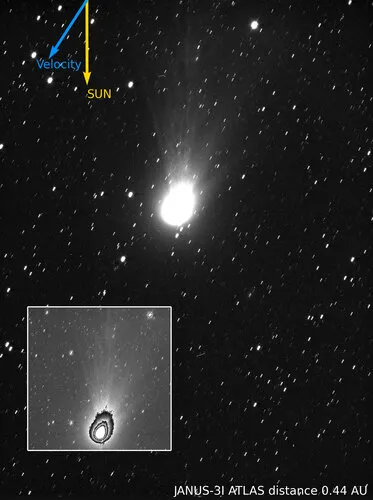
Separately, the PUNCH mission also captured the comet. PUNCH consists of four small satellites primarily designed to study the solar wind, not comets. Yet between September 28 and October 10, 2025, careful image stacking allowed researchers to pull a clear view of 3I/ATLAS out of PUNCH's data anyway.
Shared data standards let a dozen missions work as one
Combining data from instruments as different as a Mars orbiter, an infrared space telescope, and solar-wind-monitoring satellites requires common standards. That's exactly what NASA's Planetary Data System has spent decades building: a unified format for planetary data and tools that can work across missions simultaneously.
SPHEREx data is accessible through the IRSA archive (NASA/IPAC Infrared Science Archive), MAVEN data through the Planetary Data System, and Webb's observations through MAST. All of it, free and open to anyone.
Open science, as a set of principles, has been pushing us as research communities and NASA to make data more accessible. It's worked into the way we structure and establish standards for our data archives. That's what makes our data usable.Thomas Statler, lead scientist for Solar System Small Bodies, NASA
The comet will vanish, the data will stay
3I/ATLAS is leaving the solar system for good. But the data collected about it will remain in public archives — and that, researchers say, is the real point of the observation campaign.
Humanity detected its first known interstellar object, 'Oumuamua, only in 2017 — earlier generations of telescopes simply weren't capable of spotting such objects. Scientists estimate that similar visitors may pass through our solar system roughly once a year. As instruments grow more powerful, such discoveries are expected to become far more common.
The more interstellar visitors researchers manage to capture, the better they'll be able to compare them to one another — and 3I/ATLAS, the most thoroughly documented of them so far, will serve as the reference point for all the interstellar comets still to come.