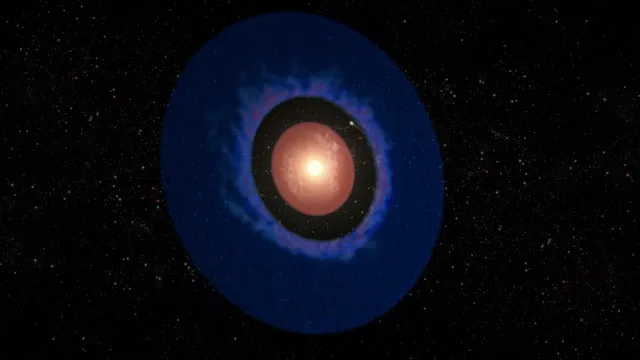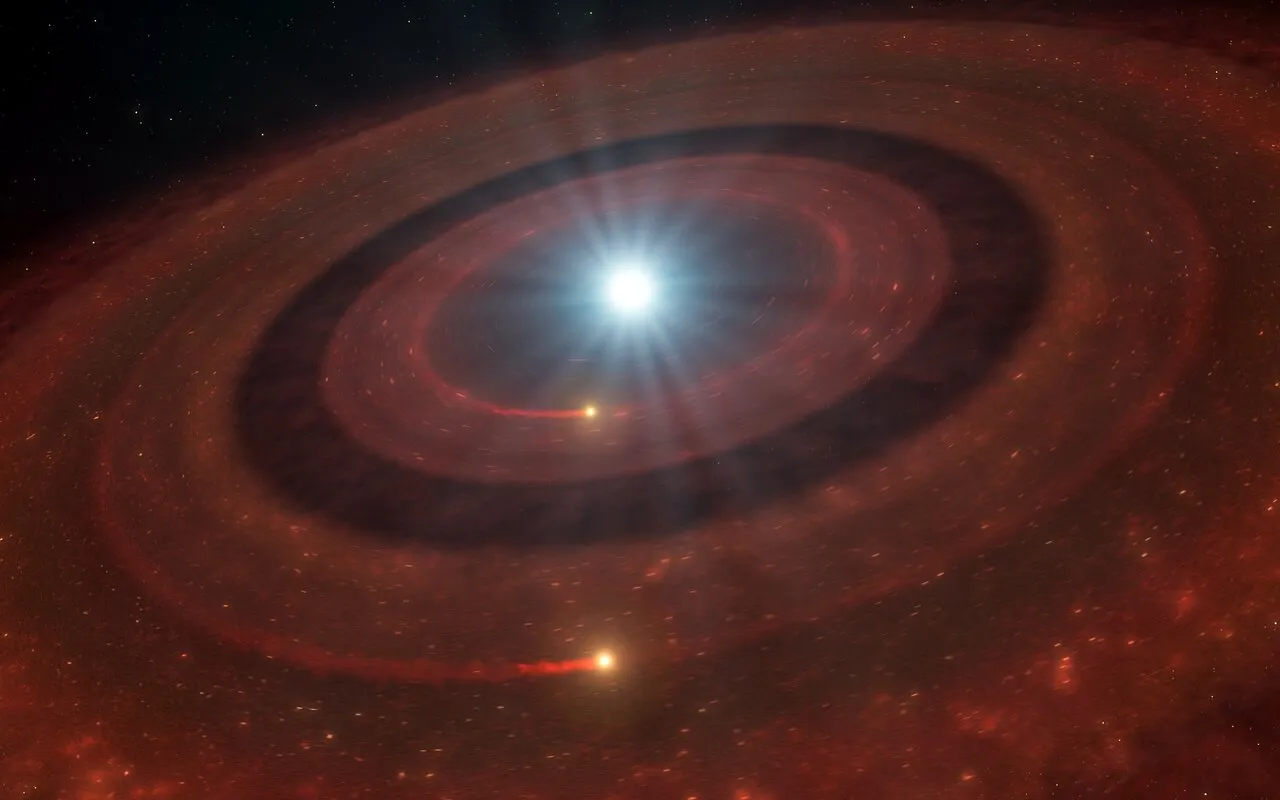
Astronomers using the European Southern Observatory's Very Large Telescope (ESO's VLT) have found a rare disc of debris around a dead star. It is made of the leftovers of planets that once orbited the star. A system like this offers a glimpse of what may happen to our own Solar System.
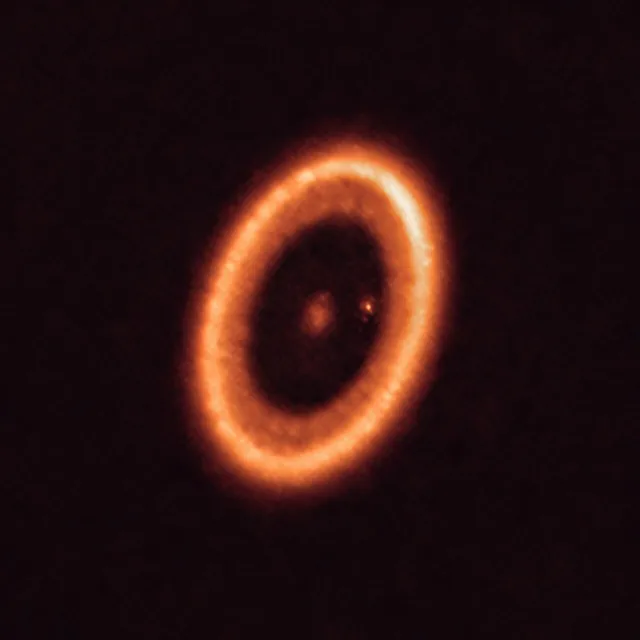
The key feature of the find is the structure of the disc. The debris does not form a single band. It has a two-part structure with a clear gap between the parts.
Two discs instead of one
Debris discs around dead stars are not common. They are made of material from planets and other bodies that once belonged to a planetary system. This time astronomers saw a disc split into two parts, with a distinct empty region between them.
Similar systems found earlier did not show this picture. That is why the discovery is described as unique. The data were obtained with the VLT, one of the most powerful ground-based telescopes.
Two planetary bodies that survived
The structure of the disc appears to be shaped by two planetary bodies. One of them is possibly as big as Pluto. Pluto is about 2,400 km across, less than a fifth of Earth's diameter.
Caution is appropriate here: the size is given as a possibility, not an established value. Still, two bodies would explain why the disc has a gap. Objects moving among debris act on it with their gravity and can change how material is distributed around them.
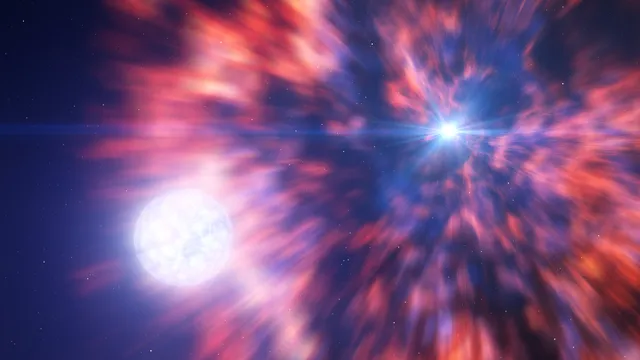
Both bodies survived what happens to a star at the end of its life. The source describes that death as violent. Even so, part of the planetary system endured.
What was known before
Astronomers have studied dead stars with planetary remnants for a long time. Systems where a debris disc can actually be seen remain rare. In those found earlier, no double structure with a clear gap was seen.
The new find adds another type of structure to that collection. Now there is an example where the disc looks like the result of the influence of specific surviving bodies.
What it means for the Solar System
The Sun is not eternal. One day it will also end its life, and the planets of our system will find themselves in new conditions. What happens around other dead stars shows what such an ending can look like.
The new disc offers one scenario. After the death of a star, some planetary bodies may survive. The rest turn into debris that forms a disc, and the surviving bodies shape it.
This is not a prediction for the Solar System. It is an observation of another system that has already gone down this path. But such examples give astronomers real data instead of purely theoretical models. Each new disc refines the picture of what can survive the death of a star.