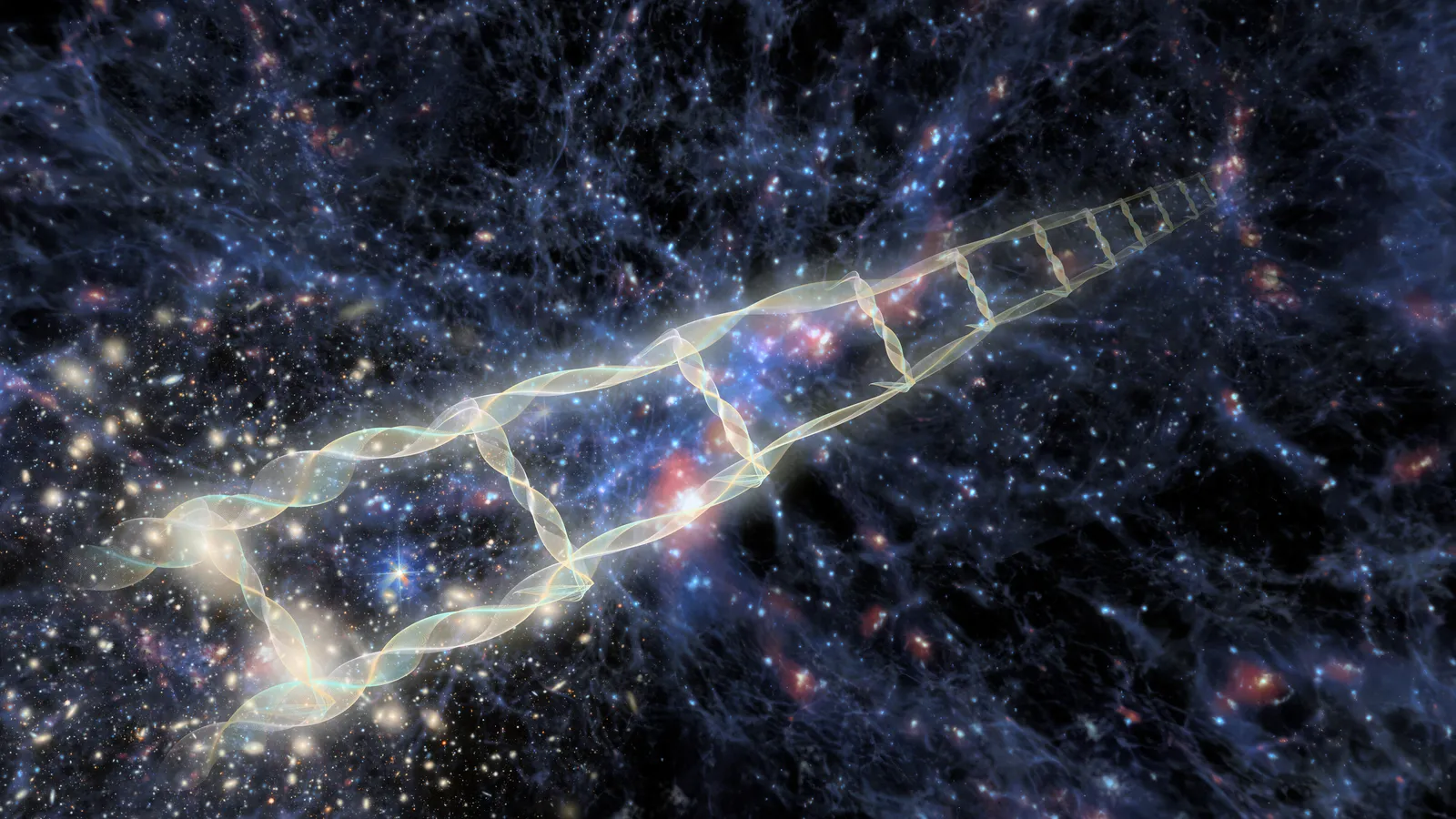
The Hubble constant describes how fast the Universe is expanding. It sounds like a straightforward number to measure, yet for more than a decade it has been unsettling cosmologists more than almost any other figure in the field. The international H0DN (H0 Distance Network) collaboration has now delivered a new value — 73.50 ± 0.81 km/s/Mpc — accurate to just over 1%. It stands as one of the most precise direct measurements yet of how fast the local Universe is expanding.
The result was published on 10 April 2026 in Astronomy & Astrophysics. The paper is the outcome of a broader community effort launched at an International Space Science Institute (ISSI) workshop in Bern in March 2025. NSF NOIRLab contributed both expertise and observational data, including measurements from the Cerro Tololo Inter-American Observatory in Chile and Kitt Peak National Observatory in Arizona.
A network built from dozens of independent methods
The core idea behind the study was to avoid relying on any single distance-measuring technique and instead link several of them into one cross-checked system. The team combined observations of pulsating Cepheid variable stars, red giant stars with a known peak brightness (the tip of the red giant branch), Type Ia supernovae, and certain classes of galaxies.
Each of these methods functions as its own "distance ladder": nearby objects are measured first, then used to calibrate brighter markers visible at greater distances. By weaving several such ladders into a single network, the researchers created multiple independent routes to the same final answer.
That structure enabled a critical test — checking whether the discrepancy could be hiding inside just one method. The team removed Cepheids, supernovae, or any other single technique from the analysis in turn and recalculated the result. The answer barely moved. Independent measurements remained consistent with one another, reinforcing confidence in the overall figure.
This work effectively rules out explanations of the Hubble tension that rely on a single overlooked error in local distance measurementsH0DN Collaboration
Two numbers that should match — and don't
The Hubble constant can be derived through two fundamentally different routes. One relies on direct distance measurements to stars and galaxies in the nearby Universe, the approach taken by the H0DN team. The other starts from the cosmic microwave background, the afterglow of the Big Bang, and uses the standard model of cosmology to predict what today's expansion rate should be.
Under that standard model, both routes are expected to converge on the same value. Instead, direct measurements consistently land around 73 km/s/Mpc, while early-Universe predictions point to 67–68 km/s/Mpc. The gap looks small, but it dwarfs the statistical uncertainty involved, and it has now been reproduced across many independent studies using different teams and techniques. This mismatch is known as the Hubble tension.
The new H0DN result matters because it narrows the range of plausible explanations. If the tension stemmed from a hidden error in one particular distance-measuring method, refining that method should eventually make the discrepancy disappear. But when dozens of independent techniques, woven into a single network, converge on the same figure near 73, that explanation becomes increasingly hard to sustain.
What it could mean for the cosmological model
If the Hubble tension turns out to be real rather than a measurement artifact, the problem may run deeper — into the standard cosmological model itself, which describes how the Universe has evolved since the Big Bang. That same model is used to translate cosmic microwave background data into a prediction for today's expansion rate.
If the model doesn't fully capture the behavior of dark energy, misses undiscovered particles, or requires modifications to gravity at cosmological scales, its predictions for the present-day expansion rate would be skewed. In that scenario, the Hubble tension wouldn't be a measurement mistake — it would be a sign that something is missing from the current description of the Universe.
The H0DN collaboration has made its methods and data openly available, laying a foundation that can be expanded as new observations arrive. The next step belongs to a coming generation of observatories capable of measuring distances with even greater precision. They will either close the gap between the two approaches or confirm that physics beyond the standard model is genuinely needed to explain how fast the Universe is expanding.