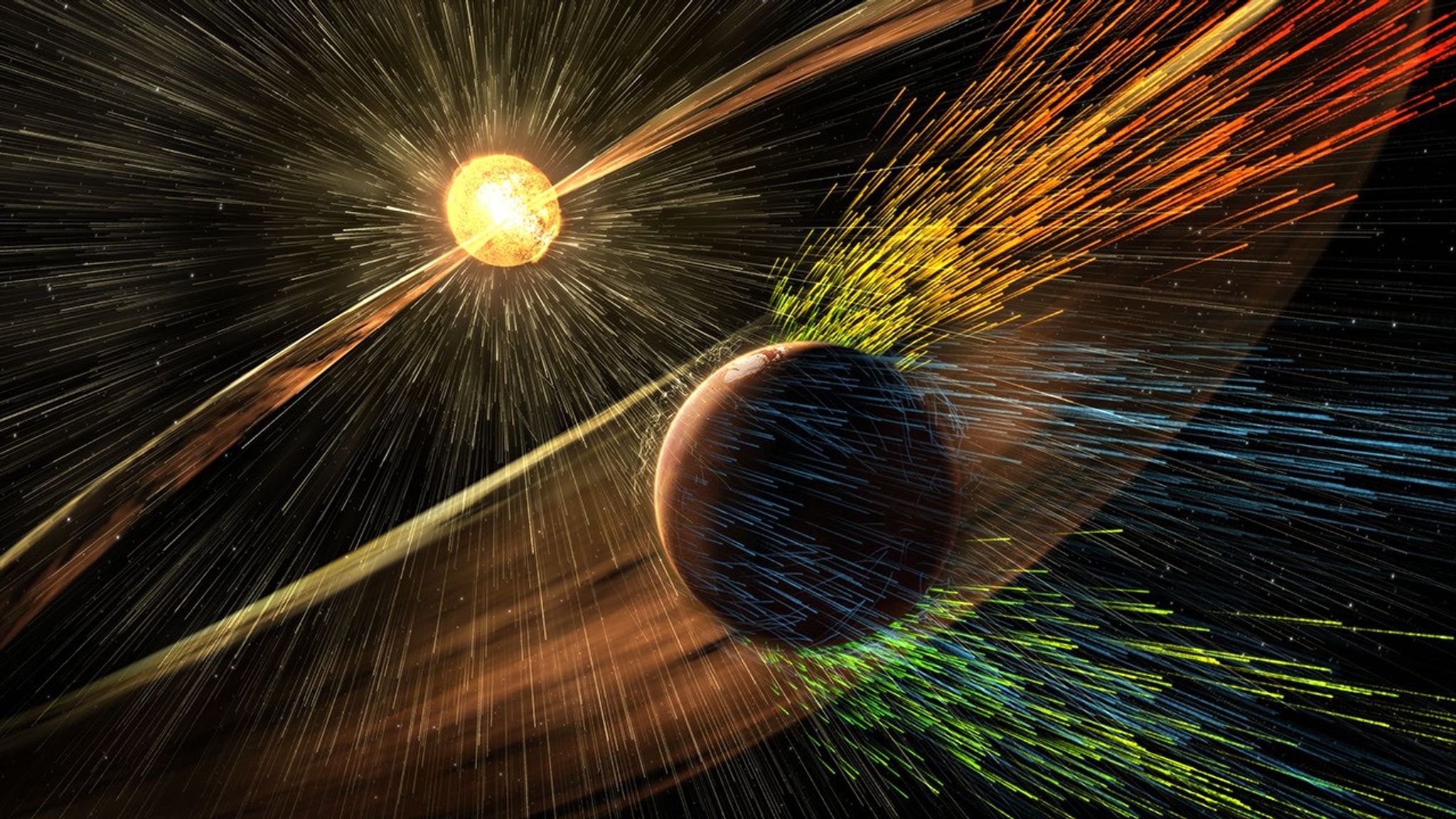
The European-Chinese Smile mission was formally declared ready to begin science operations on 23 September. Its goal is to reveal how Earth responds to the solar wind, the stream of charged particles coming from the Sun.
The road to this point took several months. The spacecraft launched on 19 May and reached its target orbit for science operations on 20 June. Since then, European and Chinese teams have been preparing it for observations.
Three months of commissioning in space
A spacecraft never quite behaves the same in space as it does on the ground. So from 20 June the teams deployed mechanisms, switched on units, checked all communications between the spacecraft and the ground, and fixed any issues that came up.
A large part of this period went into testing Smile's four science instruments: the soft X-ray imager (SXI), the ultraviolet aurora imager (UVI), the magnetometer (MAG) and the light ion analyser (LIA). Each collects its own part of the information about solar storms, geomagnetic storms and space weather.
The Smile mission is a testament to the trust built between our teams, their dedication to excellence and their determination to find solutions whatever the challenge.Carole Mundell, Professor, ESA Director of Science
What the instruments have shown so far
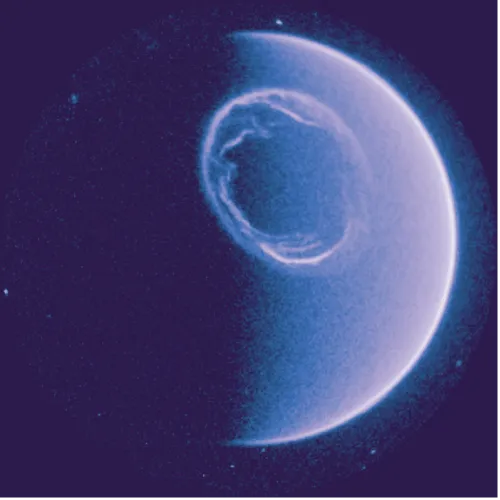
The first footage released came from UVI. It captured an auroral substorm in the ring of northern lights on 24 July, about two weeks after the camera was switched on. The cause was a disturbance in Earth's magnetic field driven by a rush of solar wind particles.
UVI is the first camera since 2008 to capture the full ring of northern lights around the North Pole in ultraviolet light. It can record for up to 45 hours at a time, a record.
The X-ray camera SXI was also switched on successfully and has taken its first images. It was pointed at the remnants of a distant exploded star to check that the instrument works as expected. The test images show a supernova remnant in the Large Magellanic Cloud and Cassiopeia A.
The stray light problem
The SXI camera itself is working very well. But when it points towards Earth, it detects too much unwanted stray light. To reduce it, settings are being changed and software updated onboard.
ESA, the consortium of universities and companies behind the instrument, and the Chinese team leading spacecraft operations are working on this together. The instrument's versatile design, which can be adjusted remotely, helps.
The stray light is also declining on its own. Smile is steadily pointing farther from Earth, and winter is approaching in the north, so the pole emits less light. The minimum is expected in mid-October.
What comes next
At that point SXI is expected to take its first good image of the magnetopause (where the solar wind meets Earth's magnetic field) or the northern polar cusp. The cusp is a hole in the magnetosphere above the North Pole where charged solar wind particles are funnelled towards Earth's surface.
Why it matters
Smile combines several ways of observing one chain of events, from the solar wind to Earth's magnetic field and the auroras. According to the mission, this will help us better understand how solar activity affects electronic infrastructure on and around Earth.
The first ultraviolet footage shows that UVI is already working. The teams expect SXI's stray light to fall over the coming weeks, though its first good image is still ahead.
Who is responsible for what
Smile (the Solar wind Magnetosphere Ionosphere Link Explorer) is a joint mission between the European Space Agency (ESA) and the Chinese Academy of Sciences (CAS). ESA provides the payload module (which carries three of the four instruments), the SXI instrument, the launcher, and the assembly, integration and testing facilities. It also contributes to UVI and to mission operations.
CAS supplies the other three instruments and the spacecraft platform, and is overall responsible for operating the spacecraft in orbit. The mission is part of ESA's Cosmic Vision programme and mainly helps answer the question "How does the Solar System work?"
ESA has also released a documentary, "Let's Smile", covering the period from June 2024 to May 2026. In just over two years the spacecraft went from a handful of disconnected pieces to collecting science data.