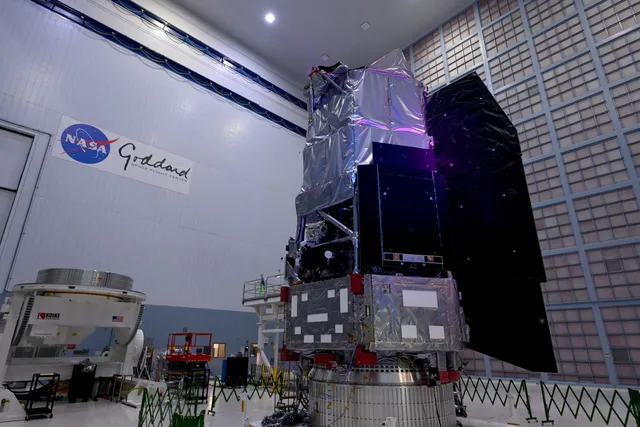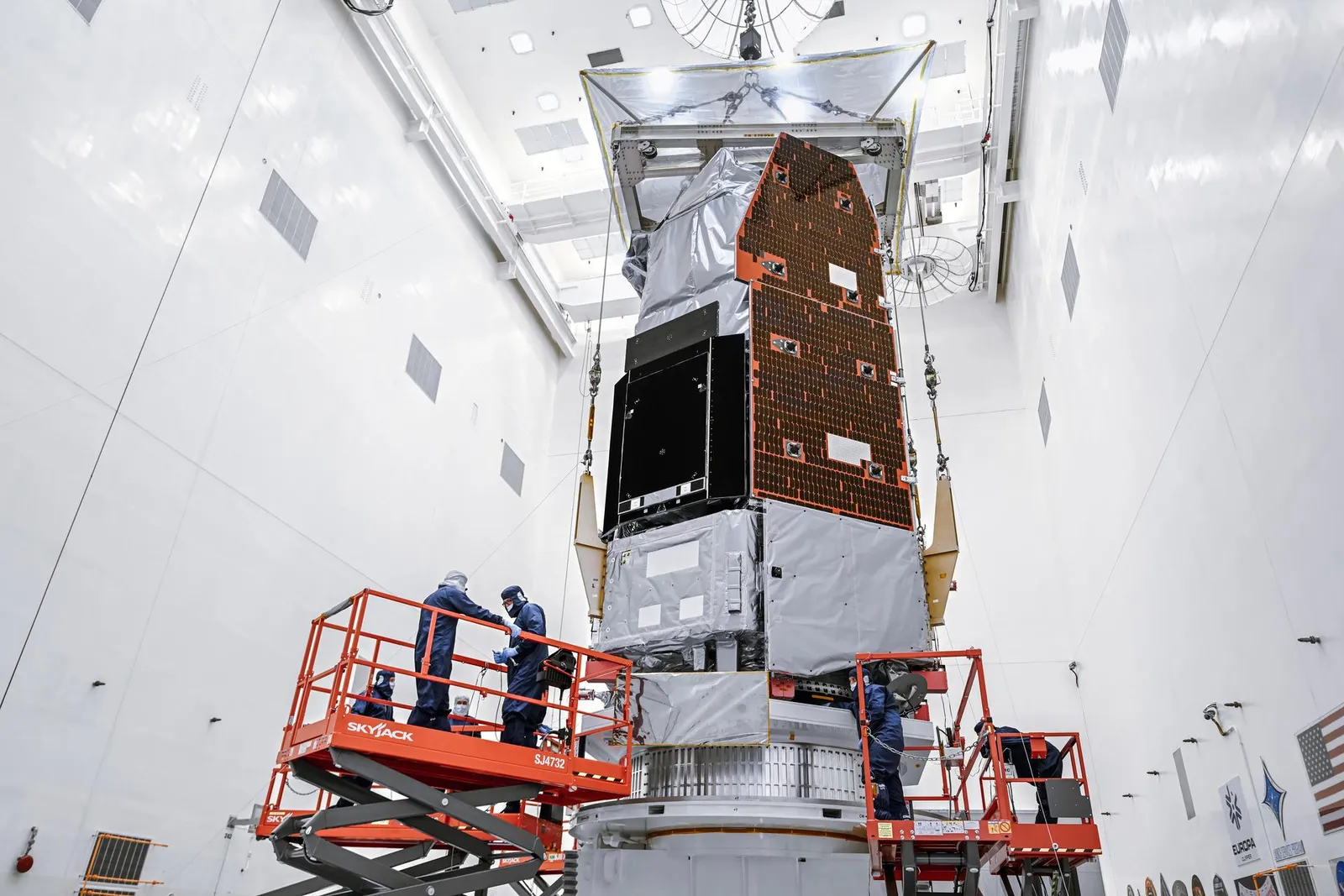
The Nancy Grace Roman Space Telescope is being prepared for launch, with NASA targeting August 30 — nine months ahead of the original schedule. The spacecraft will lift off from the Kennedy Space Center in Florida.
Ahead of the mission, on July 29, the agency will hold a virtual news conference. NASA representatives will provide an overview of the mission and its status. Participants include Astrophysics Division director Shawn Domagal-Goldman, project manager Jackie Townsend, senior project scientist Julie McEnery, and integration and test scientist Jeremy Perkins.
A Field of View 100 Times Wider Than Hubble
Roman's main technical advantage is its extremely wide field of view. It is at least 100 times larger than that of the Hubble telescope.
This is a fundamental change of approach. Hubble delivers deep but narrow images of individual sky regions. Roman will be able to cover large areas in a single frame while remaining sensitive to faint objects.
This format opens a new era of cosmic surveys. The telescope will capture sweeping panoramic images and record large numbers of celestial objects in a short time. According to the mission plan, this should help study phenomena we cannot see directly — including those tied to the largest unresolved questions about the structure of the universe.
Searching for Planets Around Other Stars
A separate part of the mission is a test of technology for directly imaging planets around nearby stars. Planets are usually lost in the bright light of their star, which makes imaging them directly very difficult.
NASA describes this technology as the most advanced of its kind ever flown in space. Its test on Roman is one step in the search for signs of life beyond the Solar System.
This is a technology test, not a full search program. But a successful demonstration will lay the groundwork for future missions aimed at finding habitable worlds.
An International Project With Many Partners
The telescope is named after Nancy Grace Roman, NASA's first chief astronomer.
The mission is managed by the Goddard Space Flight Center. It also involves the Jet Propulsion Laboratory, Caltech/IPAC, the Space Telescope Science Institute in Baltimore, and scientists from various research institutions.
International partners have contributed as well: the European Space Agency ESA, Japan's JAXA, France's CNES, and the Max Planck Institute for Astronomy in Germany. The primary industrial partners are BAE Systems, L3Harris, and Teledyne Scientific & Imaging.
The launch date of August 30 may still change — for large missions this caution is normal. But getting ahead of schedule by nine months is itself rare: major space observatories are usually launched with delays, not early.