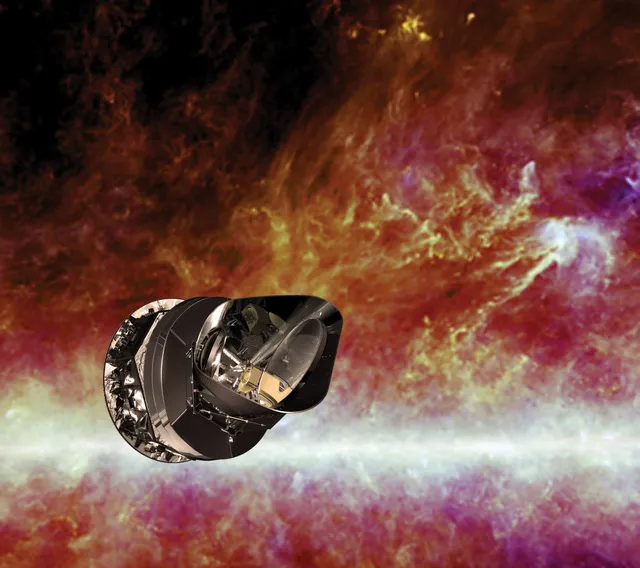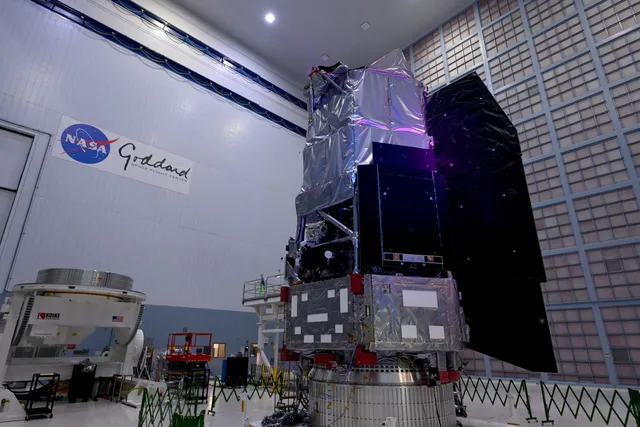
NASA has announced that the PRIMA mission (PRobe far-Infrared Mission for Astrophysics) is moving into Phase B of development. This is not just another space telescope — it is the first mission in an entirely new class called Probe Explorers, created within NASA's oldest science program, Explorers.
The Explorers Program dates back to 1958, when Explorer 1 discovered Earth's radiation belts. Over nearly seven decades, it has launched more than 100 missions, including Uhuru and the Cosmic Background Explorer, both of which led to Nobel Prizes for their investigators. PRIMA continues this tradition, but at a new level of complexity and budget.
What PRIMA Is and How It Will Work
The telescope will carry a 1.8-meter mirror (5.9 feet, per NASA's release) and will observe the universe in far-infrared light. This is a narrow but crucial slice of the electromagnetic spectrum: it is where cold dust, molecular gas, and other components of the interstellar medium radiate — largely invisible in visible light or in the near- and mid-infrared range covered by the James Webb Space Telescope.
Effectively, PRIMA will serve as a bridge between Webb, which observes hotter and closer objects, and ground-based radio telescopes, which capture much longer wavelengths. This part of the spectrum has long remained underexplored because of technical challenges — far-infrared detectors require extremely low temperatures and specialized engineering.
The Mission's Scientific Goals
PRIMA will conduct deep, sensitive surveys of the sky aimed at answering several fundamental questions in astrophysics. These include how planets form beyond the solar system, how galaxies and the black holes at their centers have grown and evolved over cosmic history, and how dust and heavy chemical elements have accumulated in the universe over time.
Together, these processes help paint a picture of why the universe looks the way it does today — from the distribution of stars and planets to the chemical makeup of interstellar space.
Why It Matters
The Probe Explorers class was recommended by the National Academies of Sciences, Engineering, and Medicine in their 2020 Decadal Survey of astronomy and astrophysics — a document that sets NASA's science priorities for a decade. PRIMA became the first mission selected for development in this class, following a detailed evaluation of several concept studies based on scientific merit, feasibility of cost and schedule, and the potential of technologies to support future large missions.
According to Shawn Domagal-Goldman, director of NASA's Astrophysics Division, no single mission can probe all the universe's mysteries, but extending survey capabilities into far-infrared wavelengths gives a far more comprehensive view of the cosmos when combined with Webb and the Roman Space Telescope. He added that NASA intends to maintain a steady cadence of launching premiere-class missions — one in each half of the decade — with PRIMA opening that pipeline for the 2030s.
What Comes Next
Before entering Phase C, the construction stage, the project will undergo a confirmation review based on technical, programmatic, and cost performance. If confirmed, its budget will be capped at 1.2 billion dollars, not including launch and other non-project costs.
Launch is targeted for 2033, with the mission designed to operate for five years. NASA's Jet Propulsion Laboratory in California will manage the project, with partners including NASA's Goddard Space Flight Center, Marshall Space Flight Center, and international space agencies from France (CNES), Italy (ASI), Germany (DLR), Canada (CSA), Korea (KASI), Japan (JAXA), and the UK (UKSA).