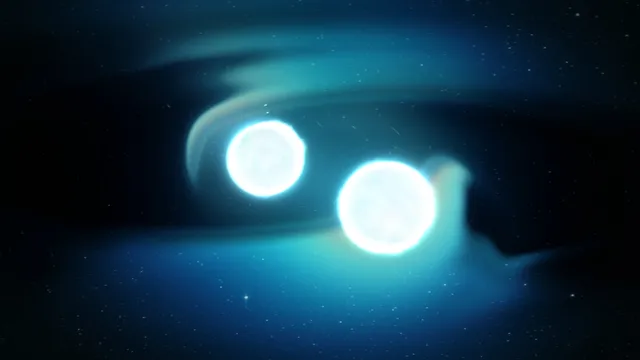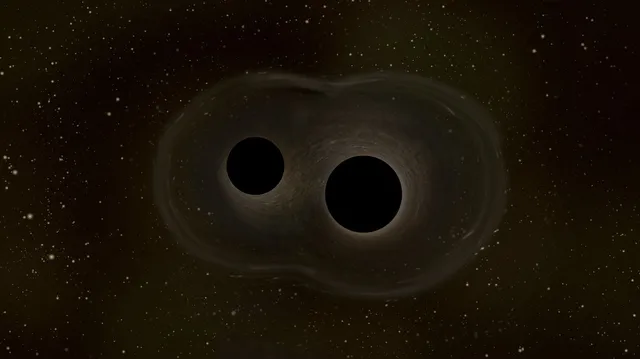
Dense stellar environments - globular clusters and young massive clusters - are known factories of exotic phenomena. They produce compact-object binaries that eventually merge and emit gravitational waves, and they also bring stars dangerously close to compact objects, tearing them apart with tidal forces. A new preprint posted on arXiv shows that the second type of event - specifically a gentler "micro" version of it - happens far more often than the first, with its own observational consequences.
How the simulation works
The authors used Rapster, a fast Monte Carlo code for modeling the dynamical evolution of star clusters. Unlike full N-body simulations, this approach allows a huge number of clusters to be processed in reasonable time: the study covers 100,000 clusters across ten model variations and two formation histories.
A key addition is a unified model of spin evolution for neutron stars and black holes during disk accretion, correctly capturing the transition between these object types (when a neutron star collapses into a black hole). The researchers also added new dynamical disruption channels: not just the classical tidal disruption by a binary, but disruption by a single compact object and by black-hole binaries. Weaker versions of these encounters, where a star loses only part of its mass instead of being fully destroyed, are termed micro-tidal disruption events (µTDEs).
Key numbers
The model's black-hole merger rate peaks at redshift z≈2-3, at several tens of events per cubic gigaparsec per year. This matches the local rate observed by the LVK (LIGO-Virgo-KAGRA) gravitational-wave collaboration.
Meanwhile, the cumulative number of micro-tidal disruptions exceeds the number of compact-object mergers by a factor of a few. Since the model only includes dynamically formed binaries (those assembled through encounters within the cluster, rather than born together), about 90% of micro-tidal disruptions occur through single compact-object-star encounters. The authors stress this is a conservative lower limit - the real rate could be higher once other binary formation pathways are included.
Why it matters
Micro-tidal disruptions are not just a statistical curiosity. Material from the disrupted star falling onto the compact object during prograde accretion spins it up. This provides a purely dynamical mechanism for producing high-spin black holes - one where spin orientation ends up random, unlike scenarios where spin is inherited from binary evolution from the start.
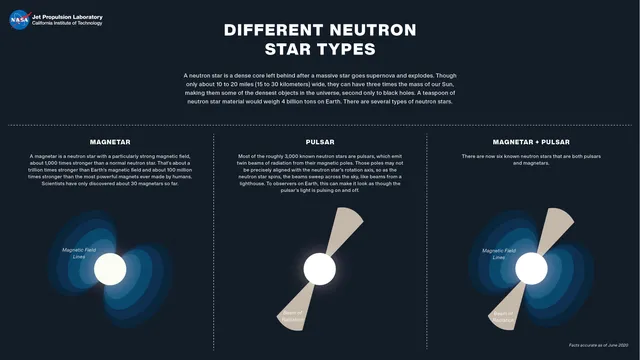
For neutron stars, accretion during a micro-tidal disruption may be enough to trigger collapse into a black hole. These newly formed objects would fall into the so-called lower mass gap - the mass range between the heaviest known neutron stars and the lightest known black holes, where observed candidates remain scarce. If the mechanism described in this work operates in real clusters, it could help explain part of the observed deficit of objects in that mass range.
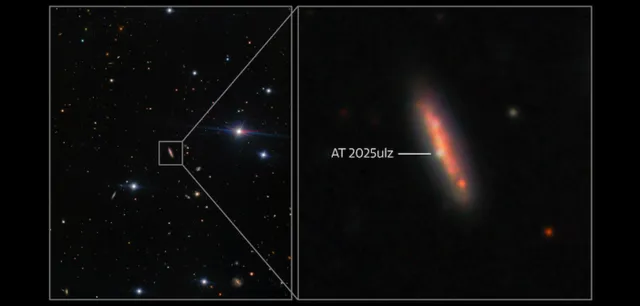
The results also motivate multi-messenger observations: compact-object mergers are picked up by gravitational-wave detectors, while micro-tidal disruptions are potentially observable electromagnetically, as flares from accretion disks. Comparing the rates and properties of these two event types in dense stellar environments could become an additional test for models of cluster dynamics.