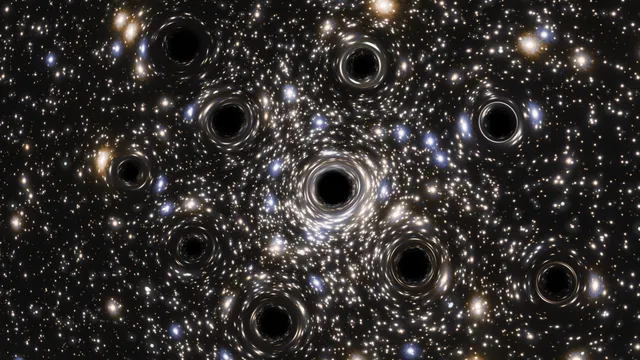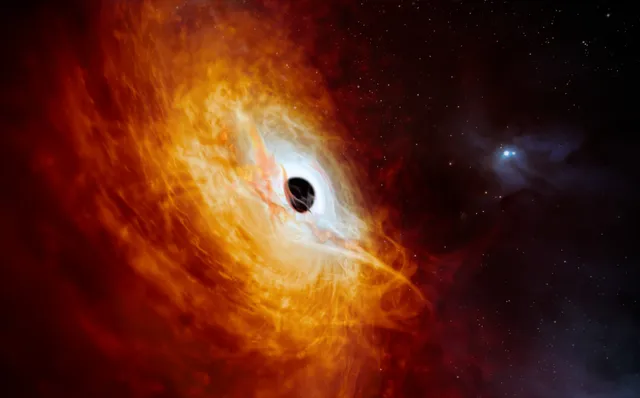
The hunt for dark matter is usually associated with underground detectors or particle collisions. But there's another, purely astronomical approach: gravitational microlensing. If dark matter consists, at least partly, of compact objects — such as primordial black holes formed in the earliest moments of the universe — they should bend the light of distant stars when passing exactly along the line of sight. The lower the mass of such an object, the shorter and fainter the resulting brightening. For black holes with masses below one ten-billionth of the Sun's, these events last only seconds to minutes and are strongly suppressed by the finite size of the source star itself.
This "asteroid-mass" range remains one of the least explored corners of the dark matter parameter space. Ground-based telescopes have limited time resolution and face atmospheric interference, so finding second-long flickers requires a space telescope with high sensitivity and frequent imaging.
How the FLASH pipeline works
The authors developed a dedicated pipeline called FLASH (Fast Lensing And Sub-minute High-accuracy photometry), built specifically to search for short-duration microlensing in James Webb's NIRCam data. Its key feature is that it works from Level 1 data products — the earliest, "raw" processing stage that retains the full detector-ramp information accumulated during an exposure. This preserves fine time structure that standard processing discards.
FLASH also applies improved detector calibration, accounting for non-linearity in the detector's response and position-dependent calibration across the frame. This matters greatly for crowded stellar fields, where overlapping sources amplify any calibration error. The pipeline performs forced multi-band photometry — measuring the brightness of specific known stars in every frame separately, building high-precision light curves.
Observing the disk of Andromeda
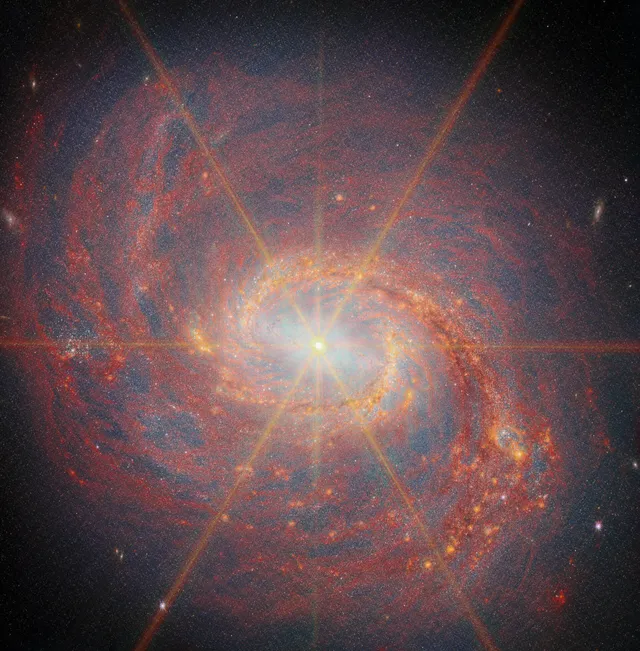
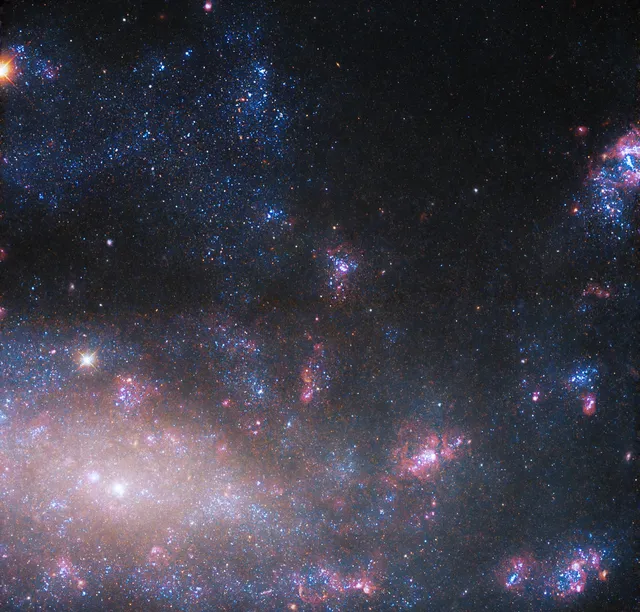
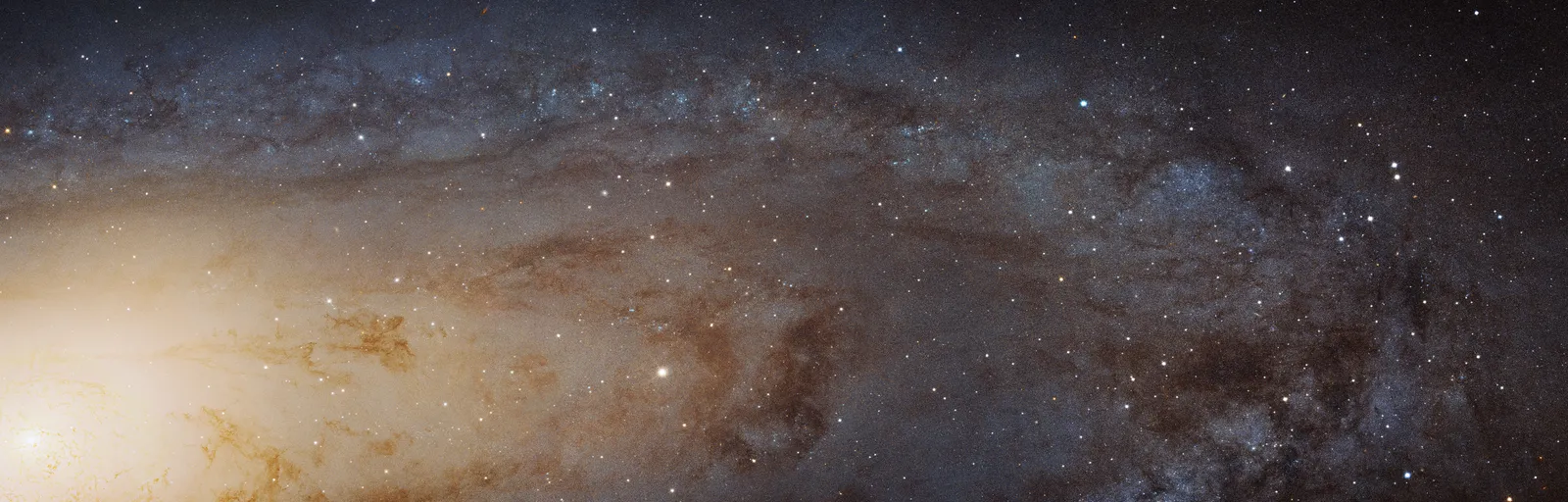
The pipeline was applied to two public JWST/NIRCam datasets targeting the disk of M31 (Andromeda) — programs GO-4735 and GO-2609. Both used a cadence of 21.5 seconds, fast enough to catch sub-minute events.
Importantly, these observations weren't designed as a dedicated microlensing survey — they're a byproduct of other science programs. The authors openly note that as a microlensing survey, this dataset is suboptimal. Still, it served as a valuable stress test: can JWST deliver the photometric precision needed in such a bright, crowded extragalactic field at all.
First constraints and what comes next
Combining the real data with their own microlensing simulations, the researchers derived the first JWST-based constraints on the fraction of dark matter made of primordial black holes toward M31. For black hole masses around one billionth of the Sun's, the allowed dark matter fraction doesn't exceed roughly 100 in normalized units (fPBH — a parameter showing how many times the constraint exceeds the total dark matter budget; values above 1 mean the limit isn't yet physically meaningful).
This means the result isn't yet a competitive constraint in the strict sense — it's more a proof of methodology than a definitive exclusion. But that's precisely the point: JWST is technically capable of catching second-to-minute brightness flickers in a crowded extragalactic field with the needed precision.
The authors stress that a dedicated, continuous NIRCam monitoring program, designed specifically for microlensing, could substantially strengthen constraints on compact dark matter beyond what's achievable from the ground. This opens a path toward future dedicated JWST programs targeting low-mass primordial black holes — one of the least explored dark matter candidates.