The James Webb Space Telescope has carried out the first direct spectroscopic observation of GJ 504 b, a companion to the star GJ 504 that was long considered one of the coldest directly imaged planetary-mass objects known before the JWST era. The new data reveal clouds in the atmosphere and possible enrichment in heavy elements, offering a clue about how this unusual object may have formed.
An Object Between Planet and Brown Dwarf
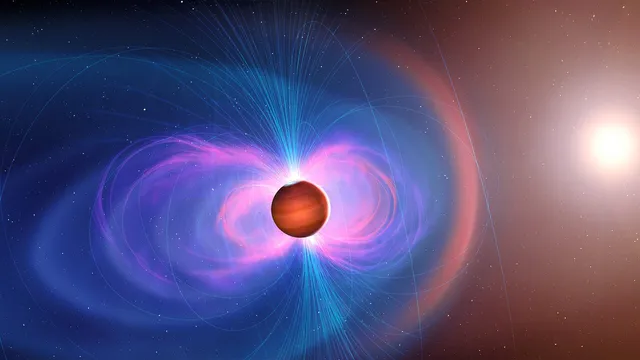
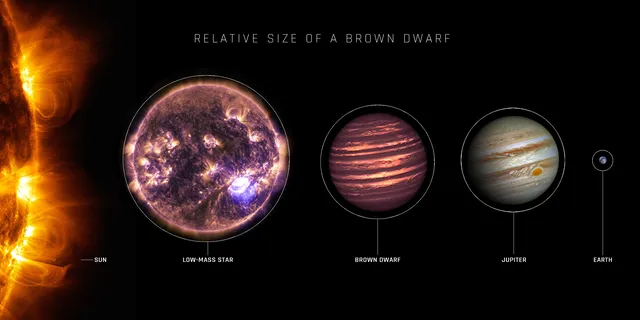
GJ 504 b orbits a star located roughly 57 light-years from Earth. Its mass is 25.2 Jupiter masses, nearly double the roughly 13-Jupiter-mass threshold astronomers often use to distinguish planets from brown dwarfs (objects too small for sustained hydrogen fusion but capable of briefly burning deuterium). By mass alone, GJ 504 b falls into brown dwarf territory, even though it has historically been classified as a planetary-mass companion.
Before this study, little was known about the object's atmosphere. Researchers had only photometric data, brightness measurements in a handful of filters collected by ground- and space-based instruments prior to Webb's launch. Such data can estimate rough temperature and size but reveal almost nothing about atmospheric chemistry or the presence of clouds.
What the Spectrum Revealed
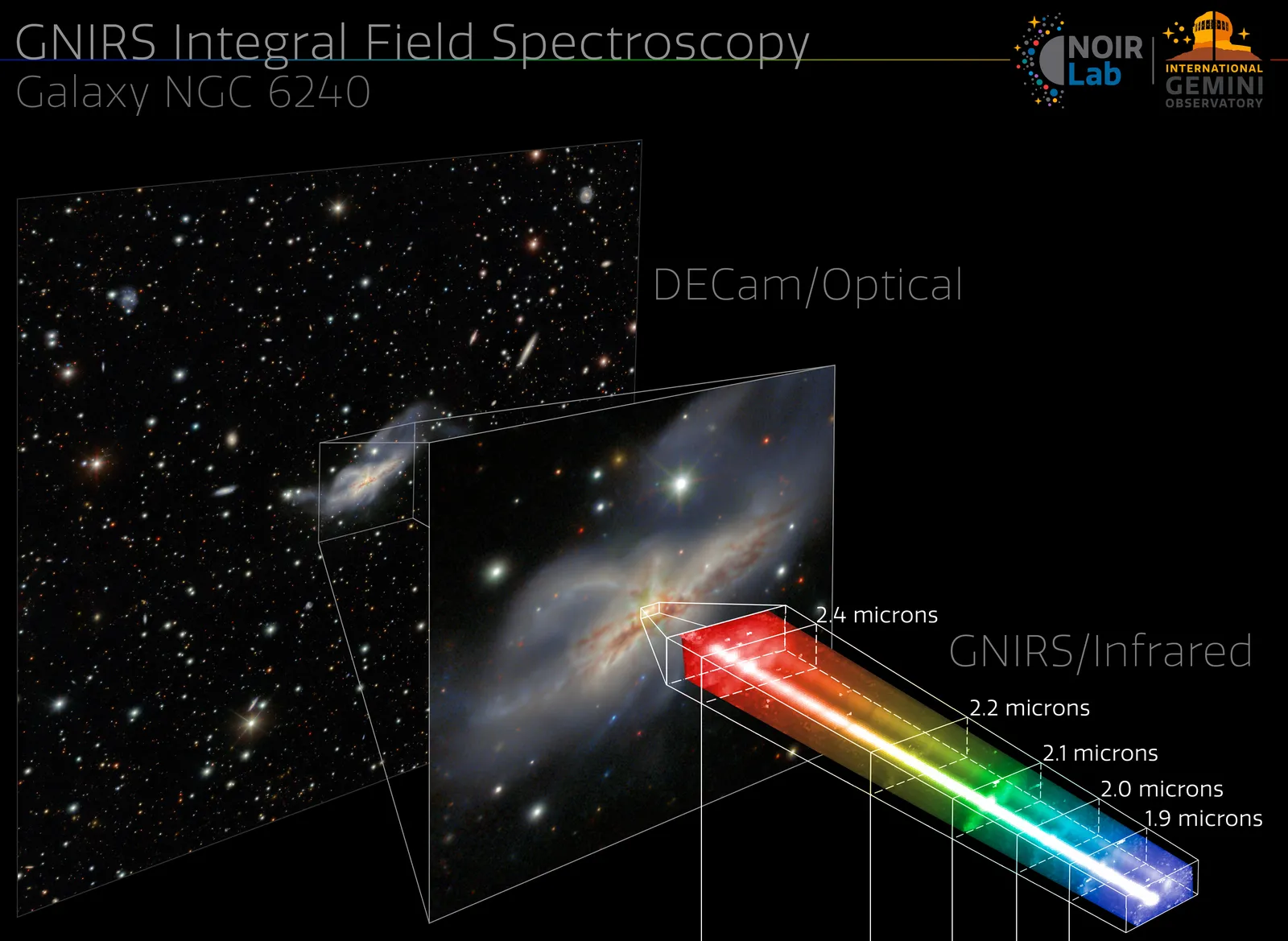
A team led by Aneesh Baburaj used Webb's high-contrast spectroscopy, capable of detecting faint light from objects sitting close to bright stars. This allowed the first full spectrum of GJ 504 b to be obtained, a breakdown of its light by wavelength that reflects absorption and emission from various molecules and particles in the atmosphere.
The analysis found signs of clouds. On such cold objects, clouds typically don't form from water vapor as on Earth, but from compounds like sulfides or silicates that condense at low temperatures far from stellar heating. The spectrum also showed a higher abundance of heavy elements, what astronomers broadly call metals, meaning anything heavier than hydrogen and helium, than expected for an object of this mass.
The researchers are careful with their wording: this is described as possible metal enrichment, not a firmly confirmed fact. Additional observations and more precise atmospheric models for cold objects are needed to interpret the signal with confidence.
Implications for Planet Formation
Elevated metallicity is traditionally seen as a sign of formation through core accretion, the process typically responsible for giant planets like Jupiter and Saturn. In this scenario, a solid core first forms from dust and ice, then pulls in surrounding gas. This pathway differs from the direct gravitational collapse of a gas cloud, the mechanism thought to form stars and likely many brown dwarfs.
If the metal enrichment hypothesis holds up, it would mean GJ 504 b, despite having a brown-dwarf-level mass, may have formed through a planet-like process. This matters for understanding how cleanly planets and brown dwarfs can really be separated by mass alone, suggesting that formation history might be more informative than simply comparing an object to the 13-Jupiter-mass boundary.
What Comes Next
The GJ 504 b observation is part of the broader JWST-TST High Contrast program, aimed at directly studying planetary-mass companions using Webb's high-contrast spectroscopy. The authors see this result as a demonstration of the method's power for cold, faint objects whose spectra were previously out of reach. Further observations of similar companions will help determine whether metal enrichment is a common feature of objects sitting at the planet-brown dwarf boundary, or a peculiarity of GJ 504 b itself.