On 12 August 2026, Europe will witness one of the most striking astronomical events available from the ground — a total solar eclipse. The Moon's shadow will sweep across Spain, and the European Space Agency (ESA) is streaming the event live for everyone who can't watch it in person.
The eclipse begins at 19:30 Central European Summer Time, which is 20:30 Kyiv time. The broadcast will come from the Astrophysical Observatory of Javalambre, one of the observatories located within the path of totality.
How a total solar eclipse happens
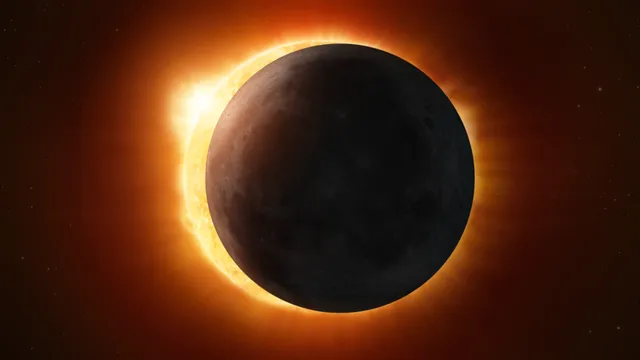
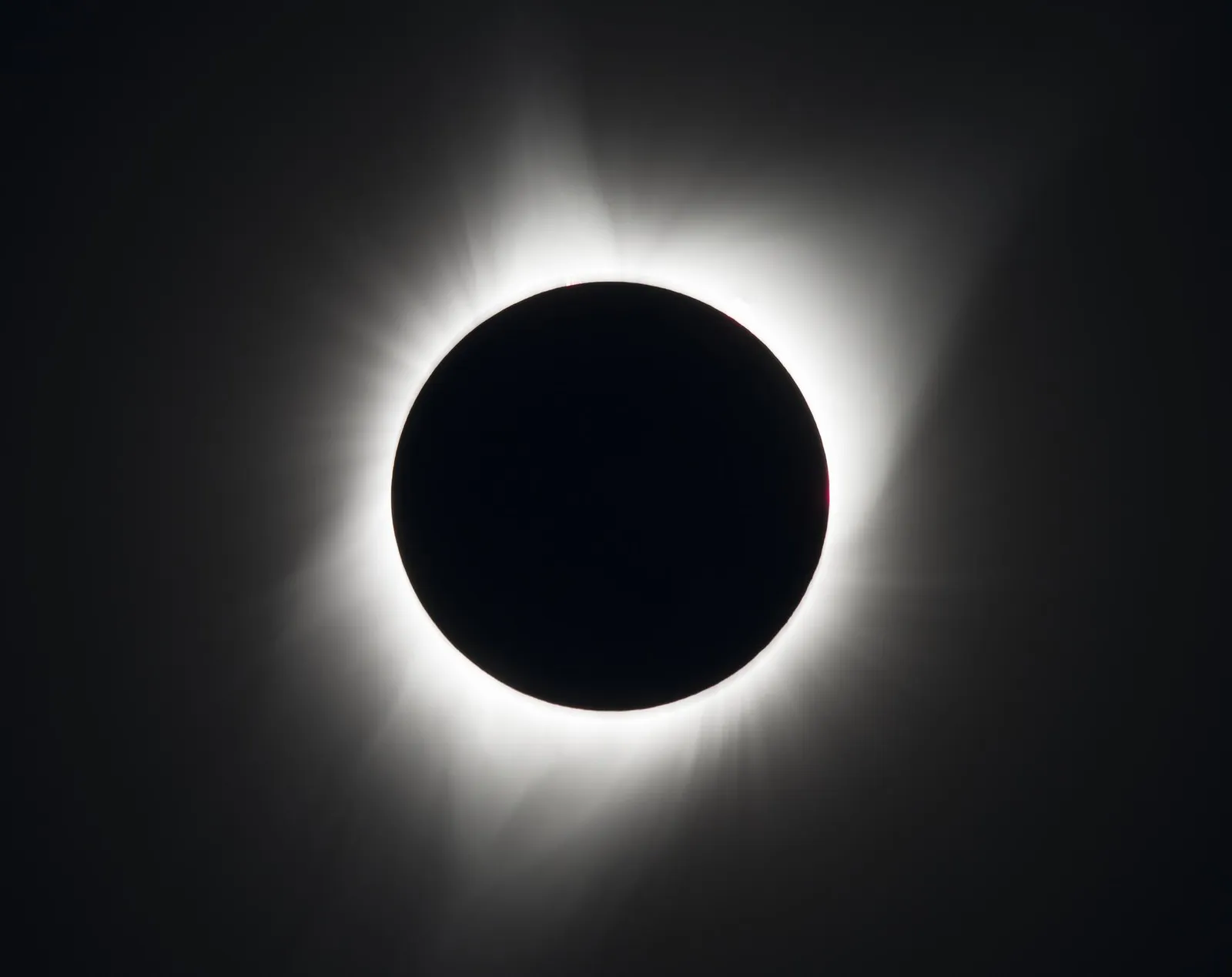
An eclipse occurs when the Moon passes directly between the Sun and Earth. At that moment the Moon blocks the Sun's disk, casting a shadow onto Earth's surface. The darkest part of that shadow — the path of totality — is a narrow strip that moves across the planet as the Moon travels along its orbit. Only observers within that strip see the full phase: the Sun disappears entirely behind the Moon, and for a few minutes it becomes possible to see the solar corona — the Sun's outer atmosphere, normally invisible because of the star's brightness.
On 12 August 2026 that path runs through Spain. The rest of Europe will see only a partial eclipse, with the Moon covering just part of the Sun's disk.
The live broadcast and who's taking part
ESA is streaming from the Javalambre Observatory. Dame Dr. Maggie Aderin, a well-known science communicator, together with ESA scientists, will explain what happens during totality and why such eclipses occur only rarely.
The stream is available on ESA's official YouTube channel and on the watch.esa.int platform. Anyone can watch — whether inside the path of totality or anywhere else in the world.
A science day in León
Besides the observatory broadcast, ESA is organising a separate public event in León, at the Palacio de Congresos y Exposiciones. The programme includes science talks, hands-on activities for visitors, and safe eclipse-viewing equipment on site.
Organisers stress the importance of safe viewing: looking directly at the Sun without proper filters is dangerous for the eyes, even during an eclipse. That's why the León event provides equipment and guidance for watching the phenomenon without risk.
Why it matters
Total solar eclipses offer a rare chance to see the solar corona with the naked eye — something impossible under normal conditions because of the Sun's brightness. For scientists, these brief windows are also an opportunity to study the Sun's outer atmosphere directly. For the public, it's a rare occasion to witness one of the most spectacular natural events visible from Earth.