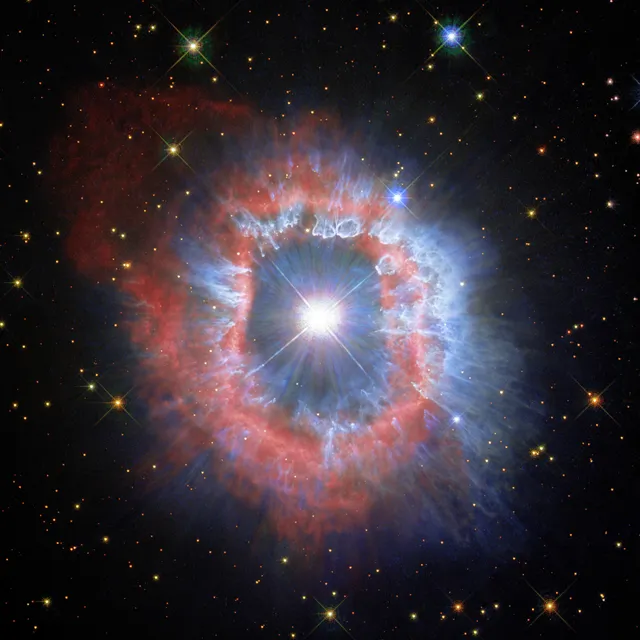
At the very heart of the Milky Way, where the supermassive black hole Sagittarius A* dominates, astronomers have long struggled to make out the traces of an old catastrophe — a supernova explosion that left behind a remnant known as Sgr A East. The trouble is that this is like trying to hear a quiet voice in a crowded room: the remnant’s X-ray emission is almost entirely mixed with the glow of hot plasma surrounding the central black hole.
A new study by Mayura Balakrishnan and colleagues offers a way through. The authors developed an approach that separates Sgr A East’s emission from the signal of the surrounding plasma, producing something that didn’t exist before — the first X-ray maps of the supernova remnant free of this background contamination.
Why the Galactic center is so hard to observe
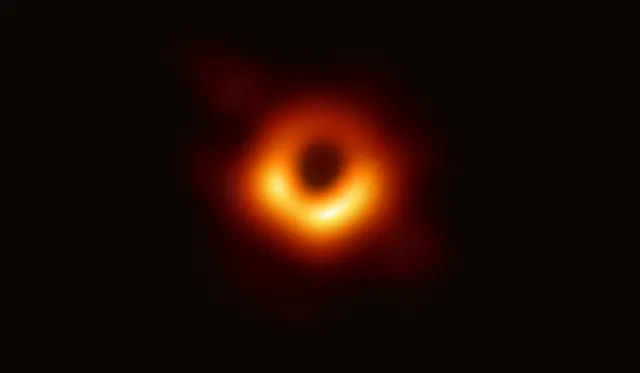
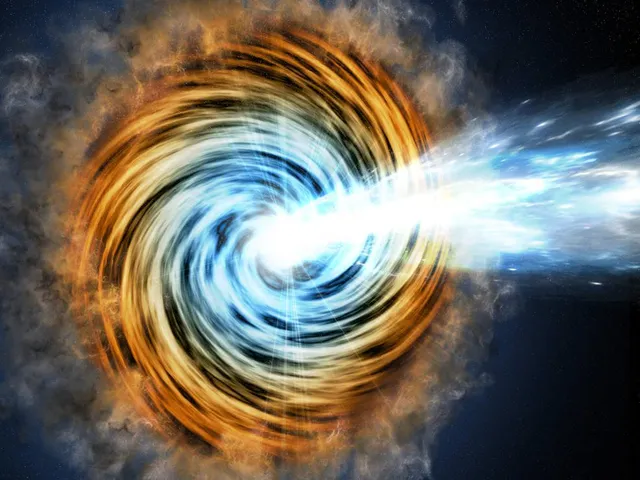
Sagittarius A* is the supermassive black hole at the center of our galaxy. Gas orbiting and heating up around it forms plasma that glows brightly in X-rays. Right next door, on galactic scales, sits Sgr A East — the remnant of a supernova explosion. Both objects radiate in the same energy range and occupy the same small patch of sky.
For telescopes, this means two signals overlapping at the very same point in the image. Ordinary filtering can’t separate them: this isn’t noise that can be screened out, but two physically distinct sources of emission that spatially coincide. As a result, any attempt to measure the temperature, composition, or structure of gas in Sgr A East inevitably included a contribution from the black hole’s surrounding plasma — distorting the results.
How the two sources were finally disentangled
The research team developed a method to mathematically isolate the contribution of the plasma around Sagittarius A* and subtract it from the total signal, leaving behind the “clean” emission of the supernova remnant itself. This is not simple image processing but effectively a reconstruction of one of two overlapping sources based on known properties of the other.
The result: the first X-ray maps of Sgr A East free from contamination by its neighbor. The source material stresses that these are indeed the first maps of this kind — no such uncontaminated view of the remnant existed before.
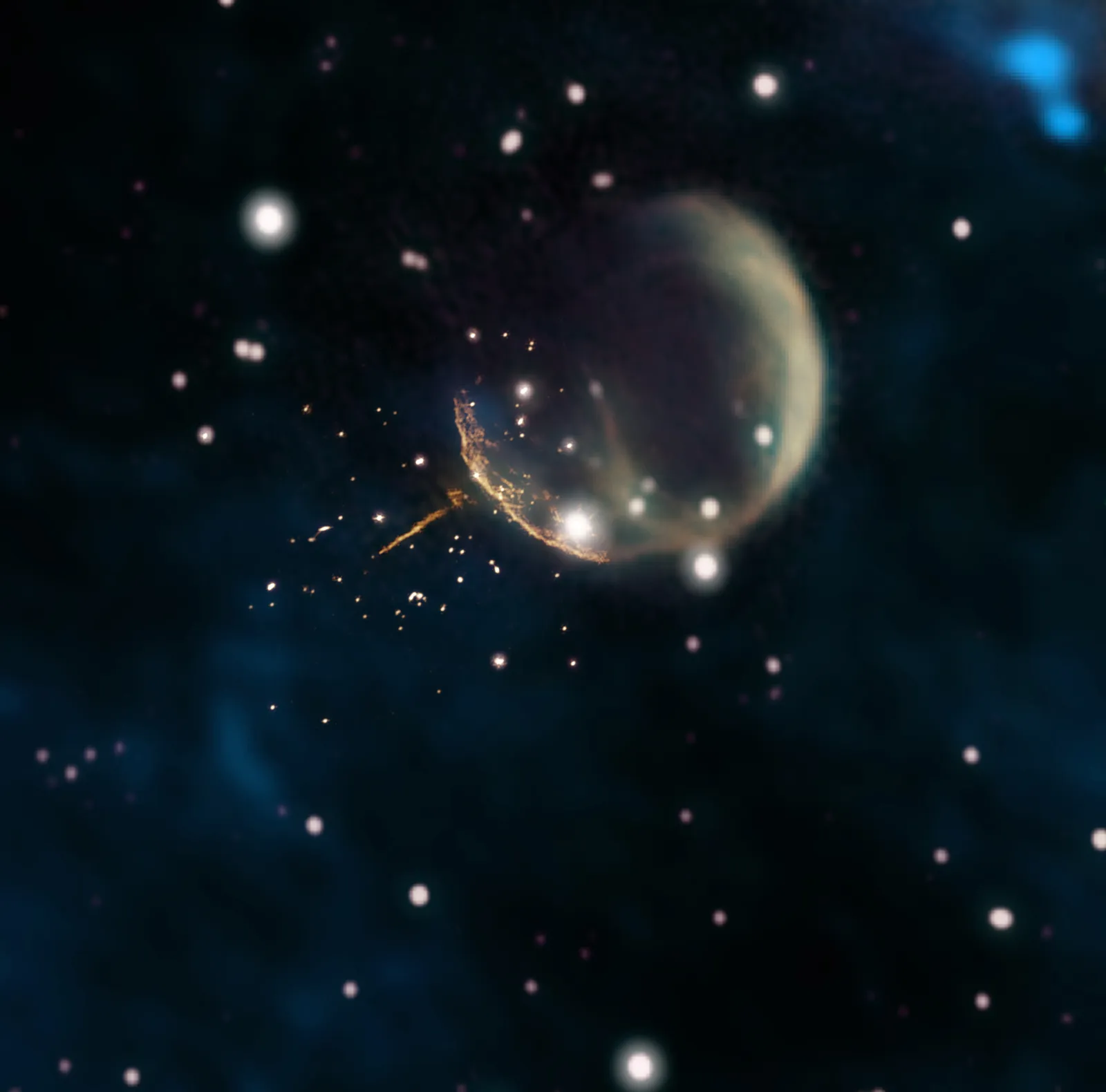
Sgr A East strongly overlaps with plasma associated with the Milky Way’s central supermassive black hole, but new efforts to disentangle this emission have successfully isolated the remnant’s emission.
What this means going forward
Clean maps make it possible to study the shape of the supernova’s shock front, along with the temperature distribution and chemical composition of the remnant’s gas, without the risk that these parameters are skewed by signal from the neighboring black hole. This matters for reconstructing the history of the explosion itself — when and under what conditions it occurred so close to the galactic center.
The central region of the Milky Way remains one of the most difficult areas to analyze precisely because of this kind of dense overlap between different emission sources. The method applied to Sgr A East could eventually prove useful for other parts of the Galactic center where similar signal-mixing problems keep recurring.