October 2026 brings a rich program for skywatchers: the giant planet Saturn at its best for the year, a close pairing of the Moon with Jupiter, two meteor showers — the Draconids and the Orionids — and the opposition of the brightest asteroid in the sky, Vesta. There's something here for casual observers stepping outside for a few minutes and for those with binoculars or a telescope.
Here's a closer look at each event: when, where, and what to look for.
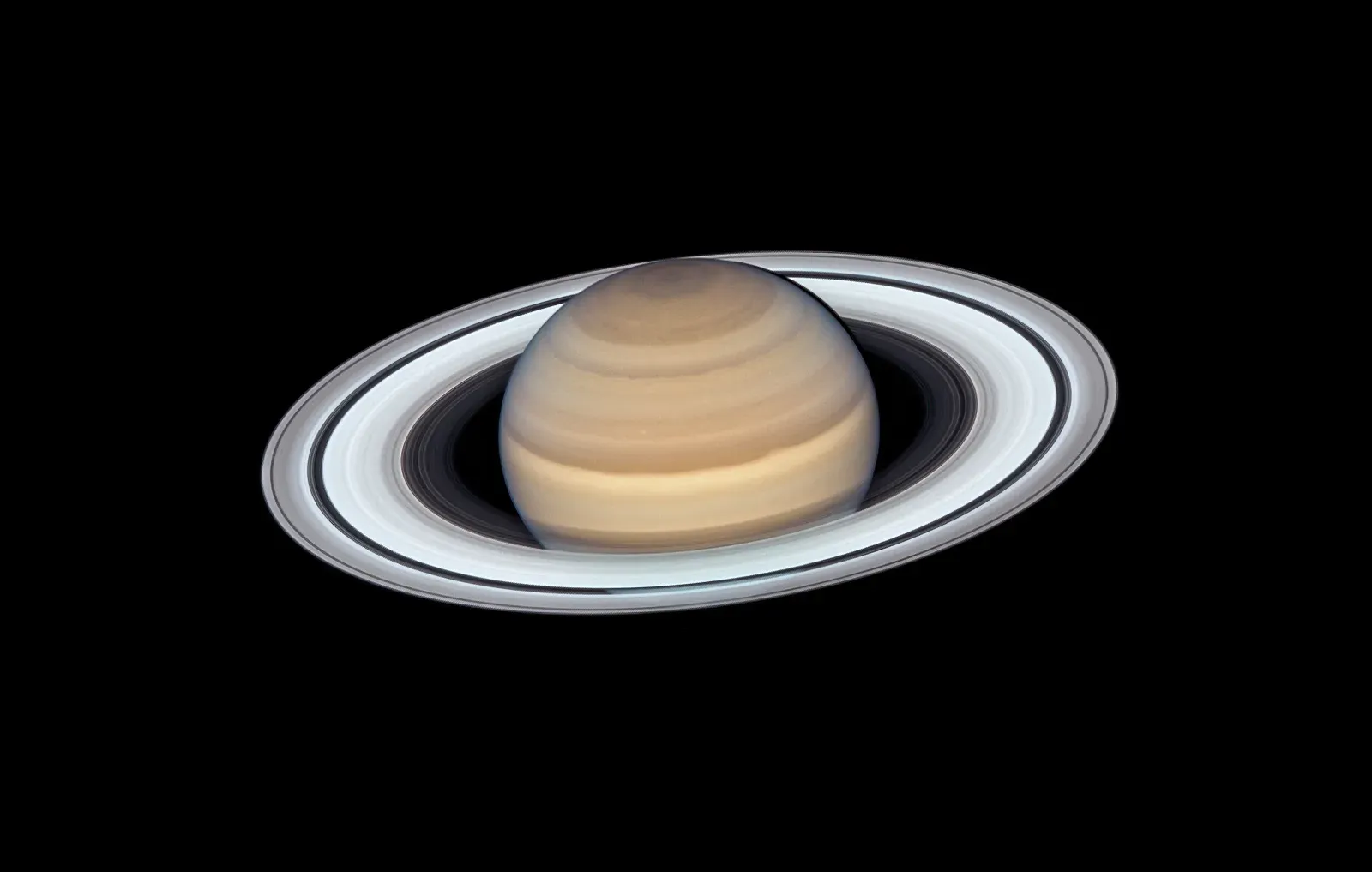
October 4: Saturn at opposition
Opposition occurs when a planet lies directly opposite the Sun as seen from Earth, bringing it closest to us for the year. That's why Saturn at opposition marks the best night of the year for observing it: the planet is visible all night and shines at its brightest. Look for it in the south, about 41° above the horizon, on the border of Pisces and Cetus, climbing highest around 01:00. To the naked eye, Saturn appears as a bright yellowish "star," while even a small telescope reveals its famous rings.
October 6: Moon meets Jupiter
On the morning of October 6, between 04:00 and 06:30, before dawn, the Moon passes close to Jupiter in the eastern sky, climbing higher as the sky brightens. The pair will be an eye-catching naked-eye sight — the bright Moon sitting right next to equally bright Jupiter. The occultation itself (when the Moon covers the planet) is not visible from Ukraine — only the close approach can be seen.
October 8–9: Draconid meteor shower peak
The Draconids are a meteor shower linked to comet 21P/Giacobini-Zinner: Earth passes through a trail of dust left behind by the comet, and the particles burn up in the atmosphere as "shooting stars." What makes this shower unusual is that it's best seen in the evening rather than before dawn, like most showers. The peak falls on the evening of October 8–9, roughly between 19:30 and 23:00, with no interference from the Moon. The radiant (the point in the sky the meteors appear to radiate from) sits high in the northwest, in the constellation Draco, though meteors can appear anywhere in the sky. The Draconids are usually weak, but occasionally deliver surprising bursts of activity.
October 13: Asteroid 4 Vesta at opposition
The opposition of Vesta offers the best chance of the year to spot the brightest asteroid in the sky. Observe around midnight, on a moonless night, looking for it in the south with the help of a sky chart. Unlike planets, an asteroid shows no visible disk — Vesta will appear as a tiny "star," findable with ordinary binoculars.
October 21–22: Orionid meteor shower peak
The Orionids are one of two meteor showers tied to Halley's Comet (the other, the Eta Aquariids, appears in spring): each year Earth crosses the comet's dust trail twice. This shower peaks on the night of October 21–22. The best viewing window is after 02:40, once the Moon sets, lasting until dawn; activity increases as the radiant in Orion climbs higher in the south. This year a bright Moon (about 80% illuminated) will light up the sky before it sets, so only the brightest meteors will be visible.
More about the events: Moon meets Jupiter, Draconid meteor shower peak, Orionid meteor shower peak.
The up-to-date list of events always lives on the Sky Calendar page.