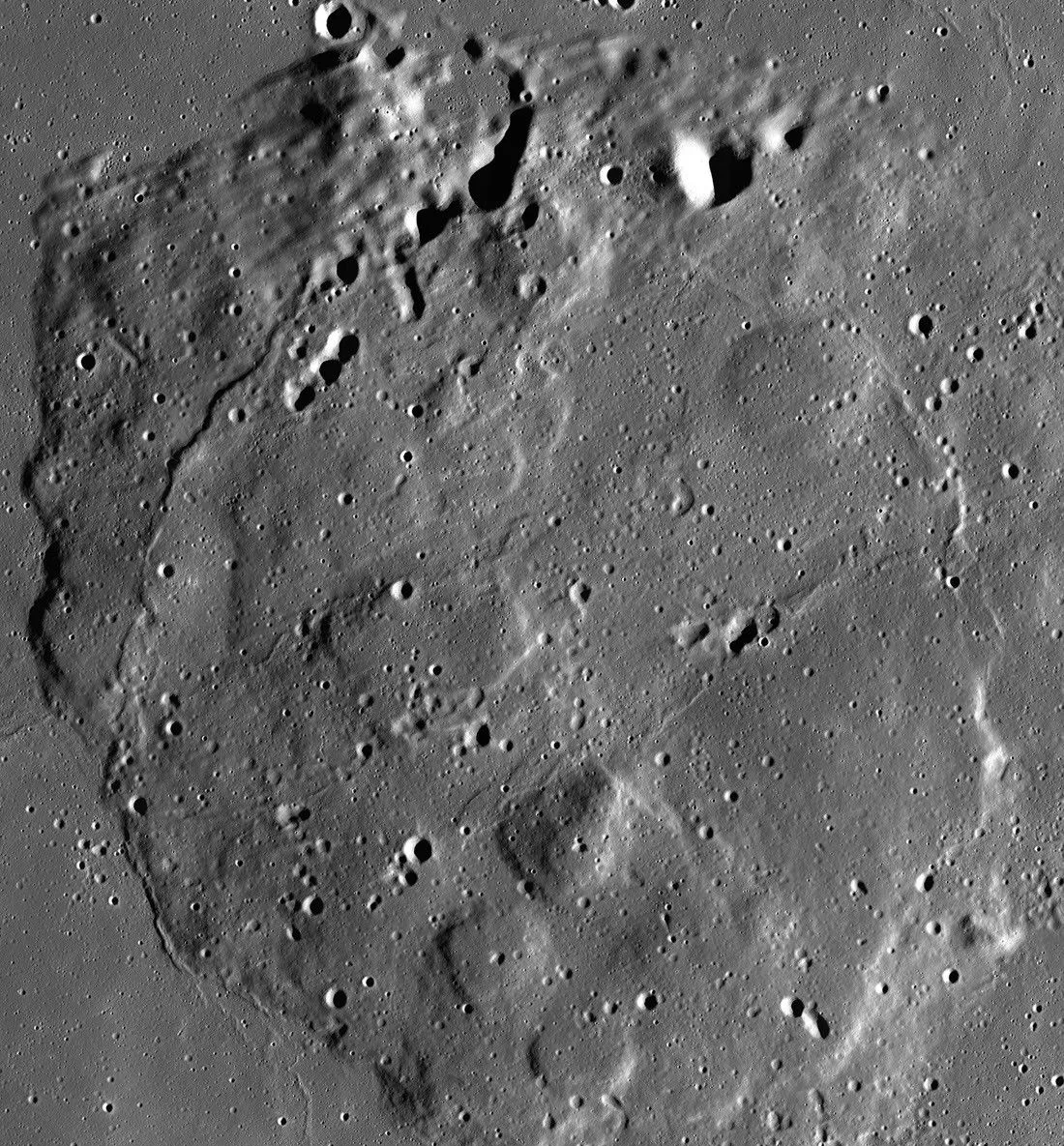
NASA and IBM Research have unveiled an open-source artificial intelligence model built specifically for lunar science. The NASA-IBM Lunar Foundation Model is among the first foundation models focused entirely on the Moon, and it's now available to anyone — the code is on GitHub, while the model itself is hosted on Hugging Face.
What Makes a Foundation Model Different
Traditional machine learning algorithms are usually built and trained from scratch for one narrow task — say, only finding craters or only analyzing ice. A foundation model works differently. It's first trained on a huge pool of unlabeled raw data, gaining a broad general understanding of surface types, landforms, and textures. Researchers can then fine-tune this base model on small amounts of labeled examples to adapt it for a specific scientific task — far faster and cheaper than building specialized algorithms from scratch each time.
"NASA has spent decades building an extraordinary scientific record of the Moon, but collecting data is only part of the job," said Kevin Murphy, chief science data officer at NASA Headquarters. "We also have to make data easier for scientists to explore and use."
The NASA-IBM Lunar Foundation Model shows what's possible when we bring AI to NASA's petabytes of scientific data. That's a real opportunity we see with AI: turning large-scale data into new discoveries.Kevin Murphy, NASA Chief Science Data Officer
LRO Data as the Foundation

The primary training source was data from the Lunar Reconnaissance Orbiter (LRO), which has been orbiting the Moon for 17 years. The data volume from this single mission exceeds that of all other NASA planetary missions combined, capturing an almost seamless, high-resolution mosaic of the entire lunar surface.
Training used roughly 2 million image tiles: more than a million high-resolution camera images at 1-meter resolution and nearly 964,000 multispectral images at 100-meter resolution. The dataset was expanded with imagery and terrain data from NASA's GRAIL (Gravity Recovery and Interior Laboratory) mission, Lunar Prospector, and JAXA's SELENE (Selenological and Engineering Explorer).
Craters, Volcanism, and Polar Ice
Once pre-trained, the model can handle several practical tasks in lunar science. First is crater mapping — since every crater forms from an impact, counting and measuring craters remains the primary method for dating surface regions and reconstructing solar system history. The model speeds up this process, freeing researchers to focus on interpreting results.
Second, the model helps identify irregular mare patches — unusual volcanic features that look relatively young and challenge established timelines for how long ago the Moon cooled and lost its volcanic activity.
Third, and apparently most successfully, the model estimates the likelihood of water ice near the lunar poles. In permanently shadowed regions, temperatures stay low enough to preserve ice for up to billions of years. Knowing exactly where these "cold traps" are located matters both for understanding the Moon's past and for planning future missions that might use that ice as a resource.
According to the development team, the model matched or exceeded several other strong baseline models across all evaluated tasks, achieving comparable results in crater mapping and mare patch segmentation, with a clear advantage specifically in estimating ice stability.
The Einstein Crater Test and What Comes Next
A telling example of the model's capabilities came from a test using images of the Einstein crater region before and after a SpaceX rocket body impact on the lunar surface. The post-impact image was deliberately excluded from pre-training, to check whether the model could recognize a new object it had never "seen" before. The model correctly outlined already-known craters and also flagged the newly formed one from the impact. Researchers note this approach could eventually help automatically detect natural impacts and surface changes across vast lunar datasets, though varying lighting between orbital passes may affect visibility of the smallest craters.
The project is part of NASA's Office of the Chief Science Data Officer strategy for AI in science and belongs to a broader, ongoing partnership with IBM. Related models in this family include Prithvi, a set of models for Earth observation analysis (disaster monitoring, flood mapping, crop yield prediction), and Surya, a heliophysics model for forecasting space weather and solar flares.
The NASA-IBM Lunar Foundation Model was built by the Impact AI team at NASA's Marshall Space Flight Center, working with scientists from NASA's Science Mission Directorate Planetary Science Division, and researchers at NASA's Goddard and Ames centers. Additional contributors came from the Universities Space Research Association, the SETI Institute, the University of Maryland, Baltimore County, and Howard University. Alongside the model, the team released machine learning-ready pre-training datasets and benchmark collections, with the model integrated into the open-source TerraTorch toolkit — ensuring reproducible research and giving scientists worldwide the tools to keep refining AI for lunar exploration.