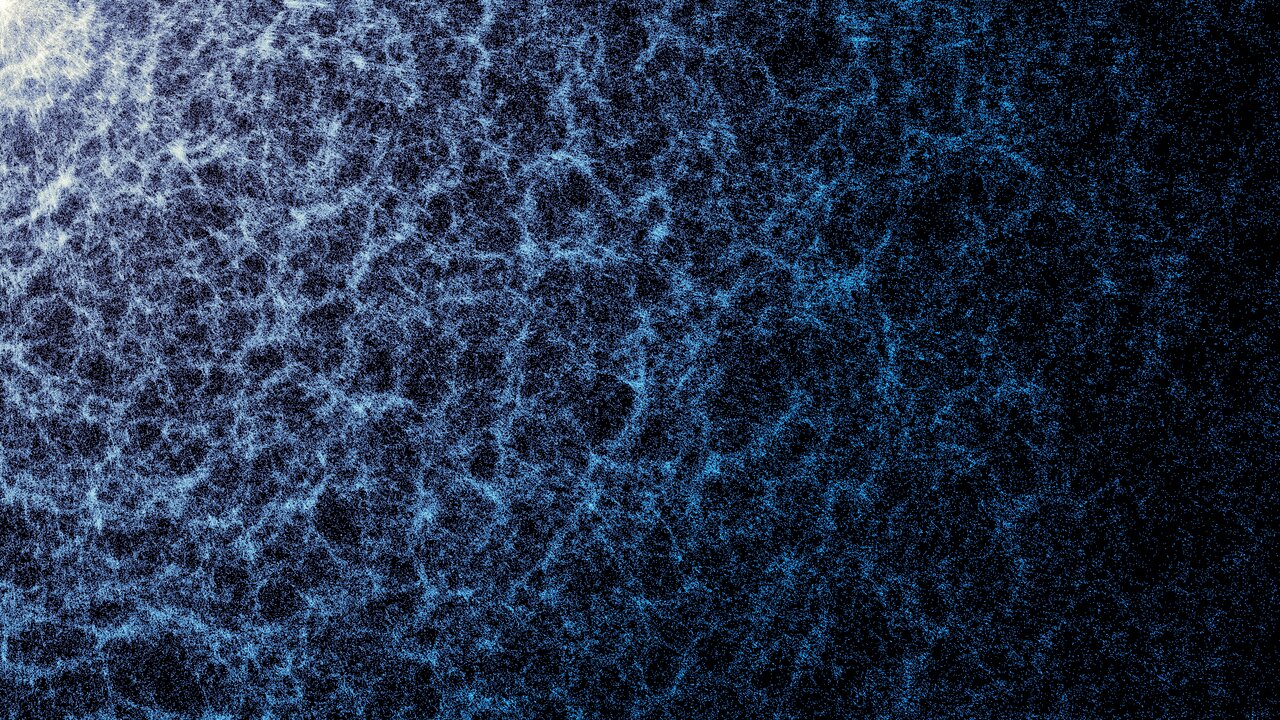
The Dark Energy Spectroscopic Instrument (DESI) has finished its five-year observation program — ahead of schedule — producing the largest high-resolution 3D map of the Universe ever made.
DESI uses 5,000 fiber-optic "eyes" on the 4-meter Mayall Telescope in Arizona. Every ~20 minutes, they lock onto distant objects, collecting photons that traveled toward Earth for billions of years. The original goal was 34 million galaxies and quasars. The actual result: over 47 million galaxies and quasars, plus 20 million stars — six times more cosmological data than all previous surveys combined.
The purpose? DESI studies dark energy, the mysterious component making up ~70% of the Universe and driving its accelerating expansion. By comparing how galaxies clustered in the past versus today, researchers trace dark energy's influence across 11 billion years of cosmic history.
Here's the big intrigue: analysis of the first three years of data hinted that dark energy might evolve over time — rather than being the constant physicists assumed for decades. If confirmed with the full five-year dataset, it would fundamentally reshape our understanding of the Universe's fate. First results from the complete analysis are expected in 2027.
The road wasn't smooth: COVID-19 halted final testing in 2020, and a wildfire swept over Kitt Peak in 2022.
DESI will continue observing through 2028, expanding its map by ~20% and surveying faint "luminous red galaxies" plus dwarf galaxies and stellar streams to probe dark matter.
Over 900 researchers from 70+ institutions worldwide contribute to the project.