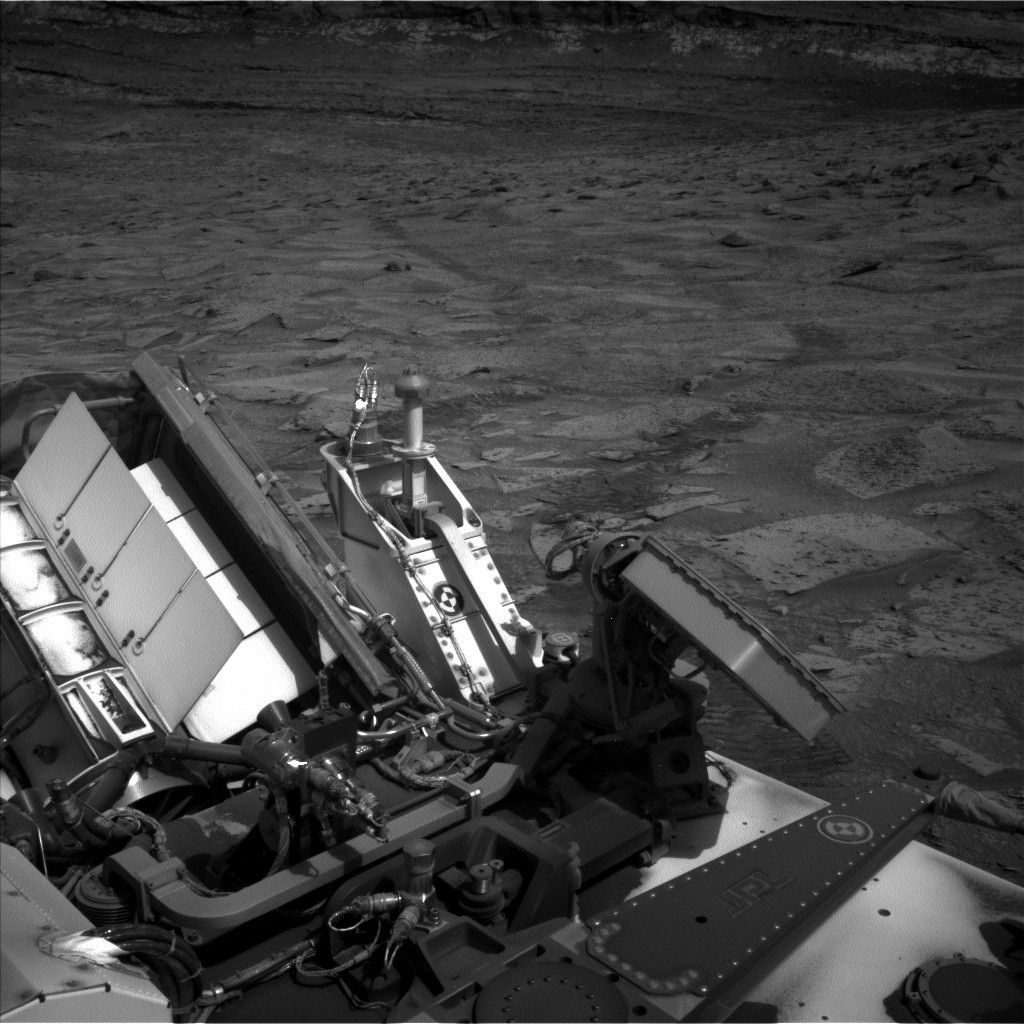
The rover spent the past week driving toward a small crater roughly 10 meters across, informally named "Antofagasta" after a Chilean city on the edge of the Atacama. Orbital images suggest it's less than 50 million years old — meaning rocks in and around it have spent relatively little time exposed to Mars' radiation. Curiosity has already found ancient organics that survived billions of years, but could something even better preserved lie deeper below? Antofagasta might hold the answer, if the age, depth, and a drill-ready rock all check out.
The journey itself has been striking: rocks covered in thousands of honeycomb-shaped polygons, stretching meters across. These textures have been seen before, but never quite this abundant. The team collected images and chemical data to understand how they formed, while also monitoring the atmosphere as Mars heads into its predictably dusty summer season.
New data should arrive by Tuesday. If all goes well, Curiosity will be parked on the crater rim — giving us our first ground-level look inside Antofagasta.