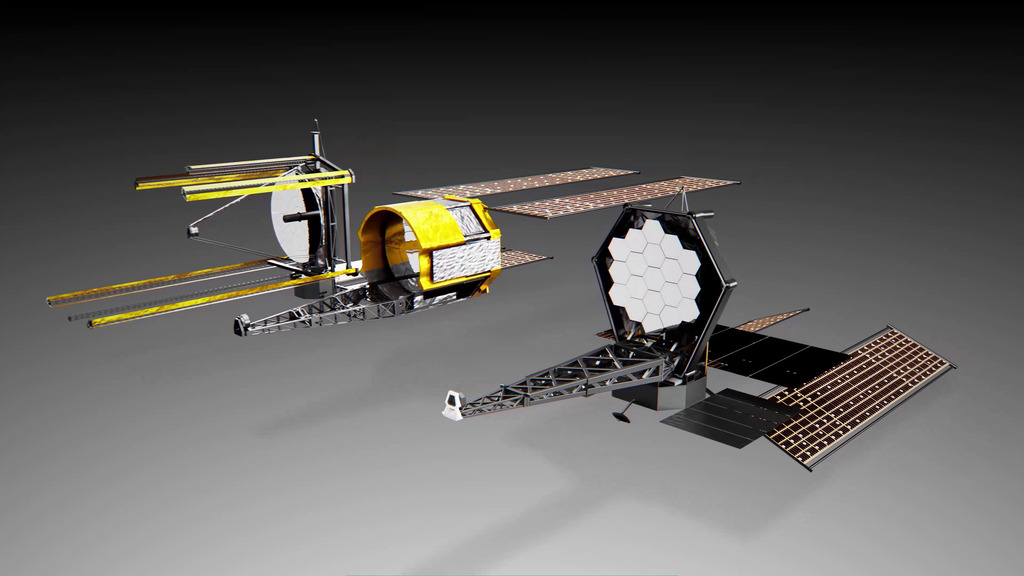
The Habitable Worlds Observatory (HWO) is NASA's future space telescope with a bold and specific goal: directly image and characterize at least 25 Earth-like planets around other stars. Not indirectly, not via transits — but by capturing their light separately from the host star.
This is an enormous engineering challenge. A new study models how the telescope's design parameters affect the number of exo-Earths it can find. The authors developed a dynamic observation scheduling algorithm and explored thousands of combinations: mirror diameter (6.5 and 8 meters), survey duration (2.5–7.5 years), field of regard, and the number of repeat observations per planet.
The results reveal a delicate balance between ambition and reality. Field of regard is critical: if the telescope can only look within a narrow cone (less than 90°), planet yield drops sharply. Each additional re-observation of a candidate (for confirmation and atmospheric study) reduces the total yield by roughly 22%. Four observations instead of one means 52% fewer planets. Longer mission duration partially compensates for this.
In essence, scientists are solving a puzzle: how to see as many potentially habitable worlds as possible within a limited time, while studying each one in sufficient detail? This fundamental trade-off will shape the entire telescope's architecture.
HWO will be the successor to JWST in the search for life beyond the Solar System.