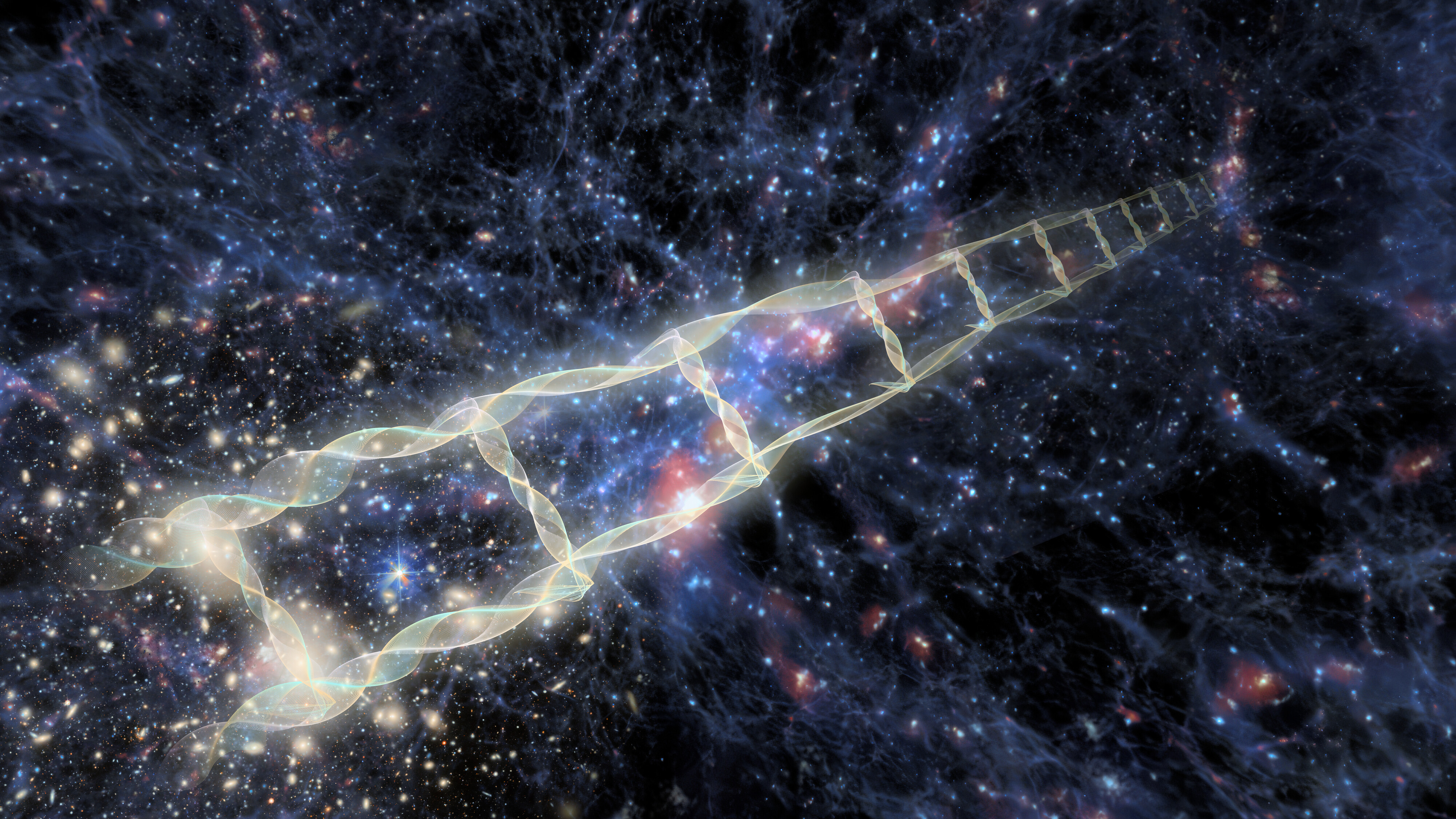
The H0DN collaboration has produced one of the most precise direct measurements of the local Universe's expansion rate to date: 73.50 ± 0.81 km/s/Mpc, just over 1% precision. Rather than relying on a single technique, the team built a "distance network" — a unified framework combining Cepheid variable stars, the tip of the red giant branch, Type Ia supernovae, and galaxy-based methods into a single, cross-validated result.
The key test: does removing any individual method shift the answer? It doesn't. The result holds firm across configurations, which effectively rules out a hidden systematic error in local distance measurements as the source of the Hubble tension.
That tension remains as sharp as ever. Direct measurements of the nearby Universe consistently yield ~73 km/s/Mpc, while early-Universe predictions based on the cosmic microwave background point to 67–68. The gap is small in absolute terms but far exceeds statistical uncertainty, and has now been confirmed across multiple independent studies.
If the discrepancy is real — and the evidence increasingly suggests it is — the standard cosmological model may be incomplete. An imperfect description of dark energy, unknown particles, or modifications to gravity could all shift what the early Universe predicts about today's expansion. The next generation of observatories will either close the gap or push it further into unknown physics.