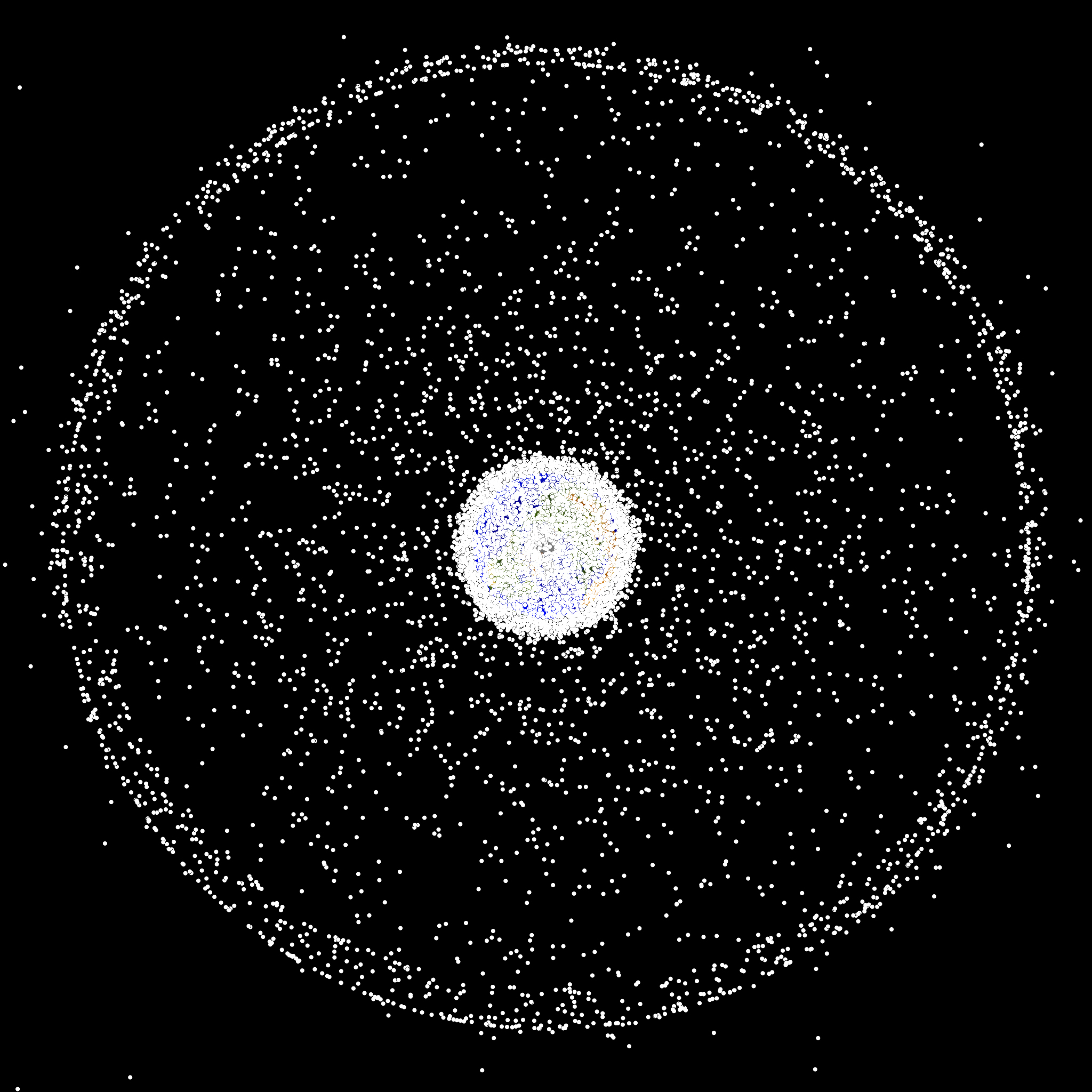
More than 44,000 tracked objects are currently in Earth orbit, with a combined mass exceeding 15,800 tonnes. Most are rocket stages, defunct spacecraft, and collision fragments. Model estimates put objects larger than 10 cm at roughly 54,000; those between 1 and 10 cm at over a million; smaller debris at over 130 million. Radar cannot see them — but even a small fragment can destroy an active satellite.
The problem is already visible in operational data. Starlink collision-avoidance maneuvers increased from 6,873 over six months in 2022 to 144,404 over the same period in 2025 — nearly 21 times in three years. The deepest long-term risk sits around 850 km altitude, where debris persists for decades and 96% of all objects are inactive. A few major collisions there could trigger Kessler syndrome — a self-sustaining cascade that renders the orbit permanently unusable.
Shortening the standard deorbit timeline from 25 to 15 years yields benefit-cost ratios between 20 and 750. But a debris removal market will not emerge on its own: no one has an economic incentive to clean up someone else's mess. Without public intervention, the legacy stock accumulated over decades of unregulated launches will remain in orbit indefinitely.