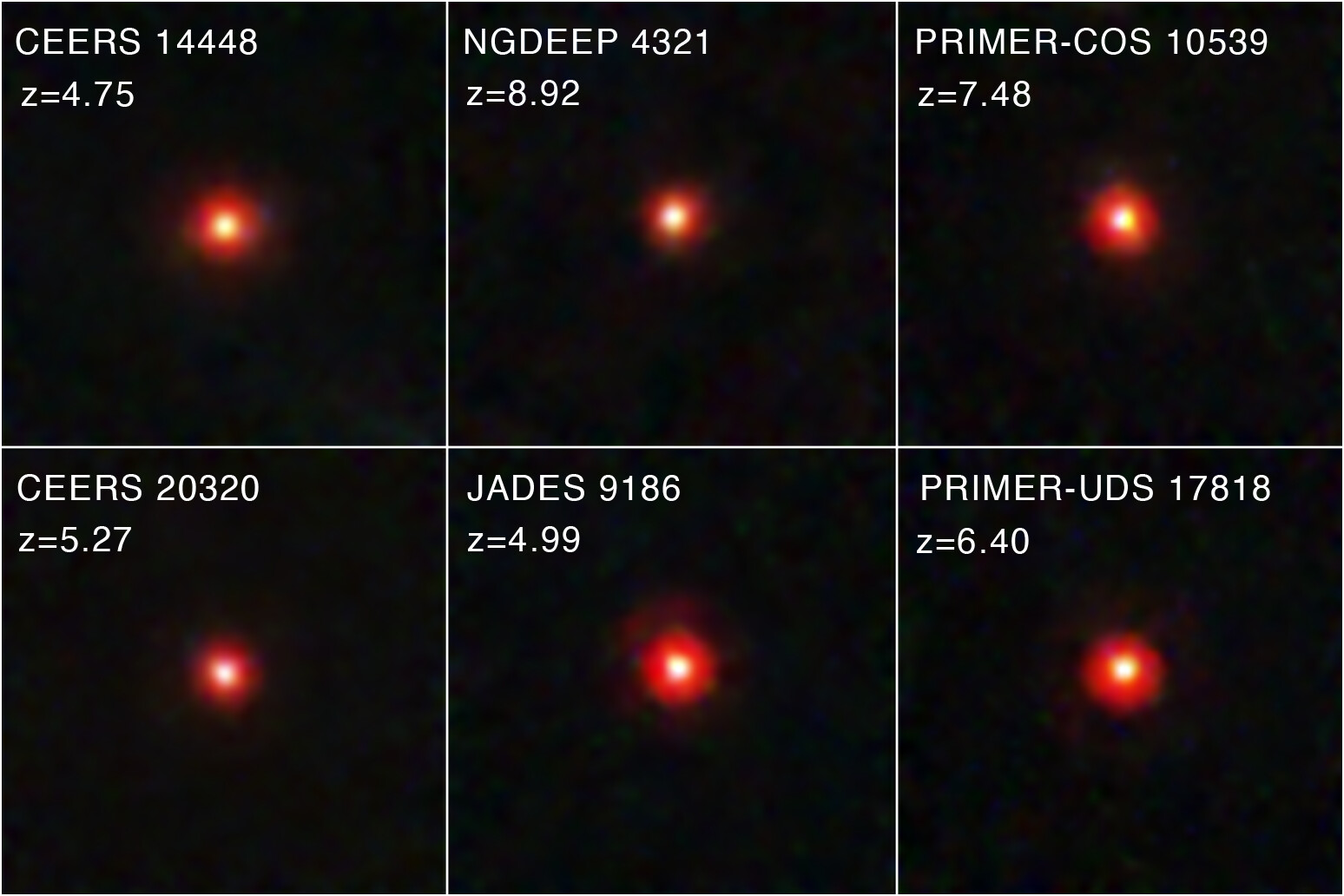
The early Universe was a far denser, more chaotic place than today. In compact stellar systems of that era — proto-globular clusters, nuclear star clusters — stars were packed closely enough that physical collisions between them were not rare accidents but a routine feature of the environment.
A new study presents an analytic framework for stellar dynamics in these extreme conditions, covering systems with and without intermediate or supermassive black holes across a wide range of densities and collision rates. Initial conditions are drawn from high-resolution cosmological simulations, grounding the model in realistic early-Universe environments. Predictions are validated against Monte Carlo simulations with good agreement.
The key findings: stellar collisions were ubiquitous at high redshift, and runaway collision sequences naturally produce very massive stars in the early Universe. Furthermore, high rates of destructive collisions can rapidly build up extremely dense gaseous environments around massive black holes — potentially offering a physical analogue to the puzzling population of Little Red Dots observed by JWST.