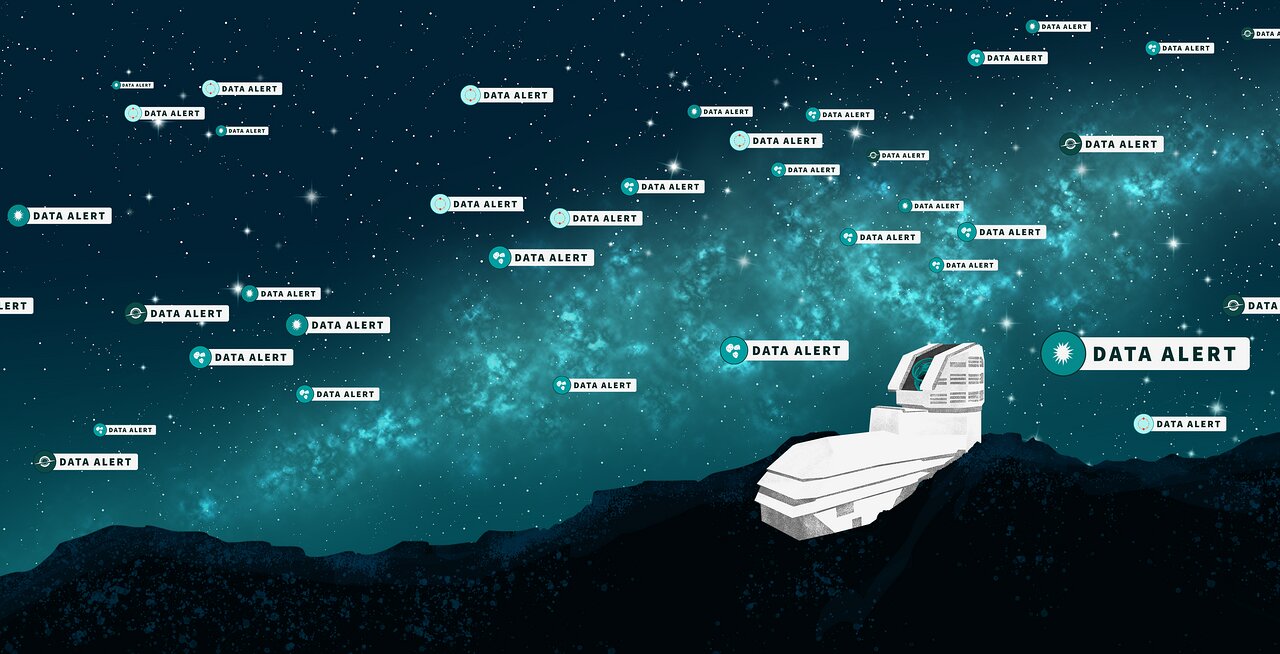
On the night of February 24, 2026, NSF–DOE Vera C. Rubin Observatory sent its first scientific alerts — 800,000 in a single night. Once fully operational, the system is expected to generate up to seven million alerts per night.
The first detections include supernovae, variable stars, active galactic nuclei, and Solar System asteroids. Every 40 seconds, the telescope photographs a new region of the sky. Software automatically compares each image to a previous template of the same area, and any change triggers a public alert within two minutes.
At the heart of the system is the 3200-megapixel LSST Camera — the largest digital camera ever built — capable of detecting faint and distant objects across the Universe. Data travels from Chile to SLAC's U.S. Data Facility in California in seconds for processing.
To handle the scale of the alert stream, scientists rely on a network of brokers: machine-learning platforms that filter, classify, and distribute alerts to research teams and observatories worldwide. This enables near-instant coordination of follow-up observations across ground and space-based telescopes.
Later this year, Rubin will begin the Legacy Survey of Space and Time (LSST) — a 10-year nightly scan of the Southern Hemisphere sky. In its first year alone, Rubin is expected to image more objects than all optical observatories in human history combined. The resulting data will advance understanding of dark matter, dark energy, and the large-scale evolution of the Universe.
All alerts are public, accessible to professional researchers, students, and citizen scientists alike.