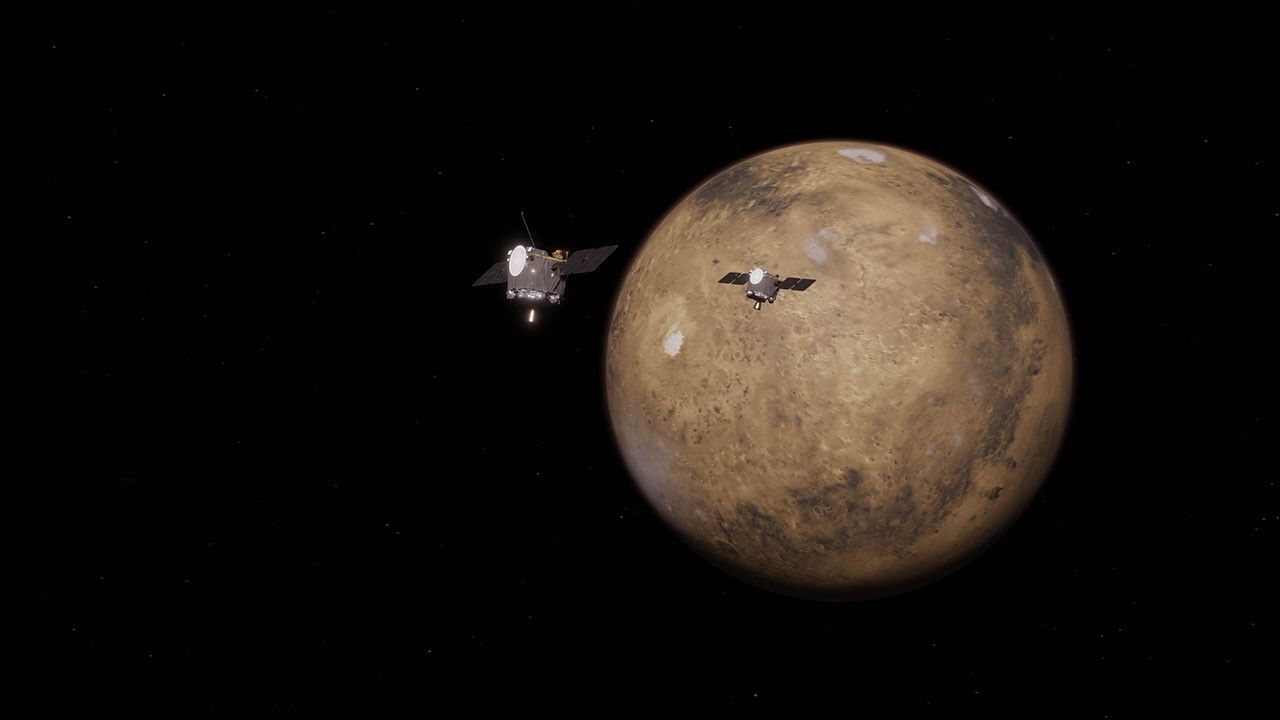
Tonight, a spacecraft that spent nearly seven years in one of the most hostile environments near Earth will make its final descent — burning up in the atmosphere.
Van Allen Probe A launched in 2012 alongside its twin, Probe B, on a mission unlike most: not to avoid Earth's radiation belts, but to fly through them for years. These rings of charged particles, trapped by Earth's magnetic field, damage satellite electronics and pose serious risks to astronauts.
Understanding how they behave is key to protecting both technology and people in space.
Over nearly seven years, the probes delivered several landmark findings. The most significant: the first direct observation of a transient third radiation belt — a temporary ring that forms during intense solar activity. Until then, only two permanent belts were known to exist.
Originally, models predicted the spacecraft would re-enter in 2034. But the current solar cycle turned out far more active than expected. As the Sun's output increased, Earth's upper atmosphere expanded slightly, increasing drag on the spacecraft and pulling it down eight years ahead of schedule.
Most of the structure will burn up on re-entry. However, NASA expects some components to survive and reach the surface. The probability of anyone being harmed is roughly 1 in 4,200 — within the standard accepted threshold for uncontrolled re-entries.
Probe B remains in orbit and is not expected to re-enter before 2030.