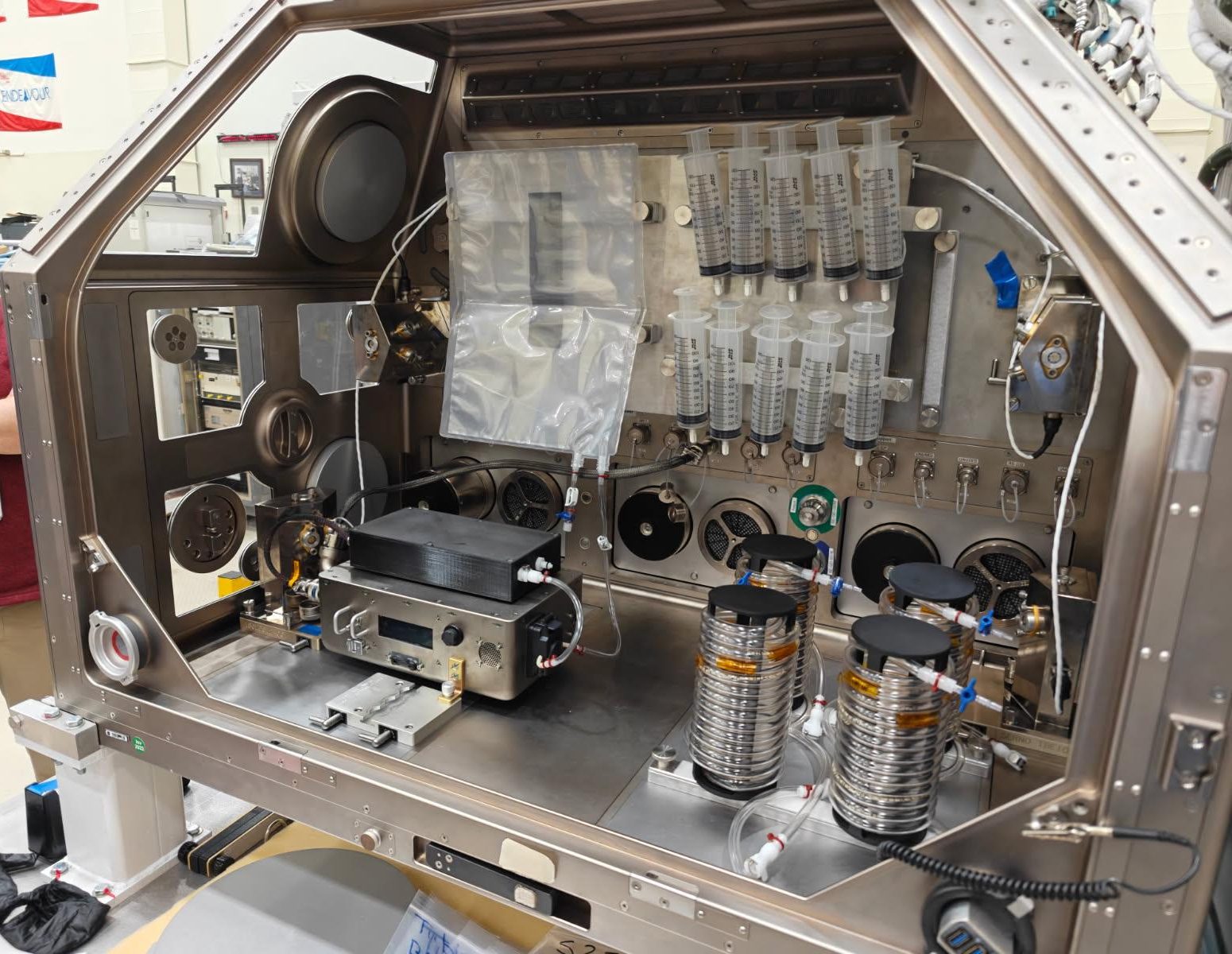
Every crewed NASA mission carries pouches of intravenous saline — a simple mix of sodium chloride and purified water that can treat ~30% of possible in-flight medical conditions: dehydration, burns, and more.
The problem: IV fluid shelf life is only 16 months. A Mars mission could last up to three years. Carrying supplies that expire en route isn't an option.
Engineers at NASA's Glenn Research Center built the solution: IVGEN Mini (IntraVenous Fluid GENeration Miniaturized), a device that converts drinking water into medical-grade saline on board. The system filters water to remove particulates and mineral ions, then feeds it into a bag with premeasured sodium chloride — producing sterile IV fluid on demand.
On April 11, 2026, IVGEN Mini was delivered to the ISS aboard a Cygnus cargo spacecraft. In May, the crew will run a two-day demonstration generating 10 liters of fluid, which will be returned to Earth for quality analysis.
This is the second iteration of the technology. The original IVGEN was tested on the ISS back in 2010 but was much larger due to additional sensing equipment. The mini version is more compact, lighter, and uses miniaturized pumps instead of a gaseous nitrogen delivery system.
Beyond solving expiration concerns, IVGEN Mini saves precious cargo mass. A hundred one-liter IV bags for a Mars mission would take up significant volume and weight. A compact on-demand device is a far more practical solution.