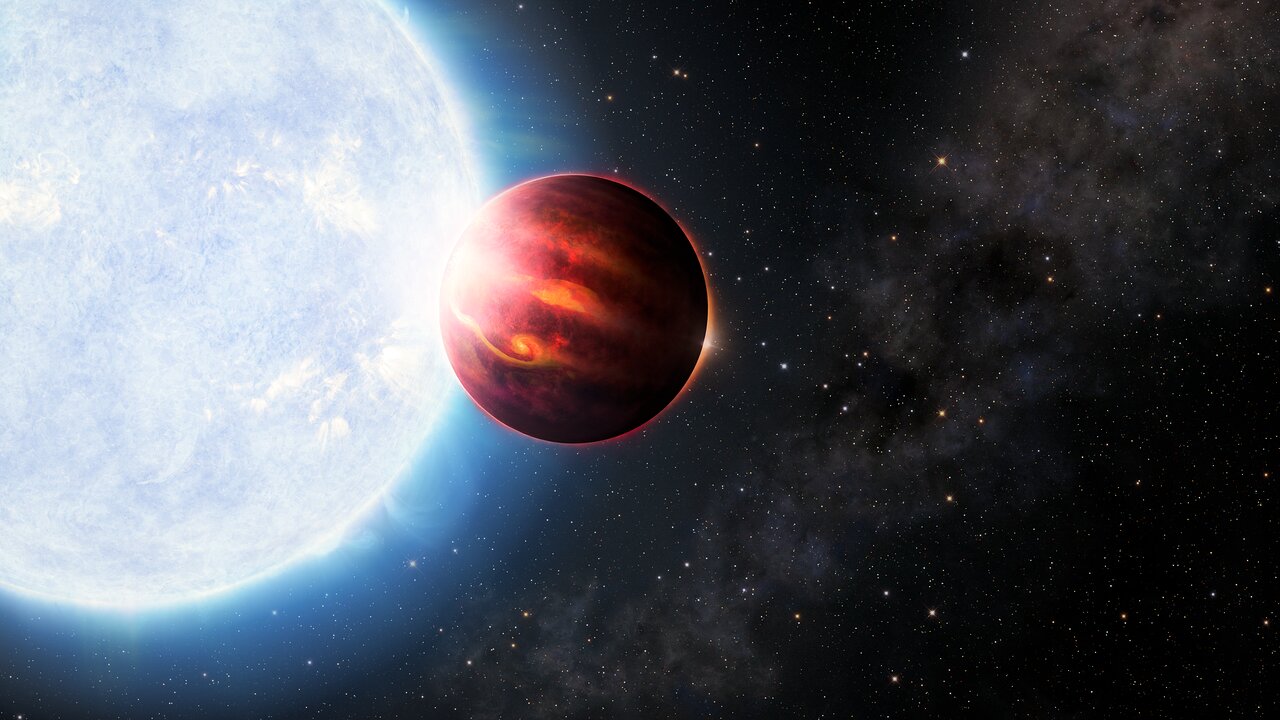
A foundational assumption of planet formation science has finally been confirmed by direct observation. Astronomers measured magnesium and silicon in the atmosphere of ultra-hot Jupiter WASP-189b and found that its magnesium-to-silicon ratio exactly mirrors that of its host star — the first such measurement ever made.
Located ~320 light-years away in Libra, WASP-189b is hot enough to keep rock-forming elements in gaseous form, making them detectable via spectroscopy. Using the IGRINS spectrograph on Gemini South, the team achieved the first simultaneous atmospheric detection of both elements in a single exoplanet.
The implications extend well beyond this one system. Rock-forming elements like magnesium and silicon govern a planet's magnetic field, plate tectonics, and the release of life-sustaining compounds. If a planet's elemental ratios trace back to its star, then stellar spectroscopy becomes a practical tool for assessing the habitability of rocky worlds — including those far too small to characterize directly. The finding gives astrobiology its first observational anchor outside the Solar System.