1️⃣ CHRONOS: a gravitational wave detector for the "blind zone" between LIGO and LISA
Current gravitational wave detectors can hear black hole mergers — but there's a frequency range where they're deaf, roughly between 0.1 and 10 oscillations per second. That's exactly where the new CHRONOS project aims. It's a cryogenic detector based on torsion bars cooled close to absolute zero, designed to catch mergers of intermediate-mass black holes — objects we currently only suspect exist. As a bonus, the instrument could detect gravitational signals from earthquakes faster than the destructive seismic waves reach the surface.
🔗 Source
2️⃣ The PLATO telescope is being tested in space — on the ground
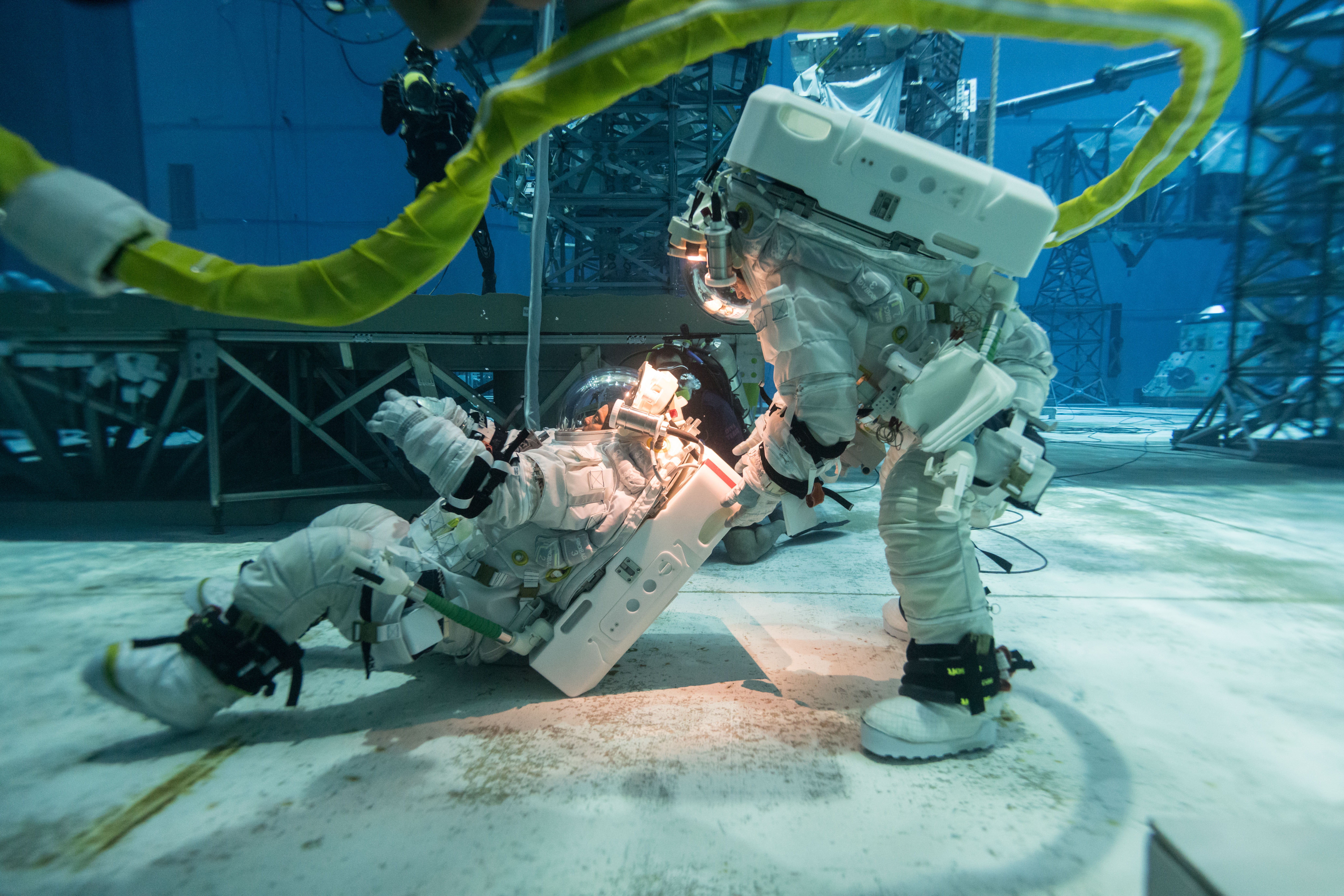
Before flying, it has to survive. Right now PLATO is sealed inside Europe's largest vacuum chamber — a 15-meter cylinder that recreates the conditions of open space. One side of the spacecraft is heated to +160 °C, the other cooled to –80 °C. Engineers are stress-testing 26 ultra-sensitive cameras that will one day simultaneously watch 150,000 stars for Earth-sized planets. Launch is scheduled for early 2027.
🔗 Source
3️⃣ Pollux: one instrument to search for oceans and signs of life at the same time
Pollux is a spectropolarimeter — a candidate instrument for the future US Habitable Worlds Observatory (HWO). It sees everything from hard ultraviolet to near-infrared, and can analyze the surface composition of ocean moons, probe atmospheric aerosols, and detect faint airglow above worlds like Europa and Enceladus. In other words: one instrument for the solar system and for hunting biosignatures around distant stars.
🔗 Source
4️⃣ A new kind of math for detecting extraterrestrial life
How do you tell a planet with the chemistry of life from one with the chemistry of rock — especially if we don't know what alien life might look like? Researchers propose applying "Assembly Theory": a method that measures how complex and "selected" the mixture of molecules in an atmosphere is. The more diverse and intricate the molecular ensemble, the higher the complexity score. No assumed biochemistry, no binary yes/no — just a continuous scale that can be applied to thousands of planets at once.
🔗 Source
5️⃣ The Habitable Worlds Observatory will be able to weigh planets
Finding an Earth-sized planet is already hard. But understanding whether it could support life requires knowing its mass to about 10% accuracy — without that, even the best atmospheric spectrum stays ambiguous. Researchers show that a 6-meter HWO could measure the masses of roughly 40 such planets by tracking the tiny wobble each planet induces in its host star. The catch: each star needs at least 100 observations spread over 200 days.
🔗 Source