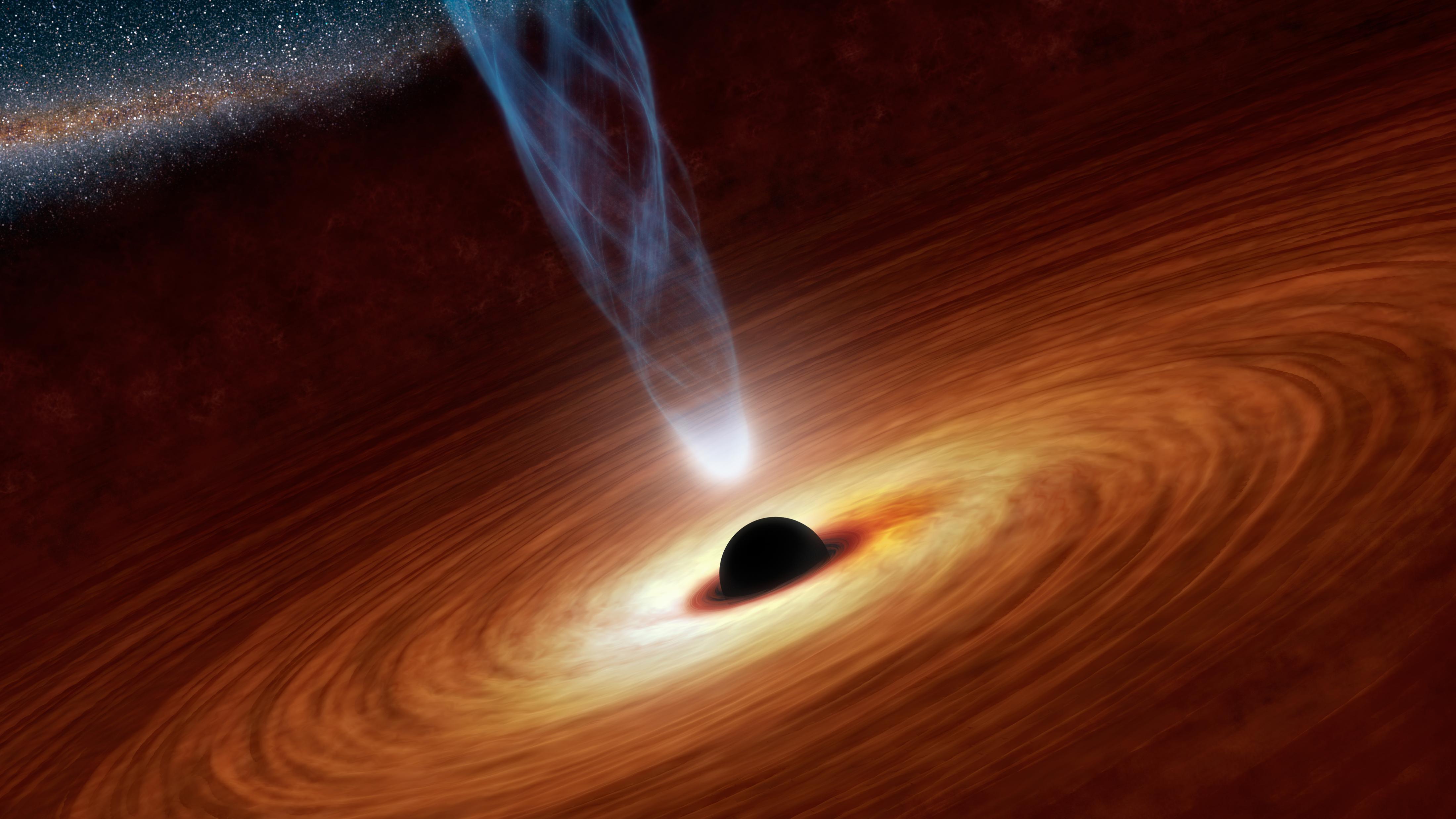
Supermassive black holes sit at the center of nearly every large galaxy. But a question that has long puzzled astronomers remains: does the galaxy shape the black hole, or does the black hole shape the galaxy?
New research accepted by The Astrophysical Journal offers a surprising answer — it depends on the shape of the galaxy.
In spiral galaxies like our own Milky Way, the central black hole actively drives the evolution of its host. It's not just sitting there — it's calling the shots. In elliptical galaxies, however, the picture flips: the black hole is a passive passenger, growing in step with the galaxy but not dictating its development.
To reach this conclusion, researchers used the NIHAO simulation suite — a set of cosmological models that track how galaxies evolve from the early Universe to the present day. This allowed the team to follow cause-and-effect relationships through time, something observational data alone cannot provide.
The findings have real consequences. Astronomers often estimate the mass of ancient black holes using stellar velocity dispersion — how fast stars move inside a galaxy. But if the causal direction shifts depending on galaxy type, those estimates may be systematically off. Could we be mismeasuring the masses of some of the earliest black holes in the Universe?