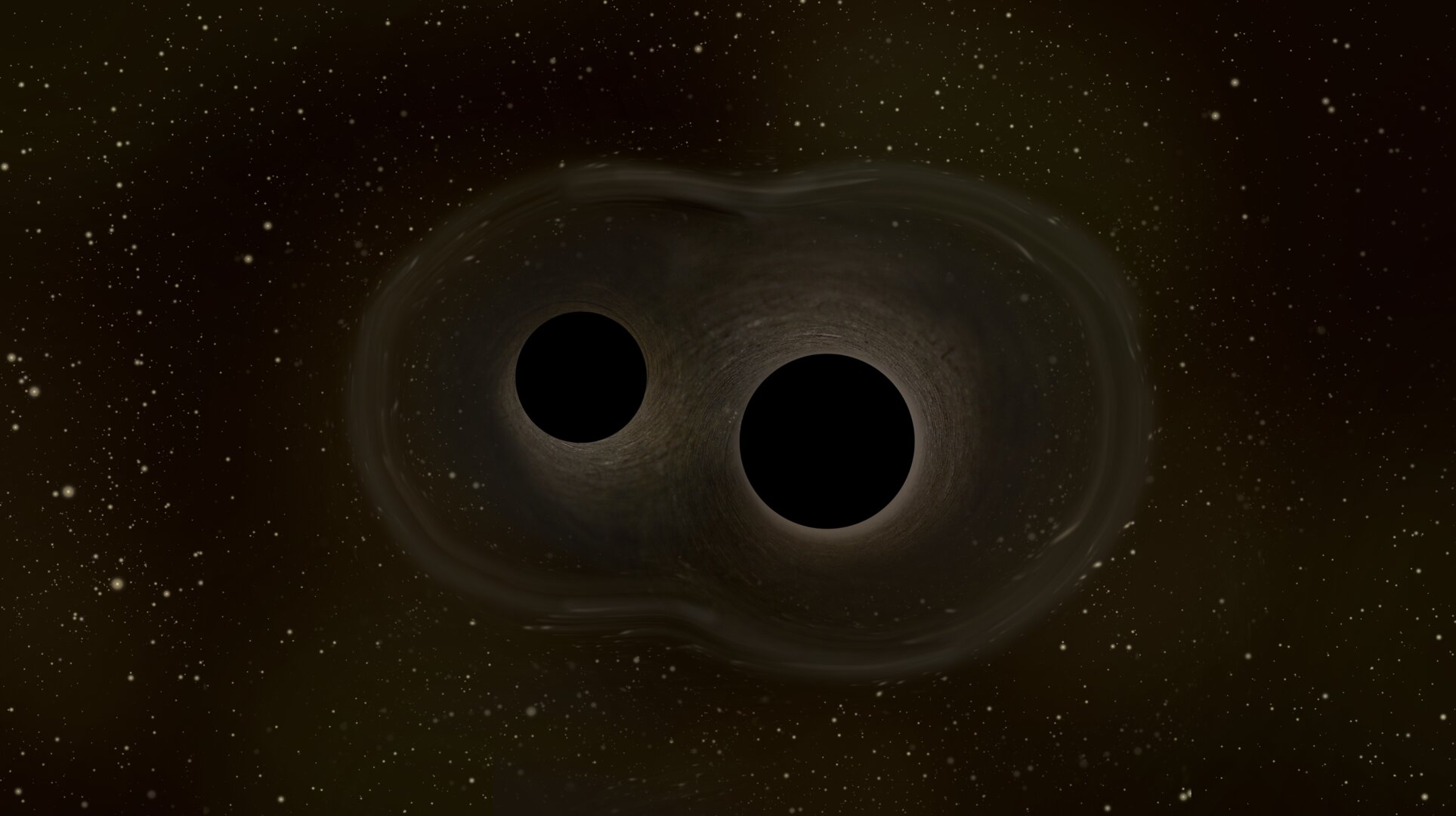
In November 2025, the LIGO-Virgo-KAGRA network detected S251112cm — a compact binary merger where at least one object appears lighter than the Sun. That single fact rules out standard formation channels: neither neutron stars nor stellar black holes can reach such low masses.
A natural candidate is primordial black holes — objects formed from the collapse of density fluctuations in the early Universe, before the first stars existed. Their masses are unconstrained by stellar physics, making sub-solar values entirely plausible.
A new study calculates the probability that S251112cm represents a merger of two such objects in the 0.1–1 M☉ range. In the ~0.5–1 M☉ window, under moderately relaxed constraints, that probability reaches unity; in more conservative scenarios it remains around 0.5. Astrophysical uncertainties prevent a definitive conclusion — but the analysis confirms that sub-solar merger events are a genuine, increasingly practical probe of primordial black holes and their role in dark matter.