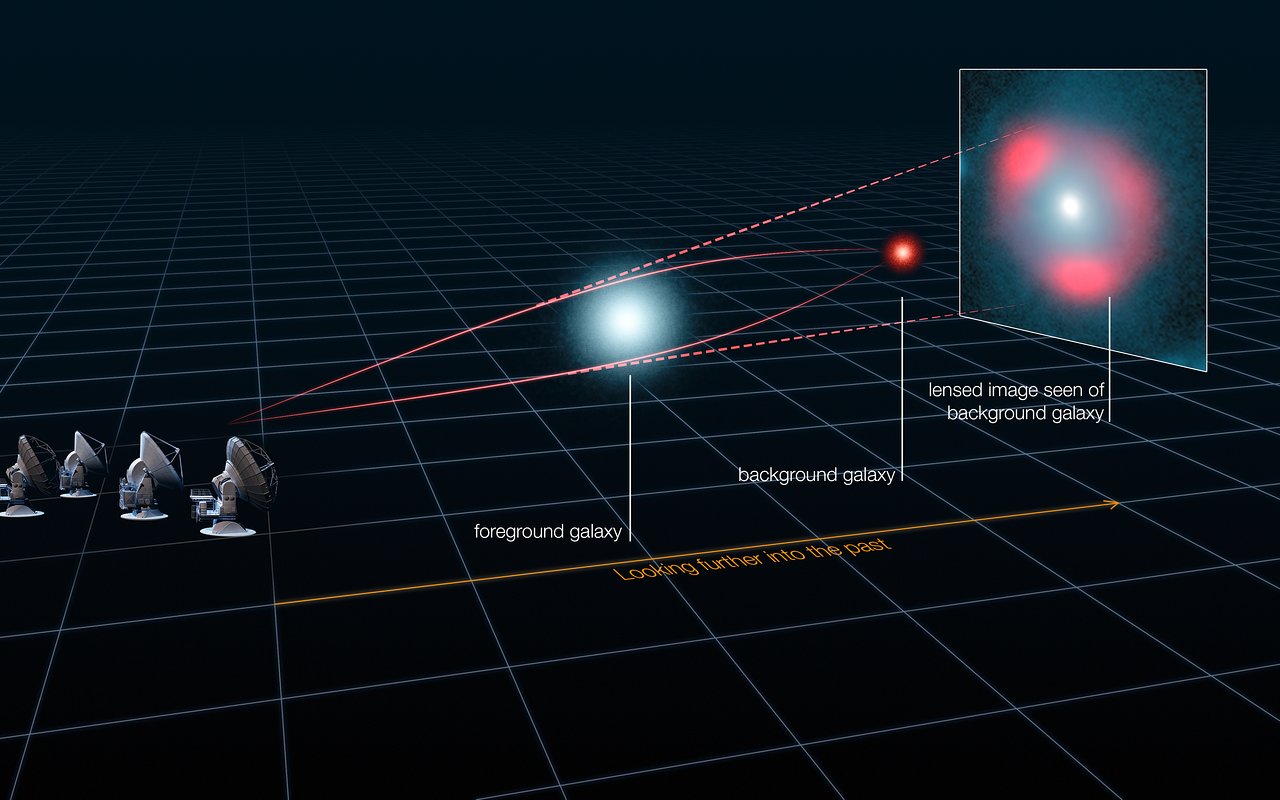
A gravitational lens is a galaxy or cluster so massive that its gravity bends light from objects behind it — acting as a natural cosmic magnifying glass that brings otherwise unreachable targets into view.
The AGEL survey has released its second catalog, presenting 139 spectroscopically confirmed gravitational lenses and Hubble Space Telescope images for 167 systems. Candidates were first identified by a convolutional neural network scanning the Dark Energy Camera Legacy Survey, and follow-up spectroscopy confirmed 96% of them — an exceptionally high success rate. The collection includes rare finds: Einstein rings, lensed quiescent galaxies, and systems where a single lens magnifies multiple background sources at different distances.
That last category is especially valuable for cosmology: six such double-source-plane systems can be used to independently measure how the Universe is expanding. As Euclid, Rubin's LSST, and other next-generation surveys come online, the number of known gravitational lenses is set to increase dramatically — and AGEL is already refining the automated methods needed to find and prioritize them.